IOGP Europe position on Industrial Accelerator Act and recommendations for modifications
Executive Summary
IOGP Europe recognises the Industrial Accelerator Act (IAA) as a positive step toward the creation of lead markets to stimulate demand for low-carbon products. To fully realise this potential, the IAA should aim to create a functioning market where demand is strong enough to sustain and reward the premium associated with low-carbon products.
IOGP Europe provides the following recommendations to ensure that the framework delivers its objectives in a practical, technology-neutral, and market-oriented manner. In this regard, the overall framework should provide a stable and predictable regulatory environment, with any empowerment of the Commission to further define, expand, or restrict requirements through delegated acts being narrowly framed and limited to what is strictly necessary to preserve legal certainty and investor confidence.
IOGP Europe’s 7 recommendations for strengthening the Industrial Accelerator Act proposal:
1. Technology neutrality and level playing field principles
As many of the key details will be defined through Delegated Acts, it is essential that the Regulation explicitly enshrines the principle of technology neutrality and level playing field in its core provisions. These principles must guide the development of Delegated Acts, ensuring fair treatment across technologies, including renewable vs low-carbon hydrogen, and geographical balance across Member States.
2. Alignment between IAA and NZIA on CCS
The IAA should facilitate the development and deployment of CCS across the entire value chain, including by coordinating dedicated support mechanisms as a critical enabler of low-carbon product supply chains. At the same time, it should amend the NZIA provisions on the CO₂ injection capacity objective to ensure a realistic, investment-enabling framework for CCS value chain.
3. Definition of low-carbon products & creation of lead markets
The definition of low-carbon products is a key element of the framework. The criteria developed under Articles 10 and 16 should take into account lifecycle greenhouse gas emissions intensity and ensure a level playing field across Member States. The criteria should remain technology-neutral and recognize the role of CCS and low-carbon hydrogen in achieving the objectives of the Regulation. Experience from the market shows that voluntary classification systems alone are unlikely to generate the scale of demand needed to drive industrial transformation or create meaningful market pull.
To effectively establish lead markets, it should be reflected at the later stage to move towards stronger and more predictable demand signals, inter alia through mandatory product standards. These should be technology-neutral and designed to avoid carbon leakage by reflecting both production intensity and consumption, rather than being constrained by jurisdictional boundaries. Sound policy design will be critical to ensure effectiveness while limiting cost impacts.
4. “Made in the EU” / Union origin requirements
Union origin requirements risk creating uncertainty for globally integrated industries by disrupting value chains and reducing investment predictability. They are not an effective solution to competitiveness or unfair trade challenges, which should instead be addressed through existing EU trade and market instruments.
Strengthening the European industrial base should be carried out in a proportionate manner, while preserving openness to international cooperation. The system boundaries for the production of the covered products must also be carefully clarified as they may add further complexity to the process, as well as have implications for the European energy market.
Union-origin criteria should be applied with caution to ensure their credibility and transparency, avoiding their excessive extension to entities from third countries. At the same time, strictly defined exceptions should be allowed in the context of deep strategic partnerships.
5. Foreign Direct Investment (FDI)
The proposed FDI provisions in the IAA create more uncertainty at a time when Europe needs to safeguard its attractiveness as an investment destination. We support the overall objective of requiring FDI to create value in the EU. The IAA provisions are as in initial EC draft overly prescriptive and will likely increase administrative burden for both authorities and investors. The EU should rather leverage the existing screening tools at its disposal.
6. Permitting
Single access points are a positive step, but they will only work if they genuinely coordinate the entire permitting process. Industrial projects often involve multiple components governed by different permitting frameworks and organizations. Without alignment, simplification benefits will be lost. The Industrial Accelerator Act should therefore align single access points with those under the Net-Zero Industry Act, the Critical Raw Materials Act, and the Renewable Energy Directive, ensuring one coherent permitting process coordinated by a single authority. Interoperability should be prioritised with existing frameworks, ensuring that project developers benefit from a single, coherent permitting pathway across the full value chain.
7. Corporate climate transition plans (Article 25(4)(h))
The inclusion of corporate climate transition plans in the designation criteria for Industrial Manufacturing Acceleration Areas should not in any way be used as a requirement for eligibility. As this would create legal uncertainty, litigation risk and duplication with existing CSRD disclosure requirements, while shifting the IAA away from its core purpose of strengthening Europe’s industrial competitiveness and deployment capacity. IOGP Europe acknowledges the overall objectives of the IAA in promoting lead markets and accelerating low-carbon industrial transformation, and stands ready to engage constructively with policymakers and stakeholders to ensure the framework delivers effective and workable outcomes. A set of proposed amendments is provided in the Annexes.
Download the document to view the Annexes

- Publications
- News
- Events

IOGP Europe’s Consultation Response to the Revision of REMIT Reporting

IOGP Europe’s response to the Public consultation on the renewable energy framework (post-2030 RED) for the decade ahead

IOGP Europe response to the European Commission’s consultation on the revised Sector Agnostic ESRS

IAA: 14 associations call for greater ‘Permitability’ in Europe’s industrial framework

IOGP Europe’s response to the European Chemical Agency’s (ECHA) Socio-Economic Committee (SEAC) draft Opinion of the proposed ‘Universal-PFAS

Socio-Economic Analysis for a Reach Restriction Proposal on PFAS in the Upstream Oil & Gas, Oil Refining and Fuel Distribution Sectors, and in Carbon Capture and Storage

Joint Industry Statement: CO2 Transport infrastructure, enabling a pragmatic framework for early market development
IOGP Europe’s Response to the Revision of national targets and flexibilities in the EU climate policy framework after 2030

Extraordinary taxation risks undermining Europe’s security of supply and energy autonomy

IOGP Europe response to EU Taxonomy Consultation on the Technical Screening Criteria Delegated Act amending the Climate Delegated Act

Joint Letter: Delivering Europe’s Hydrogen Ambitions – Joint Industry Roadmap Ahead of the First European Hydrogen Forum

Joint Letter in the context of Europe’s Response to High Energy Prices – Concerns Regarding a Natural Gas Price Cap

Reforming energy taxation, charges and levies to support affordability

IOGP Europe’s response to the Stakeholder Consultation on MoP (Annex VII – Inside Information)

Joint Statement of the Informal Coalition on Permitting (ICP)

IOGP Europe’s response to the Targeted consultation on assessing the usefulness of ISO 20022 standard for REMIT Exposure data reporting

Delivering on the Omnibus I simplification mandate: IOGP Europe position on the draft Sector-Agnostic European Sustainability Reporting Standards (ESRS)

Upstream Oil & Gas and CCS operations in Europe: Perspective on a proposed EU Universal-PFAS Restriction

IOGP Europe’s response to CO₂ markets and infrastructure public consultation

Joint Statement: calling for reducing methane emissions while ensuring EU energy security

IOGP Europe response to the EU Taxonomy – review of Climate and Environmental Delegated Acts consultation
IOGP Europe’s response to the call for evidence on Foreign Subsidies Regulation (FSR)

Recommendations on the proposed new EU funding architecture under the MFF (2028-2034)

EU Methane Regulation: Addressing the tracing issue to improve compliance

Joint industry letter ahead of the plenary vote on the First Omnibus Simplification Package

IOGP Europe recommendations to help the EU restore its security of supply and competitiveness through flexible and resilient energy markets.
IOGP Europe’s response to the call for evidence on the General Block Exemption Regulation (GBER)

Amended ESRS Exposure Draft July 2025 Public Consultation Survey
IOGP Europe input to the Public Consultation on the methodologies for certifying permanent carbon removals
IOGP Europe’s response to draft revision of the REMIT Implementing Regulation on data reporting public consultation

IOGP Europe’s response to Inside information platforms and registered reporting mechanisms under REMIT – Commission Regulation public consultation

IOGP Europe recommendations to address the implementation challenges of the Net-Zero Industry Act’s (NZIA) 2030 CO2 injection capacity objective

IOGP Europe feedback on the Call for Evidence: Simplification of administrative burden in environmental legislation

IOGP Europe input to the Call for Evidence on CO2 market and infrastructure

The Mediterranean: an energy and decarbonization opportunity for Europe

Joint Letter on EU-UK ETS Linkage

IOGP Europe views on the Grids Package

IOGP Europe response to consultation on the Industrial Decarbonisation Accelerator Act (IDAA) and call for evidence

IOGP Europe call for simplification of EU permitting

Workshop Report: Addressing permitting in the EU: Challenges & opportunities

IOGP Europe’s response to ESMA consults on clearing thresholds under EMIR 3

IOGP Europe response to ESMA Consultation on the draft technical standards under the ESG Ratings Regulation

The upcoming Grids Package: a critical opportunity not to be missed for the deployment of a European hydrogen infrastructure

Omnibus Simplification Package: Open Letter with Eurogas and FuelsEurope
Unlocking the Black Sea’s Strategic Energy Potential
Simplification Omnibus Package: towards a proportionate, coherent and efficient sustainability framework for European competitiveness
Joint Letter: Accelerating investments in CO2 infrastructure

Response to the European Commission’s consultation on the draft Clean Industrial Deal State Aid Framework (CISAF)

Response to the Draft Delegated Regulation on CO₂ Injection Capacity Obligations

Omnibus Simplification Package EU Taxonomy Consultation

Public consultation on inter-temporal cost allocation mechanisms (ICA) for financing hydrogen infrastructure

Joint Position Paper – Extending the ‘Stop-the-Clock’ Initiative to Wave 1 Companies

Feedback to the public consultation on the Net-Zero Industry Act Delegated Act on primarily used components

Advancing a Competitive, Resilient, and Integrated Energy Market

IOGP Europe Response to the Consultation on the Review of the Taxonomy Climate Delegated Act
IOGP Europe recommendations for the Omnibus proposal
Recommendations for a Clean Industrial Deal
The Case for a European CCS Bank

Joint Trade Association Statement: Towards EU due diligence that works for all
Joint EGEC-IOGP Europe recommendations: Accelerating the deployment of Geothermal in Europe
IOGP Europe key principles on a future regulatory framework for CO2 transport infrastructure
Joint Letter- Harnessing the IPCEI mechanism for CCS in Europe
GasNaturally Letter to Competitiveness Council 23 May 2024

IOGP Europe key principles on a future regulatory framework for CO2 transport infrastructure
EU Taxonomy Stakeholder Request Mechanism
IOGP consultation response to draft EFRAG Value Chain Implementation Guidance (VCIG)
Download
Joint industry position on EMIR 3 trialogues
IOGP consultation response: Rationalisation of reporting requirements
Creating a sustainable business case for CCS value chains
IOGP Europe statement on the ECHA proposed PFAS restriction proposal related to the Carbon Capture, Transport and Storage (CCS) Technology

IOGP Europe position on the EU Industrial Carbon Management
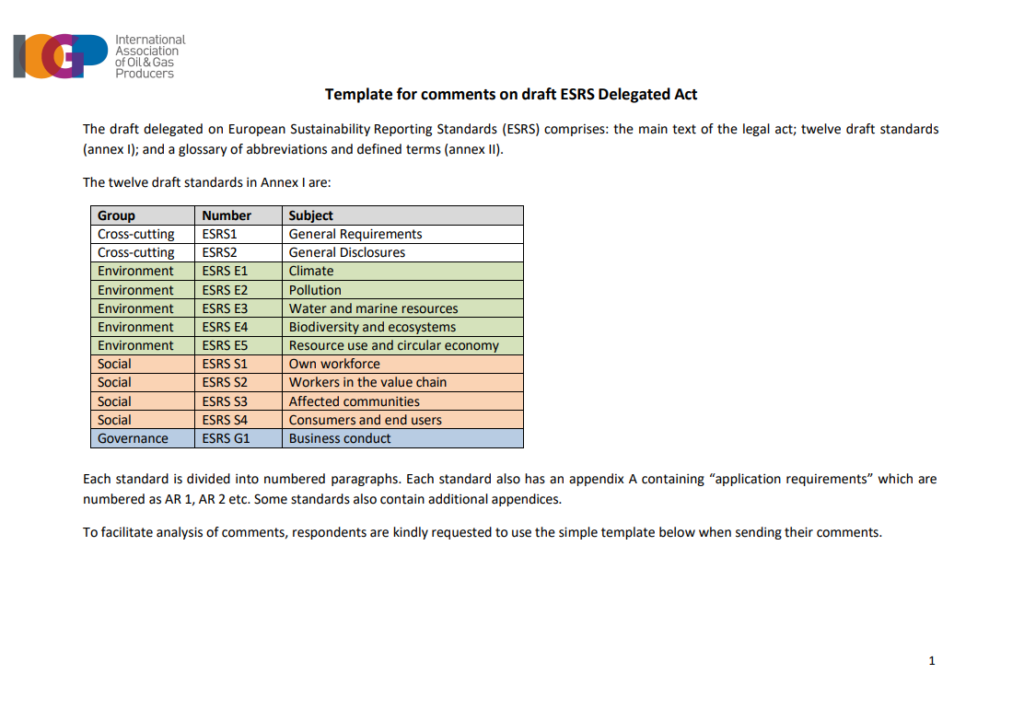

IOGP position paper on the European Commission’s public consultation on the EU climate target for 2040
IOGP Europe feedback on Net Zero Industry Act proposal
Joint industry statement on the EU Taxonomy
IOGP Europe views on the EU corporate sustainability reporting framework
IOGP input on the EU Commission’s public consultation on the EU Taxonomy Delegated Acts
IOGP position on capital requirements
IOGP response on revamping the Strategic Energy Technology (SET) Plan
IOGP position on the Corporate Sustainability Due Diligence Directive (CSDDD)
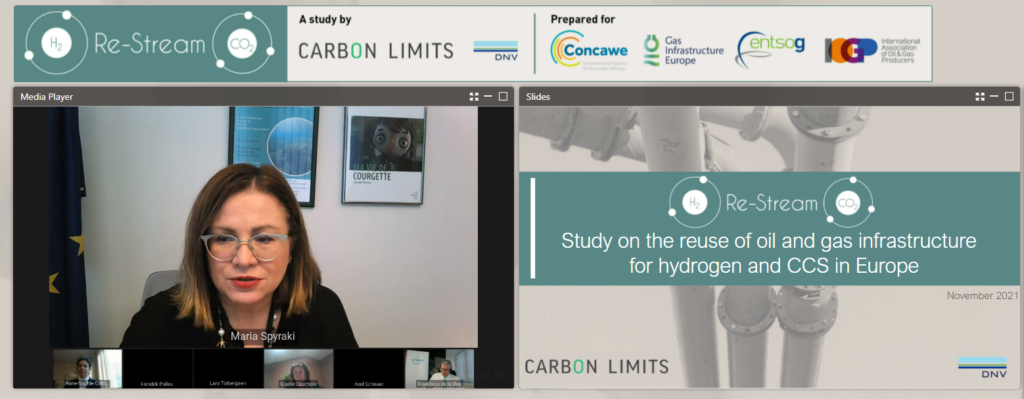
Re-Stream – Study on the reuse of oil and gas infrastructure for hydrogen and CCS in Europe
IOGP response to the public consultation on the Energy Taxation Directive (ETD) proposal
IOGP response to the public consultation on the Energy Efficiency Directive (EED) proposal
IOGP feedback on the Platform on Sustainable Finance’s draft report on preliminary recommendations for technical screening criteria for the EU taxonomy

IOGP response to the public consultation on the FuelEU Maritime proposal

IOGP feedback on the Platform on Sustainable Finance’s draft report on social taxonomy

IOGP feedback on the Platform on Sustainable Finance’s draft proposal for an extended taxonomy to support economic transition
IOGP response to public consultation on the revised Climate, Energy and Environmental Aid Guidelines (CEEAG)
IOGP Paper on metric to use for 2030 targets
IOGP position on the European Commission proposal on the update of the Corporate Sustainability Reporting Directive

FuelsEurope and IOGP position on the Draft Delegated Regulation on taxonomy related disclosures by undertakings reporting non-financial information

IOGP response to the roadmap on the modification of the General Block Exemption Regulation (GBER)
Response to consultation on proposal for an Initiative on Sustainable Corporate Governance
Consultation on the Review and the Revision of Energy Efficiency Directive
IOGP response to consultation on the revision of the Guidelines on State aid for environmental protection and energy (EEAG)
Response form for the Consultation Paper on the Draft advice to European Commission under Article 8 of the Taxonomy Regulation
IOGP input to the Commission’s Delegated Regulation establishing the technical screening criteria for economic activities contributing substantially to climate change mitigation or climate change adaptation
IOGP written input to the consultation “Maritime sector – a green post-COVID future”
IOGP views on competition policy supporting the European Green Deal
IOGP statement on the European Commission’s 2030 Climate Target Plan
IOGP written input to the public consultation on the revision of the Energy Taxation Directive (ETD)
IOGP contribution to the public consultation on Commission Decision setting the fees due to ACER for tasks under REMIT
IOGP written input to the consultation “2030 Climate Target Plan”
IOGP response to the inception impact assessment concerning the revision of the 2018 Renewable Energy Directive (REDII)

IOGP input to the public consultation for the FuelEU Maritime – Green Maritime Space Initiative
IOGP input to the IIA on the EC’s Delegated Regulation on taxonomy-related disclosures by undertakings reporting non-financial information
IOGP response to the consultation on ESG disclosures under Regulation (EU) 2019/2088
IOGP response to consultation on the renewed Sustainable Finance strategy
Funding CCS in Europe: key investments for the recovery
IOGP response to the public consultation on the revision of Regulation (EU) 347/2013 on guidelines for TEN-E Regulation
IOGP response to targeted consultation on the revision of Regulation (EU) 347/2013 on guidelines for TEN-E Regulation

IOGP input to the Roadmap on the EU Smart System Integration
IOGP feedback to the Combined Evaluation Roadmap/Inception Impact Assessment on the revision of Regulation (EU) 347/2013 on guidelines for TEN-E
IOGP response to the public consultation on the revision of the NFRD
Sustainability reporting guidance for the oil and gas industry
IOGP feedback to the roadmap for a Renovation Wave initiative for public and private buildings
IOGP input to the forthcoming EU Strategy for Energy System Integration
IOGP response to the EIB Group’s Climate Bank Roadmap 2021-2025
Input to the inception impact assessment on the FuelEU Maritime
IOGP Initial Feedback to the Taxonomy: Final report of the Technical Expert Group on Sustainable Finance
IOGP feedback to the proposed European Climate Law
Feedback to the impact inception assessment “2030 Climate Target Plan”
Response to the inception impact assessment “Commission Delegated Regulation on a climate change mitigation and adaptation taxonomy”

IOGP input to the Impact Inception Assessment on the Revision of the NFRD
New and old CCS projects in Europe: What’s different this time?
IOGP assessment of National Energy and Climate Plans

Scaling up Hydrogen in Europe
IOGP assessment of draft National Energy and Climate Plans
Call for feedback on TEG report on EU Taxonomy
The potential for CCS and CCU in Europe Report to the thirty second meeting of the European Gas Regulatory Forum 5-6 June 2019
IOGP response to the European Commission’s package on sustainable finance Call for a “Talanoa Platform” to guarantee a smart, inclusive and technology-neutral taxonomy
CCS: the Innovation Fund and beyond
OGP contribution to the CCS Directive evaluation

Majority of EU Member States call for postponement and targeted amendments to Methane Regulation
Declining number of announced CO₂ storage projects in Europe highlights gap between EU’s 2030 target and operational reality.
IAA: 14 associations call for greater ‘Permitability’ in Europe’s industrial framework
Joint Letter: Europe’s Response to High Energy Prices – Concerns Regarding a Natural Gas Price Cap

EU Methane Regulation Risks Severe Disruption to Europe’s Oil and Gas Supply from 2027
18 organizations call for smarter permitting to support EU competitiveness
Joint Statement: calling for reducing methane emissions while ensuring EU energy security
EU delivers landmark decision in quest to cut red tape, strengthen competitiveness and security of supply
Press Release: European Parliament backs meaningful simplification of sustainability rules
New Pact for the Mediterranean: an opportunity to foster the region’s energy integration

Clean Industrial Deal – How to reconcile climate ambition with industrial resilience?

Press release: 2040 Climate trajectory requires urgent action on policy enablers
Press release: State Aid Framework for Clean Industrial Deal marks a turn towards pragmatic decarbonization
Press release: Low-carbon fuels methodology envisaged by the Commission will block key hydrogen production pathways
Joint Letter: Accelerating investments in CO₂ infrastructure
Press Release: Roadmap to end Russian energy imports will require policy signals and regulatory adjustments to succeed.

MEP Jeannette Baljeu on the Crucial Role of CCS in Europe’s Industrial Transition
Draghi Report: a pragmatic pathway to Competitiveness, Sustainability, and Resilience
IOGP Europe joined BusinessEurope in industrial permitting task force
IOGP Europe signs the Antwerp Declaration
Press release: Recognition of CCS on path to 2050 marks a step change, but approach to low-carbon solutions remains too narrow.
Letter: The EU’s Corporate Sustainability Due Diligence Directive (CSDDD) – IOGP Europe and FuelsEurope recommendations in view of the trialogue negotiations
Letter: Strong support for an implementable and pragmatic Net Zero Industry Act Article 18 – solutions to make CCS work
Net-Zero Industry Act marks a step change in industrial and climate policy – EU paves way for carbon capture and storage scale-up
Letter: Open, inclusive, and pragmatic Green Deal Industrial Plan for Europe
Europe needs a CO2 storage ambition for 2050

Balance, strength and fairness: building blocks for a stronger Union
REPowerEU Plan: domestic gas production deserves stronger role alongside imports and renewables in enhancing EU energy resilience
Re-Powering the EU by protecting well-functioning markets, enhancing strategic partnerships and boosting domestic production
Inclusion of gas in the Taxonomy Regulation supports EU ambition to reach climate neutrality by 2050
Gas market reform marks a step change in EU approach to the transition
New Re-Stream study assesses the feasibility of transport of hydrogen and CO2 in European gas and oil infrastructure
More inclusion needed to be fit for 55
Letter: Call for a technology-inclusive revision of the TEN-E Regulation
“Hydrogen for Europe” study launch
Letter: IOGP input on the European Commission’s consultation on the priority list for the development of gas network codes and guidelines for 2021 (and beyond)
Letter: 57 industry leaders call for enhancing gas contribution to decarbonisation
EU Methane Strategy sets the right sequence to tackle the challenge

Sustainable Finance Webinars
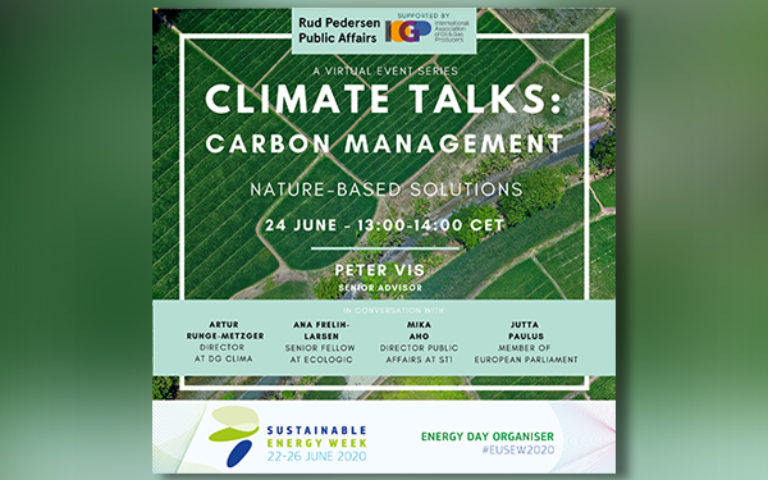
Carbon Management Webinars
Manifesto: Oil & Gas Industry Solutions Towards 2030 and 2050
IOGP Statement on the EU Recovery Plan

Climate change, purpose & doing the right thing: lessons from COVID-19

Guidelines for Methane Emissions target setting
Joint letter: CCS and CCU for the EU’s Industrial Transition
IOGP supports the EU’s objective of climate neutrality by 2050

Go Net Zero Energy Summit 2026 to Bring Together CEE Leaders in Bucharest


Takeaways from the Industry Summit: An energy system fit to support European competitiveness

Carbon Capture Europe Summit 2026 | Rotterdam | 11-12 March 2026




SPE Europe Energy Conference
Rebalancing Europe’s natural gas supplies – Learnings, future needs, and policy implications

Scaling up the energy transition whilst securing a stable suppy