IOGP Europe response to the European Commission’s consultation on the revised Sector Agnostic ESRS
Executive Summary
IOGP Europe welcomes the progress made by the European Commission in the revised draft Sector-Agnostic European Sustainability Reporting Standards (ESRS) published as part of the Omnibus I simplification package.
Compared to the November 2025 technical advice on draft simplified ESRS developed by EFRAG to the European Commission, the revised draft ESRS introduces several meaningful improvements that move the framework in a more proportionate, operable and decision-useful direction. The revised draft ESRS:
- strengthens the application of materiality and proportionality;
- recognizes more clearly top-down materiality assessment approaches;
- improves the operability of aggregation and disaggregation requirements;
- introduces more robust value chain feasibility safeguards;
- enhances flexibility in the application of GHG accounting boundaries;
- narrows pollutant scoping expectations
- removes secondary microplastics disclosure requirements; and
- introduces additional reliefs and phase-ins intended to reduce implementation burden.
These are important and constructive developments that must be preserved during the finalization of the Delegated Act.
At the same time, several core challenges remain only partially addressed.
While the revised draft reduces certain procedural complexities, it does not yet significantly reduce reporting burden, assurance exposure or legal uncertainty for companies operating within high capital-intensive sectors with complex, interdependent value chains, such as oil and gas. In particular:
- Fair presentation remains a binding overarching concept that risks reopening materiality and scoping decisions during assurance.
- Mandatory anticipated financial effects and CapEx and OpEx disclosures continue to require finance-grade analysis that cannot be consistently assured.
- There is no Tier 1 default for value chain scoping which leaves scope for expansive multi-tier expectations to develop over time.
Certain climate-related reporting requirements, including climate scenario assumptions and GHG accounting methodologies, together with Substances of Concern and human rights reporting provisions, continue to create operational uncertainty and inconsistencies with other frameworks.
Simplification should therefore be assessed not only by reductions in datapoints, but by whether the revised standards produce meaningful and durable reductions in implementation burden, assurance complexity and legal uncertainty.
IOGP Europe encourages the Commission to preserve the improvements already made while introducing further targeted refinements before adoption of the Delegated Act.
Recommendations
IOGP Europe calls on the Commission to:
- Preserve the positive developments made in the revised draft ESRS, particularly on materiality, proportionality, value chain feasibility, reliefs with no time limits, GHG accounting flexibility, pollutant scoping and removal of secondary microplastics.
- Confirm that proportionality mechanisms and reliefs are intended to operate as ongoing feasibility safeguards and cannot be progressively narrowed through assurance or supervisory interpretation.
- Make the application of fair presentation If retained, clarify that fair presentation does not constitute a separate assurance test beyond compliance with ESRS requirements and cannot be used to reopen materiality or scoping decisions.
- Confirm that disaggregation is required only where it demonstrably enhances user understanding and does not override materiality conclusions reached through a proportionate top-down approach.
- Clarify that value chain scoping defaults to direct (Tier 1) business relationships, with higher-tier assessment required only where impacts are demonstrably material, in line with the risk-based approach in CSDDD.
- Remove mandatory anticipated financial effects disclosures or, at a minimum, reduce them to voluntary qualitative information.
- Limit Capex and Opex disclosures to high level narrative, avoiding quantified financial allocation unless already produced for financial reporting purposes.
- Ensure greater consistency and precision in terminology.
- Align ESRS human rights frameworks references more closely with internationally recognized business-focused frameworks, including the UN Guiding Principles on Business and Human Rights.
- Remove references to 1.5°C scenarios with “no or limited overshoot” in ESRS E1.
- Confirm that ESRS E1 defers to the GHG Protocol in cases of methodological conflict that operational control and equity share approaches remain fully aligned with the GHG Protocol without additional ESRS-specific modifications, thereby avoiding the need for parallel emissions inventories for EU reporting purposes.
- Introduce explicit pollutant-scoping safe harbors allowing reliance on permitting and compliance data, clarify that pollutant scoping may be conducted centrally and on an activity basis, and confirm that transfers of pollutants to authorized external treatment facilities do not create additional value chain reporting obligations.
- Remove Substances of Concern and limit mandatory substance disclosures to SVHCs under REACH.
- Further clarify the application of the “substantiated” threshold and severity assessment for human rights incidents and align more closely with the EU Taxonomy approach focusing on established liability, and ensure closer alignment with internationally recognized human rights due diligence frameworks, including the UN Guiding Principles on Business and Human Rights.
For more information, download the full document to read the detailed rationale for our recommendations.

- Publications
- News
- Events

IOGP Europe’s Response to the Open Public Consultation on CSDDD Guidelines
IOGP Europe response to the European Commission’s consultation on the revised Maritime Spatial Planning Directive / Ocean Act

IOGP Europe position on Industrial Accelerator Act and recommendations for modifications

IOGP Europe’s response to the European Chemical Agency’s (ECHA) Socio-Economic Committee (SEAC) draft Opinion of the proposed ‘Universal-PFAS

Socio-Economic Analysis for a Reach Restriction Proposal on PFAS in the Upstream Oil & Gas, Oil Refining and Fuel Distribution Sectors, and in Carbon Capture and Storage

IOGP Europe response to EU Taxonomy Consultation on the Technical Screening Criteria Delegated Act amending the Climate Delegated Act

Delivering on the Omnibus I simplification mandate: IOGP Europe position on the draft Sector-Agnostic European Sustainability Reporting Standards (ESRS)

IOGP Europe response to the EU Taxonomy – review of Climate and Environmental Delegated Acts consultation

Joint industry letter ahead of the plenary vote on the First Omnibus Simplification Package

Amended ESRS Exposure Draft July 2025 Public Consultation Survey

IOGP Europe response to ESMA Consultation on the draft technical standards under the ESG Ratings Regulation

Omnibus Simplification Package: Open Letter with Eurogas and FuelsEurope
Simplification Omnibus Package: towards a proportionate, coherent and efficient sustainability framework for European competitiveness

Joint Position Paper – Extending the ‘Stop-the-Clock’ Initiative to Wave 1 Companies

IOGP Europe Response to the Consultation on the Review of the Taxonomy Climate Delegated Act
IOGP Europe recommendations for the Omnibus proposal

Joint Trade Association Statement: Towards EU due diligence that works for all
EU Taxonomy Stakeholder Request Mechanism
IOGP consultation response to draft EFRAG Value Chain Implementation Guidance (VCIG)
Download
IOGP consultation response: Rationalisation of reporting requirements
Joint industry statement on the EU Taxonomy
IOGP Europe views on the EU corporate sustainability reporting framework
IOGP input on the EU Commission’s public consultation on the EU Taxonomy Delegated Acts
IOGP position on capital requirements
IOGP position on the Corporate Sustainability Due Diligence Directive (CSDDD)
IOGP feedback on the Platform on Sustainable Finance’s draft report on preliminary recommendations for technical screening criteria for the EU taxonomy

IOGP feedback on the Platform on Sustainable Finance’s draft report on social taxonomy

IOGP feedback on the Platform on Sustainable Finance’s draft proposal for an extended taxonomy to support economic transition
IOGP position on the European Commission proposal on the update of the Corporate Sustainability Reporting Directive
FuelsEurope and IOGP position on the Draft Delegated Regulation on taxonomy related disclosures by undertakings reporting non-financial information
IOGP response to the roadmap on the modification of the General Block Exemption Regulation (GBER)

Response to consultation on proposal for an Initiative on Sustainable Corporate Governance
Response form for the Consultation Paper on the Draft advice to European Commission under Article 8 of the Taxonomy Regulation
IOGP input to the Commission’s Delegated Regulation establishing the technical screening criteria for economic activities contributing substantially to climate change mitigation or climate change adaptation
IOGP input to the IIA on the EC’s Delegated Regulation on taxonomy-related disclosures by undertakings reporting non-financial information
IOGP response to the consultation on ESG disclosures under Regulation (EU) 2019/2088
IOGP response to consultation on the renewed Sustainable Finance strategy
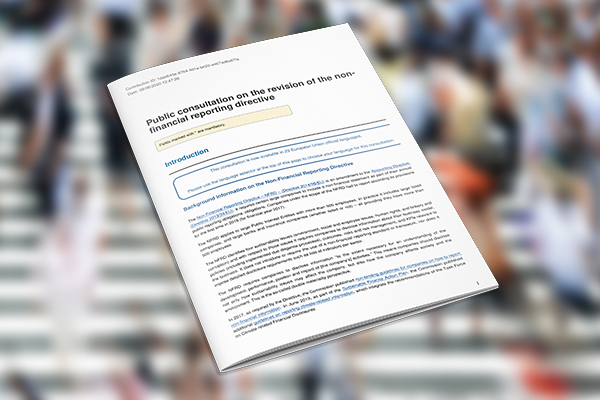
IOGP response to the public consultation on the revision of the NFRD
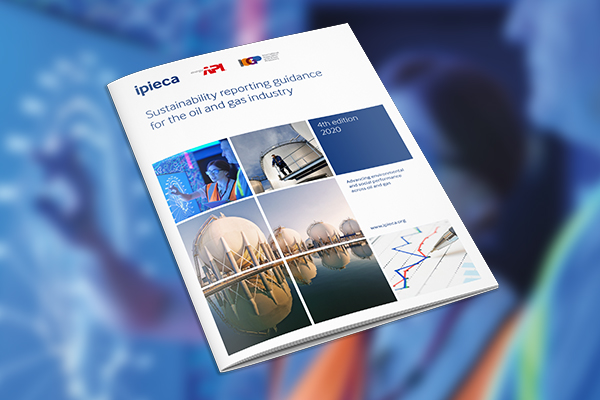
Sustainability reporting guidance for the oil and gas industry
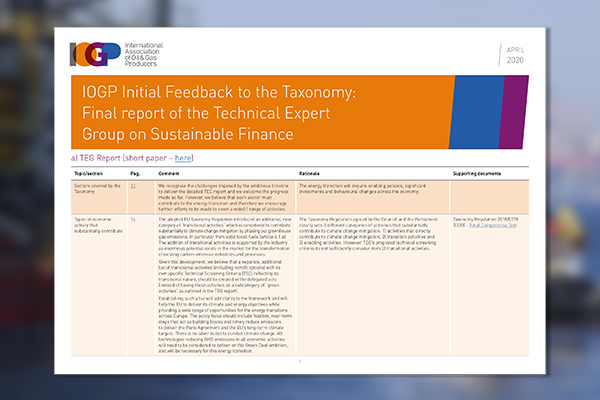
IOGP Initial Feedback to the Taxonomy: Final report of the Technical Expert Group on Sustainable Finance
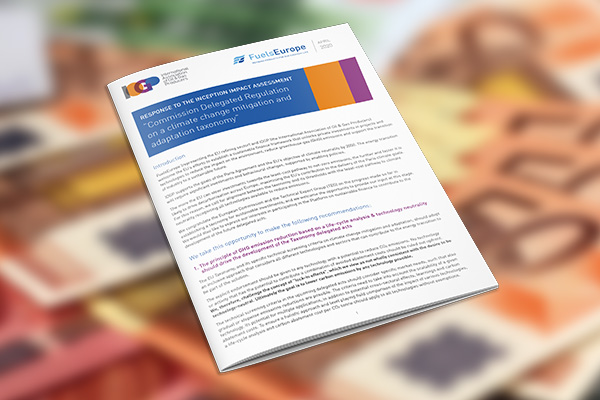
Response to the inception impact assessment “Commission Delegated Regulation on a climate change mitigation and adaptation taxonomy”

IOGP input to the Impact Inception Assessment on the Revision of the NFRD
Call for feedback on TEG report on EU Taxonomy
IOGP response to the European Commission’s package on sustainable finance Call for a “Talanoa Platform” to guarantee a smart, inclusive and technology-neutral taxonomy

Press Release: European Parliament backs meaningful simplification of sustainability rules
Letter: The EU’s Corporate Sustainability Due Diligence Directive (CSDDD) – IOGP Europe and FuelsEurope recommendations in view of the trialogue negotiations
Inclusion of gas in the Taxonomy Regulation supports EU ambition to reach climate neutrality by 2050

Sustainable Finance Webinars