IOGP Europe response to EU Taxonomy Consultation on the Technical Screening Criteria Delegated Act amending the Climate Delegated Act
Executive Summary
IOGP Europe welcomes the European Commission’s draft Delegated Act (DA) amending the Climate Delegated Act and supports its objective of “ensuring that the Technical Screening Criteria (TSC) remain clear, coherent and workable in practice while preserving their environmental integrity.”
The draft DA makes progress in improving usability through:
- The introduction of a screening-first approach to Appendix A climate change adaptation
- Broader use of existing regulatory documentation, including permits and Environmental Impact Assessments (EIAs)
- Targeted simplifications in selected activities
These changes improve the operational usability of the TSC.
However, the draft DA does not fully address persistent implementation challenges. This is particularly the case where requirements are highly granular, ambiguous or not aligned with how projects are assessed, permitted and managed across different jurisdictions.
In practice, companies face a disproportionate administrative burden in demonstrating compliance with Do No Significant Harm (DNSH) criteria, especially:
- at early project stages where key data, including lifecycle emissions, is not yet available,
- across large portfolios of similar or geographically dispersed assets, and
- for small-scale or low-impact activities that are not material to overall environmental performance
- where data is held by suppliers or joint venture partners and is not directly accessible
Additionally, reliance on EU-specific regulatory references without a clear equivalence framework creates challenges for globally operated assets. This results in duplication of effort, mapping exercises and, in some cases, conservative interpretations that lead to under-reporting of aligned activities.
A number of structural issues remain unresolved, including the lack of recognition for the entire CCS value chain, limited recognition of integrated industrial systems such as bioenergy, and the lack of technology-neutral transition pathways.
Addressing these issues would not require lowering environmental ambition but rather ensuring that the TSC is proportionate, interoperable and aligned with how projects are developed and operated.
Key recommendations:
IOGP Europe recommends that the Commission:
1. Clarify climate scenario requirements
Explicitly allow the use of Shared Socioeconomic Pathway-based scenarios aligned with Intergovernmental Panel on Climate Change Assessment Report 6 (IPCC AR6).
2. Introduce a clear equivalence approach for third-country regimes
Make it explicit that compliance can be demonstrated through third-country national regulatory frameworks and permits that achieve comparable outcomes.
3. Clarify the application of Appendix C
For projects outside of the EU, provide a practical pathway for demonstrating compliance through equivalent third-country chemicals frameworks and avoid duplicative requirements beyond existing EU chemicals legislation.
4. Apply proportionality and materiality more consistently
Reflect differences in scale and risk, including allowing representative sampling for portfolios and avoiding full assessments for small or low impact assets.
5. Clarify evidence expectations
Provide clearer guidance where data is not directly accessible, especially in supply chains and joint ventures, and where projects are at an early stage.
6. Confirm the treatment of legacy assets
Make clear that design and construction requirements are assessed against the rules applicable at the time of permitting, and that valid permits remain the basis for operational compliance.
7. Align minimum safeguards with corporate level processes
Avoid project-by-project documentation where robust governance and reporting exist at a group level.
8. Address remaining structural gaps and activity specific challenges
In particular, those relating to CCS value chain coverage, bioenergy scope, RD&I thresholds and technology neutral transition pathways.
Download the document for more details

- Publications
- News
- Events

IOGP Europe’s Response to the Open Public Consultation on CSDDD Guidelines
IOGP Europe response to the European Commission’s consultation on the revised Maritime Spatial Planning Directive / Ocean Act

IOGP Europe position on Industrial Accelerator Act and recommendations for modifications

IOGP Europe response to the European Commission’s consultation on the revised Sector Agnostic ESRS

IOGP Europe’s response to the European Chemical Agency’s (ECHA) Socio-Economic Committee (SEAC) draft Opinion of the proposed ‘Universal-PFAS

Socio-Economic Analysis for a Reach Restriction Proposal on PFAS in the Upstream Oil & Gas, Oil Refining and Fuel Distribution Sectors, and in Carbon Capture and Storage

Delivering on the Omnibus I simplification mandate: IOGP Europe position on the draft Sector-Agnostic European Sustainability Reporting Standards (ESRS)

IOGP Europe response to the EU Taxonomy – review of Climate and Environmental Delegated Acts consultation

Joint industry letter ahead of the plenary vote on the First Omnibus Simplification Package

Amended ESRS Exposure Draft July 2025 Public Consultation Survey

IOGP Europe response to ESMA Consultation on the draft technical standards under the ESG Ratings Regulation

Omnibus Simplification Package: Open Letter with Eurogas and FuelsEurope
Simplification Omnibus Package: towards a proportionate, coherent and efficient sustainability framework for European competitiveness

Joint Position Paper – Extending the ‘Stop-the-Clock’ Initiative to Wave 1 Companies

IOGP Europe Response to the Consultation on the Review of the Taxonomy Climate Delegated Act
IOGP Europe recommendations for the Omnibus proposal

Joint Trade Association Statement: Towards EU due diligence that works for all
EU Taxonomy Stakeholder Request Mechanism
IOGP consultation response to draft EFRAG Value Chain Implementation Guidance (VCIG)
Download
IOGP consultation response: Rationalisation of reporting requirements
Joint industry statement on the EU Taxonomy
IOGP Europe views on the EU corporate sustainability reporting framework
IOGP input on the EU Commission’s public consultation on the EU Taxonomy Delegated Acts
IOGP position on capital requirements
IOGP position on the Corporate Sustainability Due Diligence Directive (CSDDD)
IOGP feedback on the Platform on Sustainable Finance’s draft report on preliminary recommendations for technical screening criteria for the EU taxonomy

IOGP feedback on the Platform on Sustainable Finance’s draft report on social taxonomy
IOGP feedback on the Platform on Sustainable Finance’s draft proposal for an extended taxonomy to support economic transition
IOGP position on the European Commission proposal on the update of the Corporate Sustainability Reporting Directive
FuelsEurope and IOGP position on the Draft Delegated Regulation on taxonomy related disclosures by undertakings reporting non-financial information
IOGP response to the roadmap on the modification of the General Block Exemption Regulation (GBER)
Response to consultation on proposal for an Initiative on Sustainable Corporate Governance
Response form for the Consultation Paper on the Draft advice to European Commission under Article 8 of the Taxonomy Regulation
IOGP input to the Commission’s Delegated Regulation establishing the technical screening criteria for economic activities contributing substantially to climate change mitigation or climate change adaptation
IOGP input to the IIA on the EC’s Delegated Regulation on taxonomy-related disclosures by undertakings reporting non-financial information
IOGP response to the consultation on ESG disclosures under Regulation (EU) 2019/2088
IOGP response to consultation on the renewed Sustainable Finance strategy
IOGP response to the public consultation on the revision of the NFRD
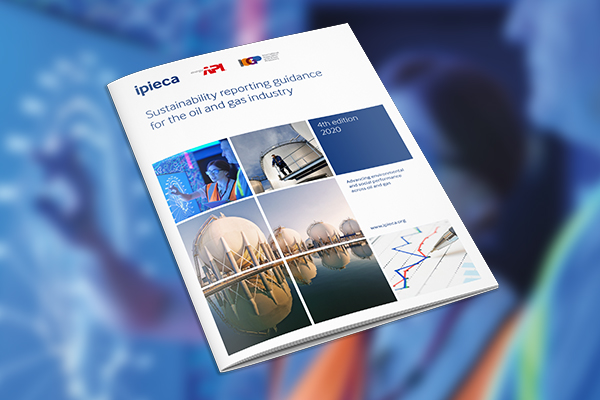
Sustainability reporting guidance for the oil and gas industry
IOGP Initial Feedback to the Taxonomy: Final report of the Technical Expert Group on Sustainable Finance
Response to the inception impact assessment “Commission Delegated Regulation on a climate change mitigation and adaptation taxonomy”

IOGP input to the Impact Inception Assessment on the Revision of the NFRD
Call for feedback on TEG report on EU Taxonomy
IOGP response to the European Commission’s package on sustainable finance Call for a “Talanoa Platform” to guarantee a smart, inclusive and technology-neutral taxonomy

Press Release: European Parliament backs meaningful simplification of sustainability rules
Letter: The EU’s Corporate Sustainability Due Diligence Directive (CSDDD) – IOGP Europe and FuelsEurope recommendations in view of the trialogue negotiations
Inclusion of gas in the Taxonomy Regulation supports EU ambition to reach climate neutrality by 2050

Sustainable Finance Webinars