Socio-Economic Analysis for a Reach Restriction Proposal on PFAS in the Upstream Oil & Gas, Oil Refining and Fuel Distribution Sectors, and in Carbon Capture and Storage
This study has been commissioned by Concawe and IOGP to provide an independent Socio-Economic Analysis (SEA for the potential EU REACH restriction of Per- and polyfluoroalkyl substances (PFAS).
This analysis focuses on upstream Oil & Gas (O&G), carbon capture and storage (CCS), refinery operations, renewable fuels and fuel distribution sectors.
This study served as the basis of IOGP Europe's response to the European Chemical Agency’s (ECHA) Socio-Economic Committee (SEAC) draft Opinion of the proposed ‘Universal-PFAS Restriction’.
Building on IOGP Europe’s PFAS Restriction Position Statement of January 2026, and underpinned by this independent socio-economic analysis of the potential impacts of a Universal PFAS Restriction on the oil, gas, and carbon capture and storage (CCS) sectors IOGP Europe’s response:
- acknowledges that certain PFAS compounds are persistent, bioaccumulative / mobile and toxic, widely distributed in the environment, and justify further control;
- describes how not all PFAS are alike: ranging from liquid/ aqueous fluorosurfactants to F-gases, to solid fluoropolymers and elastomers, the hazard properties vary greatly amongst the PFAS family;
- explains that use of fluoropolymers in industrial components and composite materials are unlikely to generate significant environmental emissions or risks;
- outlines how the oil and gas sector already uses PFAS-free alternatives for certain uses (including some hydrocarbon reservoir tracers, anti-foam agents), but notes that there are no known alternatives for the fluoropolymers and fluoroelastomers that are needed to meet the challenging requirements (high temperature stability, chemical corrosion resistant, low-friction and material flexibility) to maintain safe and reliable operations;
- demonstrates that the costs of a restriction on polymeric-PFAS outweigh the environmental and social benefits that would be derived;
- advocates to exclude fluoropolymers and fluoroelastomers from the proposed Restriction, whilst recognising that stronger controls on fluoropolymer production (under the EU Industrial Emissions Directive) and end-of-life materials management may be required;
Download the report for more information

- Publications
- News
- Events
IOGP Europe’s Response to the Open Public Consultation on CSDDD Guidelines
IOGP Europe response to the European Commission’s consultation on the revised Maritime Spatial Planning Directive / Ocean Act

IOGP Europe position on Industrial Accelerator Act and recommendations for modifications

IOGP Europe response to the European Commission’s consultation on the revised Sector Agnostic ESRS

IOGP Europe’s response to the European Chemical Agency’s (ECHA) Socio-Economic Committee (SEAC) draft Opinion of the proposed ‘Universal-PFAS

IOGP Europe response to EU Taxonomy Consultation on the Technical Screening Criteria Delegated Act amending the Climate Delegated Act

Delivering on the Omnibus I simplification mandate: IOGP Europe position on the draft Sector-Agnostic European Sustainability Reporting Standards (ESRS)

IOGP Europe response to the EU Taxonomy – review of Climate and Environmental Delegated Acts consultation

Joint industry letter ahead of the plenary vote on the First Omnibus Simplification Package
Amended ESRS Exposure Draft July 2025 Public Consultation Survey

IOGP Europe response to ESMA Consultation on the draft technical standards under the ESG Ratings Regulation

Omnibus Simplification Package: Open Letter with Eurogas and FuelsEurope
Simplification Omnibus Package: towards a proportionate, coherent and efficient sustainability framework for European competitiveness

Joint Position Paper – Extending the ‘Stop-the-Clock’ Initiative to Wave 1 Companies

IOGP Europe Response to the Consultation on the Review of the Taxonomy Climate Delegated Act
IOGP Europe recommendations for the Omnibus proposal

Joint Trade Association Statement: Towards EU due diligence that works for all
EU Taxonomy Stakeholder Request Mechanism
IOGP consultation response to draft EFRAG Value Chain Implementation Guidance (VCIG)
Download
IOGP consultation response: Rationalisation of reporting requirements
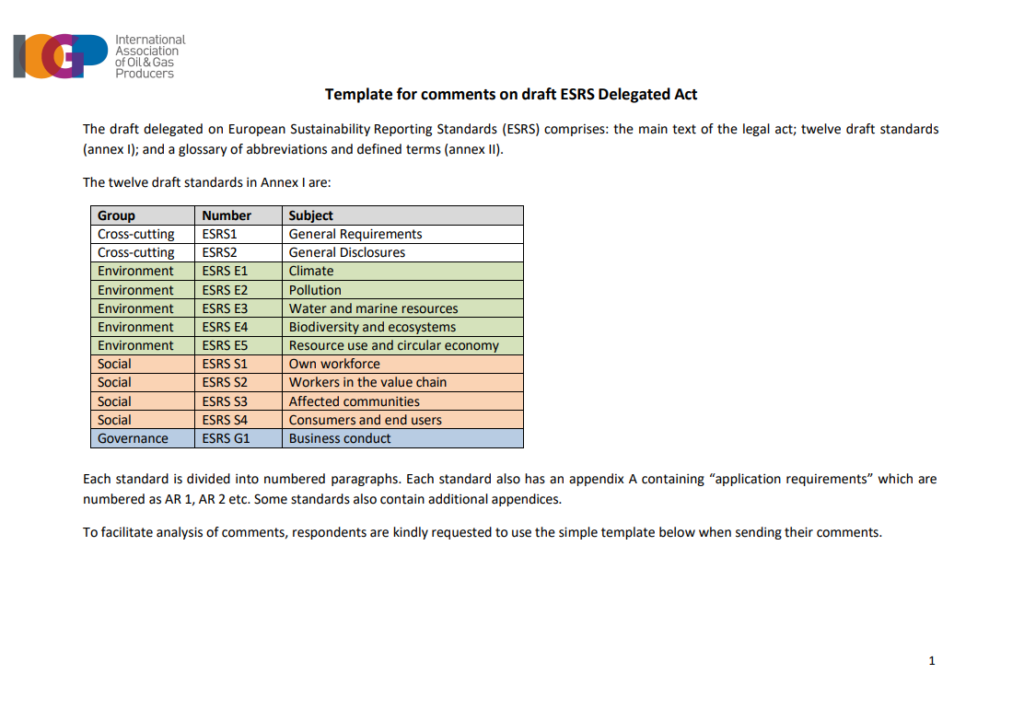
Joint industry statement on the EU Taxonomy
IOGP Europe views on the EU corporate sustainability reporting framework
IOGP input on the EU Commission’s public consultation on the EU Taxonomy Delegated Acts
IOGP position on capital requirements
IOGP position on the Corporate Sustainability Due Diligence Directive (CSDDD)
IOGP feedback on the Platform on Sustainable Finance’s draft report on preliminary recommendations for technical screening criteria for the EU taxonomy

IOGP feedback on the Platform on Sustainable Finance’s draft report on social taxonomy
IOGP feedback on the Platform on Sustainable Finance’s draft proposal for an extended taxonomy to support economic transition
IOGP position on the European Commission proposal on the update of the Corporate Sustainability Reporting Directive
FuelsEurope and IOGP position on the Draft Delegated Regulation on taxonomy related disclosures by undertakings reporting non-financial information
IOGP response to the roadmap on the modification of the General Block Exemption Regulation (GBER)
Response to consultation on proposal for an Initiative on Sustainable Corporate Governance
Response form for the Consultation Paper on the Draft advice to European Commission under Article 8 of the Taxonomy Regulation
IOGP input to the Commission’s Delegated Regulation establishing the technical screening criteria for economic activities contributing substantially to climate change mitigation or climate change adaptation
IOGP input to the IIA on the EC’s Delegated Regulation on taxonomy-related disclosures by undertakings reporting non-financial information
IOGP response to the consultation on ESG disclosures under Regulation (EU) 2019/2088
IOGP response to consultation on the renewed Sustainable Finance strategy
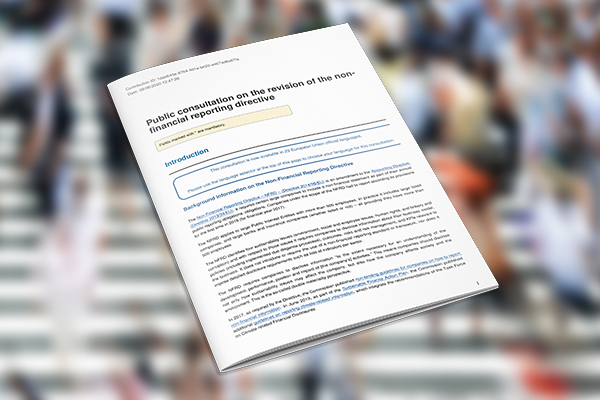
IOGP response to the public consultation on the revision of the NFRD
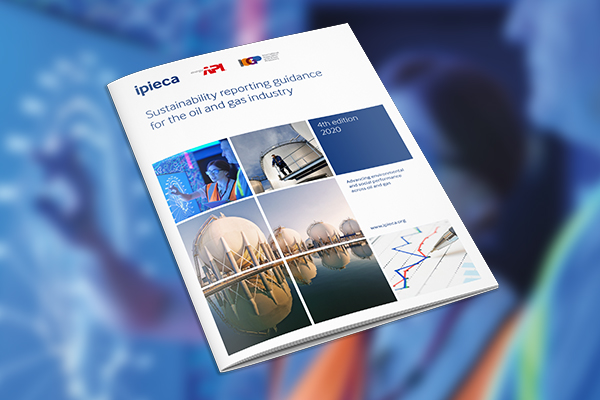
Sustainability reporting guidance for the oil and gas industry
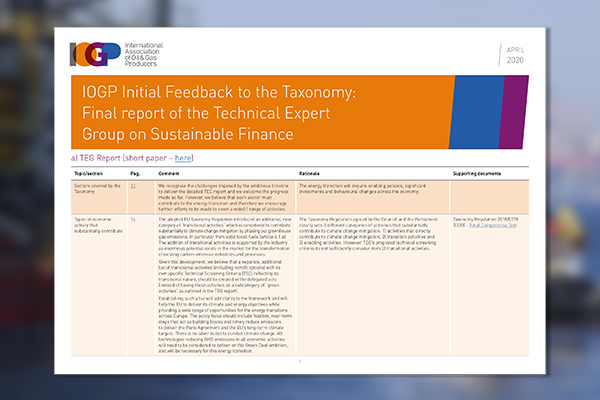
IOGP Initial Feedback to the Taxonomy: Final report of the Technical Expert Group on Sustainable Finance
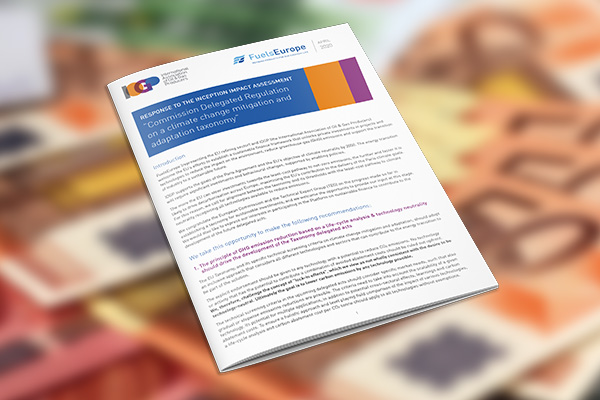
Response to the inception impact assessment “Commission Delegated Regulation on a climate change mitigation and adaptation taxonomy”

IOGP input to the Impact Inception Assessment on the Revision of the NFRD
Call for feedback on TEG report on EU Taxonomy
IOGP response to the European Commission’s package on sustainable finance Call for a “Talanoa Platform” to guarantee a smart, inclusive and technology-neutral taxonomy

Press Release: European Parliament backs meaningful simplification of sustainability rules
Letter: The EU’s Corporate Sustainability Due Diligence Directive (CSDDD) – IOGP Europe and FuelsEurope recommendations in view of the trialogue negotiations
Inclusion of gas in the Taxonomy Regulation supports EU ambition to reach climate neutrality by 2050

Sustainable Finance Webinars