
21.05.2026
IOGP Europe’s response to the European Chemical Agency’s (ECHA) Socio-Economic Committee (SEAC) draft Opinion of the proposed ‘Universal-PFAS
Building on IOGP Europe’s PFAS Restriction Position Statement of January 2026, and underpinned by a new independent socio-economic analysis of the potential impacts of a Universal PFAS Restriction on the oil, gas, and carbon capture and storage (CCS) sectors (Ricardo, 2026), IOGP Europe’s response:
- acknowledges that certain PFAS compounds are persistent, bioaccumulative / mobile and toxic, widely distributed in the environment, and justify further control;
- describes how not all PFAS are alike: ranging from liquid/ aqueous fluorosurfactants to F-gases, to solid fluoropolymers and elastomers, the hazard properties vary greatly amongst the PFAS family;
- explains that use of fluoropolymers in industrial components and composite materials are unlikely to generate significant environmental emissions or risks;
- outlines how the oil and gas sector already uses PFAS-free alternatives for certain uses (including some hydrocarbon reservoir tracers, anti-foam agents), but notes that there are no known alternatives for the fluoropolymers and fluoroelastomers that are needed to meet the challenging requirements (high temperature stability, chemical corrosion resistant, low-friction and material flexibility) to maintain safe and reliable operations;
- demonstrates that the costs of a restriction on polymeric-PFAS outweigh the environmental and social benefits that would be derived;
- advocates to exclude fluoropolymers and fluoroelastomers from the proposed Restriction, whilst recognising that stronger controls on fluoropolymer production (under the EU Industrial Emissions Directive) and end-of-life materials management may be required;
The Ricardo (2026) SEA report was jointly commissioned by IOGP and Concawe to cover both the Upstream oil and gas and Downstream refined products value chains, as well as the CCS sector.

- Publications
- News
- Events
22.07.2026
Consultation Response
IOGP Europe’s Response to the Open Public Consultation on CSDDD Guidelines
Download the document to view IOGP Europe Response's to the Open Public Consultation on CSDDD Guidelines....
Read more
15.07.2026
Consultation Response
IOGP Europe response to the European Commission’s consultation on the revised Maritime Spatial Planning Directive / Ocean Act
Executive summary
IOGP Europe recognises the value of maritime spatial planning for Europe’s busy seas and supports the objective to protect and enhance the health of the seas, whilst simultaneousl...
Read more

16.06.2026
Position Paper
IOGP Europe position on Industrial Accelerator Act and recommendations for modifications
Executive Summary
IOGP Europe recognises the Industrial Accelerator Act (IAA) as a positive step toward the creation of lead markets to stimulate demand for low-carbon products. To fully realise this...
Read more

03.06.2026
Consultation Response
IOGP Europe response to the European Commission’s consultation on the revised Sector Agnostic ESRS
Executive Summary
IOGP Europe welcomes the progress made by the European Commission in the revised draft Sector-Agnostic European Sustainability Reporting Standards (ESRS) published as part of the Om...
Read more

21.05.2026
Report & Study
Socio-Economic Analysis for a Reach Restriction Proposal on PFAS in the Upstream Oil & Gas, Oil Refining and Fuel Distribution Sectors, and in Carbon Capture and Storage
This study has been commissioned by Concawe and IOGP to provide an independent Socio-Economic Analysis (SEA for the potential EU REACH restriction of Per- and polyfluoroalkyl substances (PFAS).
This...
Read more

13.04.2026
Consultation Response
IOGP Europe response to EU Taxonomy Consultation on the Technical Screening Criteria Delegated Act amending the Climate Delegated Act
Executive Summary
IOGP Europe welcomes the European Commission’s draft Delegated Act (DA) amending the Climate Delegated Act and supports its objective of “ensuring that the Technical Screening C...
Read more

02.02.2026
Position Statement
Delivering on the Omnibus I simplification mandate: IOGP Europe position on the draft Sector-Agnostic European Sustainability Reporting Standards (ESRS)
EXECUTIVE SUMMARY
The Omnibus I simplification package was intended to materially reduce sustainability reporting burden while preserving decision-useful information. Despite a simplified structure,...
Read more

08.12.2025
Consultation Response
IOGP Europe response to the EU Taxonomy – review of Climate and Environmental Delegated Acts consultation
IOGP Europe welcomes the review of the Climate and Environmental Delegated Acts. We support the Commission’s objective to simplify the EU Taxonomy in line with the Competitiveness Compass and the Om...
Read more

21.10.2025
Joint letter
Joint industry letter ahead of the plenary vote on the First Omnibus Simplification Package
Dear Member of the European Parliament,
In light of the upcoming plenary vote on the First Omnibus Simplification Package, we write to urge you to reconsider the JURI Committee report in line with...
Read more
30.09.2025
Consultation Response
Amended ESRS Exposure Draft July 2025 Public Consultation Survey
IOGP Europe has submitted its response to EFRAG’s consultation on the Amended European Sustainability Reporting Standards (ESRS), a consultation that was launched at the explicit request of the Euro...
Read more

18.06.2025
Consultation Response
IOGP Europe response to ESMA Consultation on the draft technical standards under the ESG Ratings Regulation
IOGP Europe welcomes the opportunity to contribute to ESMA’s consultation on the draft Regulatory Technical Standards (RTS) under the ESG Ratings Regulation.
We strongly support ESMA’s objectiv...
Read more

03.06.2025
Joint letter and Letter to Officials
Omnibus Simplification Package: Open Letter with Eurogas and FuelsEurope
Omnibus Simplification Package - How simplification can drive ambition, reduce burden, and strengthen Europe's competitiveness
To: Roberta Metsola, President of the European Parliament, Donald Tusk,...
Read more
20.05.2025
Position Statement
Simplification Omnibus Package: towards a proportionate, coherent and efficient sustainability framework for European competitiveness
IOGP Europe welcomes the European Commission’s first Omnibus Simplification Package as a long-overdue step toward a more coherent and investment-friendly regulatory environment.
Simplification does...
Read more

27.03.2025
Position Statement
Joint Position Paper – Extending the ‘Stop-the-Clock’ Initiative to Wave 1 Companies
IOGP Europe, FuelsEurope, Euromines, and the International Copper Association Europe have co-signed a joint position paper calling on the European Commission to extend the scope of the "Stop-the-Clock...
Read more

05.02.2025
Consultation Response
IOGP Europe Response to the Consultation on the Review of the Taxonomy Climate Delegated Act
In February 2025, IOGP Europe submitted its response to the EU Platform on Sustainable Finance’s consultation on the review of the Taxonomy Climate Delegated Act. This consultation aims to refine th...
Read more
27.01.2025
Position Statement
IOGP Europe recommendations for the Omnibus proposal
IOGP Europe strongly supports the European Commission’s commitment to simplifying and reducing reporting and compliance obligations by 25%, as outlined by President von der Leyen in March 2023 and r...
Read more

05.11.2024
Position Statement
Joint Trade Association Statement: Towards EU due diligence that works for all
The European Green Deal is now moving into the implementation and transposition phases which present significant complexity and therefore uncertainty. The Corporate Sustainability Due Diligence Direct...
Read more
15.02.2024
Consultation Response
EU Taxonomy Stakeholder Request Mechanism
The Stakeholder Request Mechanism is the tool launched by the Platform on Sustainable Finance (PSF) to overall improve the usability of the Taxonomy Regulation.
IOGP Europe provided its feedback to...
Read more
05.02.2024
Consultation Response
IOGP consultation response to draft EFRAG Value Chain Implementation Guidance (VCIG)
Download
12.12.2023
Consultation Response
IOGP consultation response: Rationalisation of reporting requirements
IOGP Europe supports the European Commission’s consultation aimed at identifying and streamlining reporting requirements in numerous EU legislations. This is in line with what was announced in the s...
Read more
13.06.2023
Position Statement
Joint industry statement on the EU Taxonomy
The EU Taxonomy needs simpler rules to foster low-carbon investments and reflect sustainability efforts.
(Brussels, 7 June 2023) The design of the EU Taxonomy framework makes it challenging for oil a...
Read more
26.05.2023
Position Statement
IOGP Europe views on the EU corporate sustainability reporting framework
Ths document outlines IOGP Europe's views on the EU corporate sustainability reporting framework.
IOGP Europe acknowledges the growing needs and expectations of stakeholders for more transparency a...
Read more
15.05.2023
Consultation Response
IOGP input on the EU Commission’s public consultation on the EU Taxonomy Delegated Acts
This document provides IOGP’s input to the EU Commission’s public consultation on the so-called ‘Taxonomy Package’ including:
Delegated Act on 4 environmental objectives (Taxo4);
A rev...
Read more
10.02.2023
Position Statement
IOGP position on capital requirements
This document provides IOGP's position on capital requirements. This paper was drafted in response to the revision of the Capital Requirements Regulation (CRR), part of the review of EU banking rules...
Read more
03.06.2022
Position Statement
IOGP position on the Corporate Sustainability Due Diligence Directive (CSDDD)
This document provides IOGP's position on the Corporate Sustainability Due Diligence Directive (CSDDD).
The paper includes IOGP's main concerns and recommendations on how to establish a corporate d...
Read more
12.10.2021
Consultation Response
IOGP feedback on the Platform on Sustainable Finance’s draft report on preliminary recommendations for technical screening criteria for the EU taxonomy
September 2021
This document provides IOGP’s feedback to the draft report on preliminary recommendations for technical screening criteria for the EU taxonomy, by the Platform...
Read more

26.08.2021
Consultation Response
IOGP feedback on the Platform on Sustainable Finance’s draft report on social taxonomy
This document provides IOGP’s feedback to the first draft report on a proposal for a social taxonomy, published by the Platform on Sustainable Finance.
The Platform brings together experti...
Read more
26.08.2021
Consultation Response
IOGP feedback on the Platform on Sustainable Finance’s draft proposal for an extended taxonomy to support economic transition
This document provides IOGP’s feedback to the first draft proposal for an extended taxonomy to support economic transition, published by the Platform on Sustainable Finance.
The Platform br...
Read more
19.06.2021
Consultation Response
IOGP position on the European Commission proposal on the update of the Corporate Sustainability Reporting Directive
This document provides IOGP’s recommendations in view of the Commission proposal on the update of the Corporate Sustainability Reporting Directive (CSRD).
Context
IOGP acknowle...
Read more
03.06.2021
Position Statement
FuelsEurope and IOGP position on the Draft Delegated Regulation on taxonomy related disclosures by undertakings reporting non-financial information
FuelsEurope and IOGP appreciate the EU’s efforts to establish a sustainable finance framework that mobilises private funds to reduce greenhouse gas emissions and environmental impacts. Corpora...
Read more
21.04.2021
Consultation Response
IOGP response to the roadmap on the modification of the General Block Exemption Regulation (GBER)
This document provides IOGP’s response to the roadmap on the modification of the General Block Exemption Regulation (GBER) for the Green Deal and the Industrial and Digital Strategies.
&nbs...
Read more
15.02.2021
Consultation Response
Response to consultation on proposal for an Initiative on Sustainable Corporate Governance
This document provides IOGP’s response to the EU public consultation (questionnaire) on the proposal for an Initiative on Sustainable Corporate Governance.
Context
This public cons...
Read more
18.12.2020
Consultation Response
Response form for the Consultation Paper on the Draft advice to European Commission under Article 8 of the Taxonomy Regulation
This document provides IOGP’s response to the Consultation Paper on the Draft advice to European Commission under Article 8 of the Taxonomy Regulation.
Context
IOGP recognises and...
Read more
16.12.2020
Consultation Response
IOGP input to the Commission’s Delegated Regulation establishing the technical screening criteria for economic activities contributing substantially to climate change mitigation or climate change adaptation
This document provides IOGP’s input and recommendations to the development of the upcoming first Delegated Regulation on climate change mitigation and adaptation.
Key Points
...
Read more
10.09.2020
Consultation Response
IOGP input to the IIA on the EC’s Delegated Regulation on taxonomy-related disclosures by undertakings reporting non-financial information
This document provides IOGP’s input to the Impact Inception Assessment on the European Commission’s Delegated Regulation on taxonomy-related disclosures by undertakings reporting non-financi...
Read more
04.09.2020
Consultation Response
IOGP response to the consultation on ESG disclosures under Regulation (EU) 2019/2088
This document provides IOGP’s response to the consultation paper laying out the proposed Regulatory Technical Standards (RTS) on content, methodologies and presentation of disclosures under th...
Read more
23.07.2020
Consultation Response
IOGP response to consultation on the renewed Sustainable Finance strategy
This document provides IOGP’s response to the consultation on the renewed Sustainable Finance strategy.
The response to the consultation is sent through an online questionna...
Read more
12.06.2020
Consultation Response
IOGP response to the public consultation on the revision of the NFRD
This document provides IOGP’s contribution to the public consultation on the revision of the Non-Financial Reporting Directive (NFRD).
The response to the consultation is sent through an on...
Read more
12.06.2020
Report & Study
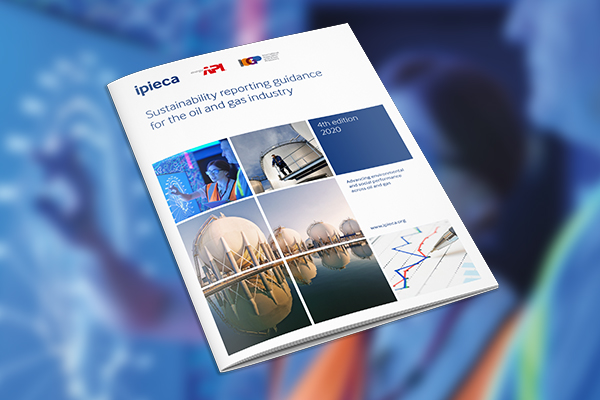
Sustainability reporting guidance for the oil and gas industry
This Sustainability reporting guidance for the oil and gas industry is a key tool to help companies shape the structure and content of their sustainability reporting.
Member companies of IPIE...
Read more
06.05.2020
Consultation Response
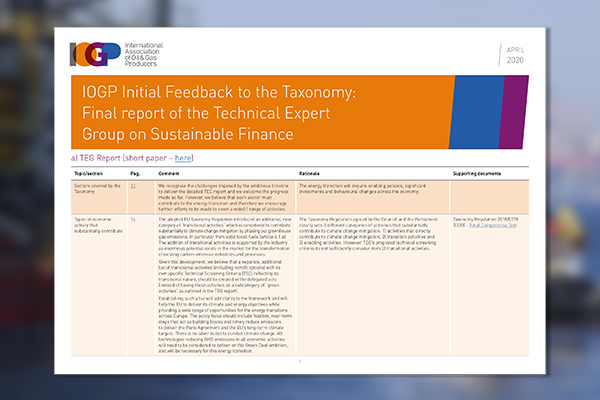
IOGP Initial Feedback to the Taxonomy: Final report of the Technical Expert Group on Sustainable Finance
This document provides IOGP’s initial feedback to the Taxonomy, “Final report of the Technical Expert Group on Sustainable Finance”.
Key Points
The EU Taxonomy should...
Read more
28.04.2020
Consultation Response
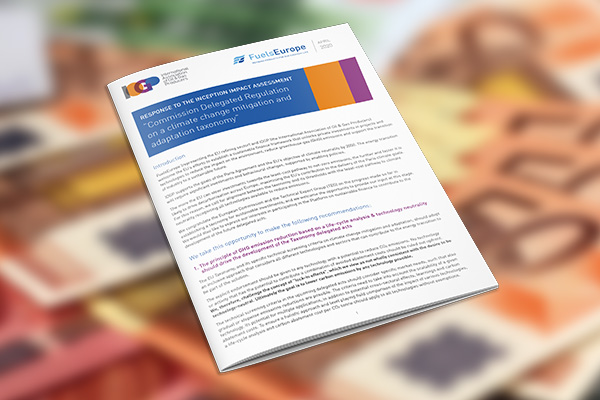
Response to the inception impact assessment “Commission Delegated Regulation on a climate change mitigation and adaptation taxonomy”
This document lays out FuelsEurope and IOGP’s response to the inception impact assessment “Commission Delegated Regulation on a climate change mitigation and adaptation taxonomy”.
IOGP...
Read more

27.04.2020
Consultation Response
IOGP input to the Impact Inception Assessment on the Revision of the NFRD
This document provides IOGP’s initial feedback to the Impact Inception Assessment on the revision of the Non-Financial Reporting Directive (NFRD).
Our industry supports meaningful corporate...
Read more
16.09.2019
Consultation Response
Call for feedback on TEG report on EU Taxonomy
In March 2018, the European Commission published its action plan on financing sustainable growth, followed in May 2018 by a proposal for a regulation on the establishment of a framework to facil...
Read more
19.08.2018
Position Statement
IOGP response to the European Commission’s package on sustainable finance Call for a “Talanoa Platform” to guarantee a smart, inclusive and technology-neutral taxonomy
Views of the upstream oil and gas industry and recommendations on sustainable finance in the context of the 2018 discussions on the European Commission’s proposal for a Regulation on taxonomy....
Read more

13.11.2025
Press Release
Press Release: European Parliament backs meaningful simplification of sustainability rules
Brussels, 13 November 2025: By calling for much-needed improvements to the European Commission’s simplification proposal, the European Parliament’s vote today signals policymakers’ determin...
Read more
06.09.2023
Letter to Officials
Letter: The EU’s Corporate Sustainability Due Diligence Directive (CSDDD) – IOGP Europe and FuelsEurope recommendations in view of the trialogue negotiations
6th of September 2023
To: Raúl Fuentes Milani, Spanish Presidency Ambassador
Lara Wolters, Rapporteur for the JURI Committee
Didier Reynders, Commissioner for Justice
Cc: Shadow Rapporteurs
Co...
Read more
03.02.2022
Press Release
Inclusion of gas in the Taxonomy Regulation supports EU ambition to reach climate neutrality by 2050
By including gas in the EU Taxonomy Complementary Delegated Act, the Commission has underlined the importance of financing investments into gas-fired power and heat plants as a key tool in decarbonizi...
Read more

20.07.2020
News
Sustainable Finance Webinars
IPIECA and IOGP organised a two-part webinar series on Sustainable Finance.
Changes to the energy system in line with the Paris Agreement, the drive toward a net-zero emissions future by 2050...
Read more
27.05.2020
Press Release
IOGP Statement on the EU Recovery Plan
IOGP commends the European Commission for the timely delivery of the EU Recovery Plan.
Why Does it Matter?
Covid-19 has triggered unprecedented socio-economic effects, as well as...
Read more
