IOGP Europe recommendations to help the EU restore its security of supply and competitiveness through flexible and resilient energy markets.
We welcome the European Commission’s (EC’s) initiative to review the EU’s energy security framework. Recent developments have demonstrated both the vulnerabilities and strengths of Europe’s energy system: the abrupt loss of major pipeline supplies and episodes of power grid instability highlighted its exposure, while the rapid response of markets, infrastructure operators, and global LNG trade showcased its capacity to adapt. These experiences confirm that well-functioning, flexible markets remain the best guarantee of resilience, even under extreme conditions.
The resilience of the EU energy system depends on coherent interaction between all relevant legislations. Therefore, the revision of the energy security framework should go beyond the current Gas Security of Supply Regulation, addressing cross-sectoral linkages and avoiding fragmented or overlapping rules. Future measures should build on identified strengths while remaining pragmatic, flexible and forward-looking. A complex regulatory framework may lead to limited sourcing flexibility and price spikes – with direct implication for EU’s competitiveness.
Natural gas plays a critical role in supporting the integration of intermittent renewable energy sources, providing flexible and reliable back-up capacity that underpins system stability. By emphasizing the importance and long-term need for natural gas, maximizing domestic production, promoting infrastructure development, ensuring a stable, clear and enabling regulatory framework, and avoiding potential barriers to importers pursuing diversification and security of supply, EU can achieve greater security of supply while meeting its climate objectives. Allowing full access to all supply sources (without artificial premiums or restrictions) maximizes diversification, supply options and competition to achieve the lowest price.
Despite projected global rise in natural gas production and export capacity, indirect policy signals and regulatory challenges discourage long-term energy contracting. Key obstacles include low EU energy demand projections based on challenging Net-Zero targets without potential upside scenarios for gas and power demand (e.g., driven by AI), market interventions, mixed political signals on the role of natural gas in the EU’s future energy mix, heavy administrative burden, prescriptive requirements, and regulatory risks for suppliers. It is important that measures introduced by the EC do not unintentionally undermine the market’s ability to respond to possible crisis by introducing rigid or counterproductive requirements, particularly when it comes to reporting.
In fact, some recent regulatory provisions are already weakening Europe’s sourcing flexibility, for instance the EU Methane Regulation (EUMR) which, through uncertainty about compliance pathways, is currently constraining future supply options. Hence, it seems important that the impact of all major regulatory modifications is properly assessed first and options to mitigate negative effects are reviewed with stakeholders before implementation.
The primary objective of the review of the EU Gas Security of Supply Regulation should be to adapt existing tools to make them more operational, reducing complexity, and preserving the advantages of liquid markets. Cross-sectoral regulatory consistency should be ensured between gas and electricity as much as possible. We provide recommendations on the six building blocks identified by the EC, attached in Annex. Taken together, these recommendations suggest that the revision of the energy security framework should not increase requirements but rather streamline or reinforce existing tools in a pragmatic, targeted manner.
A future-proof framework must be pragmatic, economical, operational, and able to support the transition while safeguarding the availability of reliable and affordable energy.

- Publications
- News
- Events
18 Organizations send a Joint Industry Letter to European Council on the EU Methane Regulation

Joint industry reaction and recommendations: EU Methane Regulation – DG ENER Recommendations
IOGP Europe’s views on the revision of the Oil Stocks Directive

IOGP Europe position on Industrial Accelerator Act and recommendations for modifications

IOGP Europe’s response to the Public consultation on the renewable energy framework (post-2030 RED) for the decade ahead

EU Methane Regulation Joint Statement ahead of next European Council and TTE Council of June 2026

Joint statement on measures to enhance the Union’s security of energy supply

Joint industry recommendations for simplification of the importer requirements of the EU Methane Regulation

Extraordinary taxation risks undermining Europe’s security of supply and energy autonomy

Joint industry recommendations on DG ENER Guidance on penalties for the EUMR

75 organisations and companies call for targeted amendments to the Methane Emissions Reduction Regulation through the EU simplification agenda including the stop-the-clock
IOGP Europe’s response to the European Commission’s Call for Evidence on EU Arctic Policy

Joint Letter: Delivering Europe’s Hydrogen Ambitions – Joint Industry Roadmap Ahead of the First European Hydrogen Forum

Joint Letter in the context of Europe’s Response to High Energy Prices – Concerns Regarding a Natural Gas Price Cap

Reforming energy taxation, charges and levies to support affordability

Upstream Oil & Gas and CCS operations in Europe: Perspective on a proposed EU Universal-PFAS Restriction
EU Methane Regulation: Joint letter to enable import provisions implementation
IOGP Europe’s response to CO₂ markets and infrastructure public consultation

Joint Statement: calling for reducing methane emissions while ensuring EU energy security

Recommendations on the proposed new EU funding architecture under the MFF (2028-2034)

EU Methane Regulation: Addressing the tracing issue to improve compliance
IOGP Europe’s response to the call for evidence on the General Block Exemption Regulation (GBER)
IOGP Europe Letter to Competitiveness Council
The Mediterranean: an energy and decarbonization opportunity for Europe
Joint letter: Integrating the EU Methane Regulation into the EU Simplification Agenda

Action plan to address key challenges on importers’ requirements in the Methane Regulation

IOGP Europe call for inclusion of the Methane Emissions Regulation in the forthcoming Energy Omnibus Package
Unlocking the Black Sea’s Strategic Energy Potential

Our response to the EC questionnaire on LDAR minimum detection limits and first step underground leak thresholds in the EU Methane Regulation

Joint statement on the role of LNG in Europe’s energy transition
Response to the EU Consultation on Commodity Derivatives and Energy Spot Markets
IOGP Europe views on Communication on the Action Plan for Affordable Energy
IOGP Europe opposes any extension of the EU gas storage target to 31 December 2027

Balancing Energy Security, Decarbonization, and Competitiveness in Europeʼs Energy Landscape
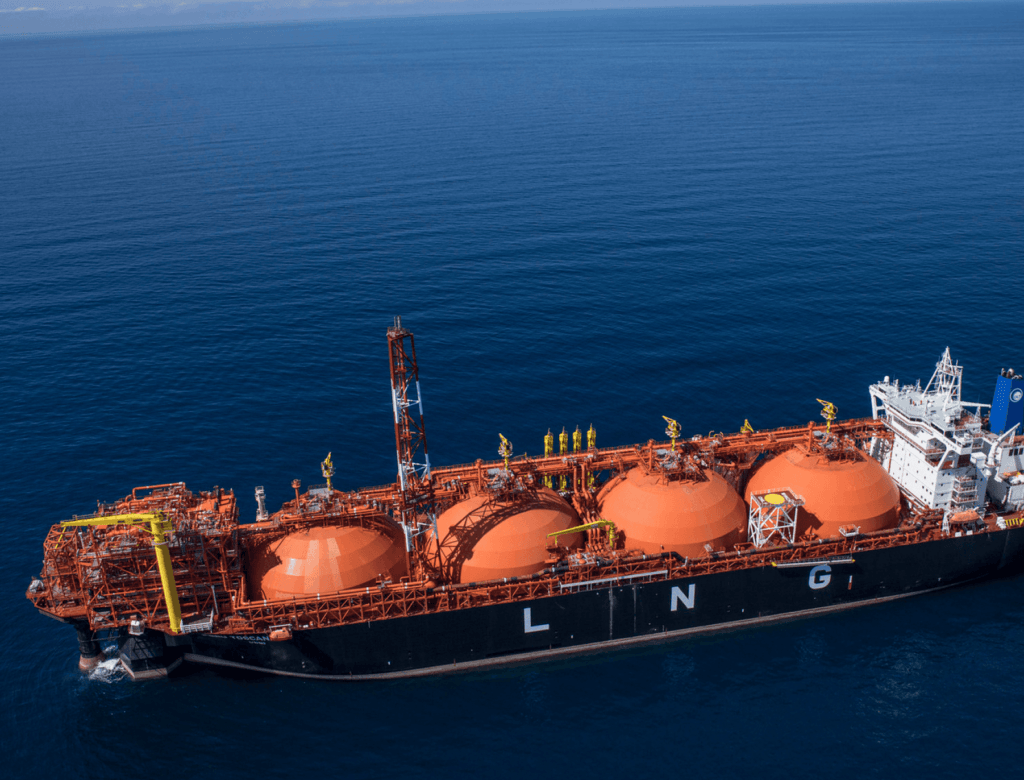
Navigating Towards 2040: The Critical Role of the LNG Industry in Achieving the EU’s Climate Targets
IOGP Europe’s Position on International GHG Supply Chain MMRV Framework

GasNaturally Letter to Competitiveness Council 23 May 2024
IOGP Europe response to European Commission survey on long-term contracts
Download
Rebalancing Europe’s Gas Supply Second Edition
IOGP views on the proposed Regulation amending Regulation (EU) 2021/241 as regards REPowerEU chapters in Recovery and Resilience Plans
IOGP response to the consultation on ‘Securing the EU’s winter gas supply (storage measures)’
IOGP response to Regulation on methane emissions reduction in the energy sector
Reaction: Proposed market interventions in context of 2021 energy price rises
IOGP response to public consultation on legislation to measure and mitigate methane emissions in the energy sector
IOGP answer to the EU roadmap on new rules to prevent methane leakage in the energy sector
Methane Management in the Upstream Oil and Gas Industry: Policy recommendations in the context of the EU Methane Strategy
Global Production Report 2019
2017 European Gas Resources Report: Plenty left and more to find

LNG – a fast lane to make Europe a leader in clean shipping
European Government Revenues from Oil & Gas

One year delays the problem; three years will fix it: Why a three-year postponement of the EU Methane Regulation’s importer requirements is needed

State of the European Union: Europe needs energy optionality to strengthen resilience while advancing the transition
21 Energy Associations sign a Joint industry reaction to the EU Methane Regulation Recommendations
Majority of EU Member States call for postponement and targeted amendments to Methane Regulation
Joint statement: Commission Recommendations on Penalties are helpful but do not provide industry with the needed legal certainty
Industry calls for 15 targeted amendments to the EU Methane Regulation to safeguard energy security and preserve environmental ambition
75 organisations and companies call for targeted amendments to the Methane Emissions Reduction Regulation through the EU simplification agenda including the stop-the-clock
Joint Letter: Europe’s Response to High Energy Prices – Concerns Regarding a Natural Gas Price Cap
EU Methane Regulation Risks Severe Disruption to Europe’s Oil and Gas Supply from 2027
Joint Statement: calling for reducing methane emissions while ensuring EU energy security
EU delivers landmark decision in quest to cut red tape, strengthen competitiveness and security of supply
New Pact for the Mediterranean: an opportunity to foster the region’s energy integration
IOGP Europe welcomes EU Energy Ministers’ call for Inclusion of the EU Methane Regulation in upcoming Energy Omnibus
Press Release: Roadmap to end Russian energy imports will require policy signals and regulatory adjustments to succeed.
The case for unrestricted US LNG exports to Europe
Navigating the EU Methane Regulation: Insights & Challenges
EU Approves Methane Regulation: What’s Next for the Industry?

Press Release: US decision to pause LNG export approvals could put European security of supply at risk
Letter: Industry views regarding the prolongation of the joint purchasing & demand aggregation mechanism
Letter: Methane emissions reduction: call for a proportionate, efficient and implementable EU Regulation
Letter: Proposed EU Methane Regulation – International dimension of EU importer requirements

Continued cross-sectoral dialogue needed to overcome energy and climate crises
Europe’s energy market proves resilient in 2022 – ensures energy security
Measures chosen by the EU to address high energy prices will impact Europe’s oil and gas industry at a critical time
New study identifies Europe’s supply options to replace Russian gas before 2030
IOGP response to IEA Global Methane Tracker Report

Methane Emissions Glossary
Guidelines for Methane Emissions target setting – Press Release
EU Methane Strategy sets the right sequence to tackle the challenge

Guidelines for Methane Emissions target setting
Methane Mitigation Europe 2027
Oil & Gas Decarbonisation Congress 2027



Go Net Zero Energy Summit 2026 to Bring Together CEE Leaders in Bucharest


Takeaways from the Industry Summit: An energy system fit to support European competitiveness


EU Methane Regulation – How Operators and Stakeholders Can Implement It #3

SPE Europe Energy Conference

EU Methane Regulation – How Operators and Stakeholders Can Implement It #2
EU Methane Regulation – How Operators and Stakeholders Can Implement It #1