Joint statement on measures to enhance the Union’s security of energy supply
We recognize the European Commission’s “AccelerateEU – Energy Union” Communication as a timely and necessary step towards strengthening the resilience, coordination and flexibility of Europe’s energy system in a context of geopolitical uncertainty.
We appreciate the continued and constructive engagement between the European Commission and the industry through ad-hoc meetings and established fora (Gas Coordination Group, Oil Coordination Group). Sustained dialogue between regulators and operators is essential to ensure effective and realistic policymaking, and should be maintained on a structured basis beyond these periods of crisis.
We particularly welcome the Commission’s recognition of the need for greater flexibility in the implementation of gas storage targets¹.
To maximise price relief, flexibilities should be activated by the Commission and Member States as soon as possible, early in the storage season.
At the same time, it is essential that any emergency measure remains targeted, temporary and proportionate. Initiatives such as demand aggregation or diversification approaches should remain voluntary in nature and must not distort wholesale price signals. Clear and credible price signals are indispensable to attract natural gas, and crude oil supplies in global markets, particularly in a tightening market characterised by intense competition for LNG cargoes, including by Asian buyers².
Accelerate EU addresses demand-side measures extensively, but provides limited attention to supply-side challenges, notably the potential difficulties in securing sufficient natural gas and crude oil volumes, should the crisis persist. Against this backdrop, we stress the importance of maintaining a strong and well-functioning energy market. The policy framework should provide clear, positive signals to market participants, enabling them to procure necessary supplies for European consumers, notably through revised future gas demand scenarios in the Security of Supply framework.
We stress that the EU Methane Regulation (EUMR), in its current form, risks undermining the Union’s energy security of supply, especially under current geopolitical and market conditions. Despite the Commission’s efforts to provide guidance, their non-binding nature, create a material risk of inconsistent implementation and do not address the underlying structural and operational gaps related to importer requirements.
We, together with more than 70 organizations, continue to call for targeted amendments to the EUMR, including “stop the clock” – without compromising the ambition of the Regulation.
While we welcome the creation of a Fuel Observatory, we call for the European Commission to maintain close collaboration with the refining industry to assess EU refining capacity optimisation and output maximisation. European refineries are already operating close to technical and economic limits, while product yields are not fully flexible.
We caution against over-optimisation which risks delaying needed maintenance works and cause long-term capacity degradation. Operational decisions affecting refineries, including potential interventions on product yields or sourcing, require careful alignment with technical realities to ensure both feasibility and effectiveness.
At the same time, we note that the Communication minimises the essential role that gases, including renewable and low carbon, plays in ensuring energy security, grid stability, and industrial competitiveness. While electrification is an important vector of the energy transition, their integration should not be overlooked.
The European response to the 1970s oil shocks turned the North Sea into a major global production hub, demonstrating that developing indigenous resources can enhance security of supply, reduce external dependencies and support economic growth.
Looking ahead, strengthening Europe’s resilience should also include a renewed focus on the need to support and increase domestic production of crude oil, natural gas and other gases, including renewable and low carbon, and their derivatives.
This remains highly relevant today: as acknowledged by the IEA’s World Energy Outlook 2025, the EU is expected to demand 166 bcm of gas and 5.1 million barrels of crude oil per day in 2050, even under current climate targets. Europe still holds substantial untapped crude oil (9.7 billion BOE) and natural gas resources (2240 bcm)³, as well as a substantial biomethane production potential (111 bcm/y by 2040⁴) which could help strengthen its energy security.
The accelerated deployment of renewable and low-carbon gases - including biomethane and hydrogen - must shift from ambition to concrete commitment. In this instance, the accelerated review of the RFNBO Delegated Act is a necessary step.
The acceleration of European biomethane production also warrants concrete measures, including the full operationalization of the Union Database and the timely adoption of the necessary secondary legislation.
A balanced approach supporting both secure supply and competitive industry remains essential: Europe cannot afford demand destruction as a structural response. We stand ready to continue engaging constructively with the Commission and Member States, bringing industry expertise to support European energy security and a strong European industrial base.
Sources
1 To fill EU gas storage at the 90% level, the EU would need 86 bcm of LNG imports; additional volumes (approx. 6 bcm) in case of a halt in Russian pipeline gas; full use of existing infrastructure flexibility, which is sufficient but not a given, provided that adequate gas supplies are secured. Source: ENTSOG - ACER.
2 Source: IOGP Europe’s Data room – Europe/Asia LNG dynamics.
3 Source: IOGP Europe’s Data room – European oil and natural gas reserves and resources.
4 Source: EBA and Gas for Climate – Biogases towards 2040 and beyond
Signatories


- Publications
- News
- Events
IOGP Europe’s views on the revision of the Oil Stocks Directive

IOGP Europe’s response to the Public consultation on the renewable energy framework (post-2030 RED) for the decade ahead

Joint industry recommendations for simplification of the importer requirements of the EU Methane Regulation

Extraordinary taxation risks undermining Europe’s security of supply and energy autonomy

Joint industry recommendations on DG ENER Guidance on penalties for the EUMR

75 organisations and companies call for targeted amendments to the Methane Emissions Reduction Regulation through the EU simplification agenda including the stop-the-clock
IOGP Europe’s response to the European Commission’s Call for Evidence on EU Arctic Policy

Joint Letter in the context of Europe’s Response to High Energy Prices – Concerns Regarding a Natural Gas Price Cap

Upstream Oil & Gas and CCS operations in Europe: Perspective on a proposed EU Universal-PFAS Restriction
IOGP Europe’s response to CO₂ markets and infrastructure public consultation

Joint Statement: calling for reducing methane emissions while ensuring EU energy security

EU Methane Regulation: Addressing the tracing issue to improve compliance

IOGP Europe recommendations to help the EU restore its security of supply and competitiveness through flexible and resilient energy markets.
The Mediterranean: an energy and decarbonization opportunity for Europe
Unlocking the Black Sea’s Strategic Energy Potential

Joint statement on the role of LNG in Europe’s energy transition
Response to the EU Consultation on Commodity Derivatives and Energy Spot Markets
IOGP Europe views on Communication on the Action Plan for Affordable Energy
IOGP Europe opposes any extension of the EU gas storage target to 31 December 2027

Balancing Energy Security, Decarbonization, and Competitiveness in Europeʼs Energy Landscape
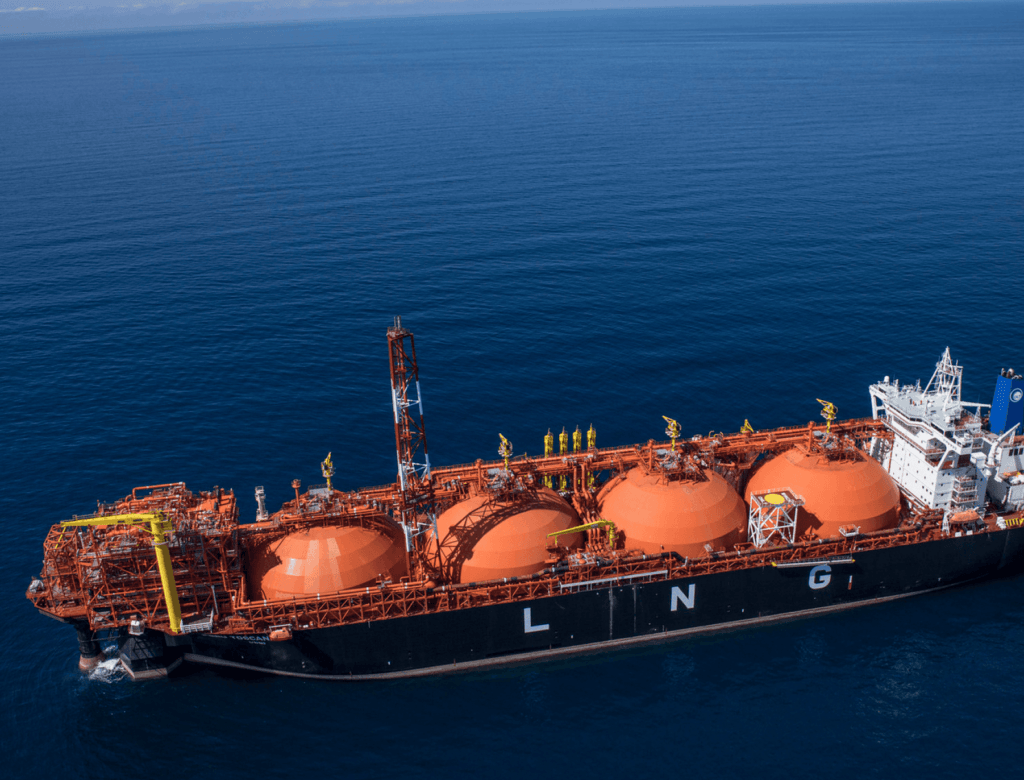
Navigating Towards 2040: The Critical Role of the LNG Industry in Achieving the EU’s Climate Targets

GasNaturally Letter to Competitiveness Council 23 May 2024
IOGP Europe response to European Commission survey on long-term contracts
Download
Rebalancing Europe’s Gas Supply Second Edition
IOGP views on the proposed Regulation amending Regulation (EU) 2021/241 as regards REPowerEU chapters in Recovery and Resilience Plans
IOGP response to the consultation on ‘Securing the EU’s winter gas supply (storage measures)’
Reaction: Proposed market interventions in context of 2021 energy price rises
Global Production Report 2019
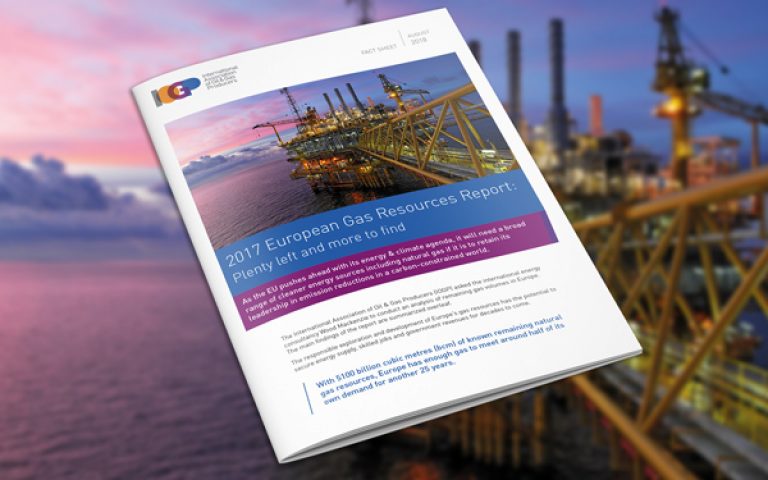
2017 European Gas Resources Report: Plenty left and more to find

LNG – a fast lane to make Europe a leader in clean shipping
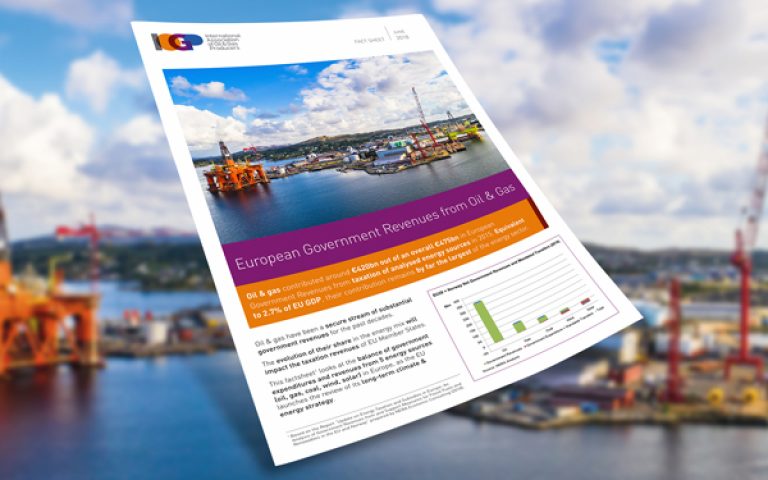
European Government Revenues from Oil & Gas

State of the European Union: Europe needs energy optionality to strengthen resilience while advancing the transition
Majority of EU Member States call for postponement and targeted amendments to Methane Regulation
Joint Letter: Europe’s Response to High Energy Prices – Concerns Regarding a Natural Gas Price Cap

EU Methane Regulation Risks Severe Disruption to Europe’s Oil and Gas Supply from 2027
Joint Statement: calling for reducing methane emissions while ensuring EU energy security
EU delivers landmark decision in quest to cut red tape, strengthen competitiveness and security of supply
New Pact for the Mediterranean: an opportunity to foster the region’s energy integration
Press Release: Roadmap to end Russian energy imports will require policy signals and regulatory adjustments to succeed.
The case for unrestricted US LNG exports to Europe

Press Release: US decision to pause LNG export approvals could put European security of supply at risk
Letter: Industry views regarding the prolongation of the joint purchasing & demand aggregation mechanism

Continued cross-sectoral dialogue needed to overcome energy and climate crises
Europe’s energy market proves resilient in 2022 – ensures energy security
Measures chosen by the EU to address high energy prices will impact Europe’s oil and gas industry at a critical time
New study identifies Europe’s supply options to replace Russian gas before 2030
Oil & Gas Decarbonisation Congress 2027