Upstream Oil & Gas and CCS operations in Europe: Perspective on a proposed EU Universal-PFAS Restriction
Proposed EU Universal-PFAS Restriction in a nutshell
- The European Chemicals Agency (ECHA) is consulting on a proposed REACH Restriction for all PFAS compounds, as proposed by the governments of Germany, the Netherlands, Sweden, Denmark and Norway.
- The proposed restriction covers nearly all compounds with a -CF2- or -CF3 group. The scope of the proposed Restriction covers liquids (e.g., fluorosurfactants), solids (e.g., fluoropolymers) and gases (e.g., F-gases).
- For the European Oil & Gas and CCS industries, common uses of PFAS include fluoropolymers in umbilicals and flexible pipes, sealing devices, O-rings and gaskets, electrical cables and equipment. Fluorinated siloxanes are used in upstream production anti-foam products, and fluoroalkanes are used as tracers to characterise some hydrocarbon reservoirs / CO2 storage complexes.
- ECHA’s Risk Assessment Committee (RAC) and Social and Economic Assessment Committee (SEAC) are currently reviewing the likely impacts of the proposed Restriction on a number of industrial, commercial, healthcare and other sectors. ECHA’s committees are due to report their Opinions in March 2026, ahead of a 60-day public consultation on the draft SEAC Opinion, anticipated to start mid-March 2026.
- IOGP is collaborating with other associations to jointly prepare evidence to inform the public consultation on the likely impacts of a restriction on the Oil & Gas / CCS sector. A restriction on the use of fluoropolymers is a particular concern to many industrial sectors, including Oil & Gas / CCS, due to the widespread application of fluoropolymers in situations where resistance to high temperatures and chemically aggressive conditions, often combined with a requirement for material flexibility and low friction, is required.
IOGP Europe acknowledges that certain PFAS need to be controlled to protect human health and the environment. PFAS that are persistent, bioaccumulative and toxic (PBT) or persistent, mobile and toxic (PMT), and where their use deliberately or inevitably results in significant environmental releases are considered the highest priority for control.
The EU has recently restricted the use of PFAS-containing fire-fighting foam (EU Regulation 2025/1998), which may contain a number of confirmed PBT/PMT PFAS. However, the current evidence suggests that many other PFAS - particularly the fluoropolymers - do not meet the criteria for PBT or PMT, and do not result in significant environmental emissions during normal use.
Fluoropolymers are widely recognized as playing an important role in the oil and gas industry to ensure the integrity of hydrocarbon containing equipment. This is due to their environmental stability, resistance to high temperatures and chemically aggressive conditions, flexibility and robustness. Fluoropolymers are widely used in flexible subsea pipes and risers, umbilicals, O-rings and gaskets, electrical wire insulation, capacitors and various sealant applications. They are used to achieve the safest operations in often challenging environments.
Fluoropolymers are also widely used in medical and healthcare applications, water treatment, wind turbine blades, hydrogen electrolysers, photovoltaic panels, carbon capture and storage installations, and other sectors critical to the safe and efficient delivery of the European Green Deal and an effective energy transition.
Flexible pipes are made of an assembly of polymeric barriers with corrosion-resistant steel wires. In many applications, they are the only viable solution for Oil & Gas / CCS developments. Fluoropolymers, such as polyvinylidene fluoride (PVDF) and polytetrafluoroethylene (PTFE) are used in the construction of flexible pipes to deliver the desired safe and reliable operational performance, and to ensure safety and environmental protection. Despite significant research, currently, there is no known substitute for extruded PVDF or current uses of PVDF and PTFE in flexible pipe design and manufacturing.
Any restriction or ban could have a devastating effect on energy affordability and security. PVDFs are currently the only solution for High Pressure High Temperature (HPHT) applications; there are no known alternatives. Barriers in flexible pipes comprised of PVDF are used between 90-130°C, while PFAS-free alternatives, such as polyethylene and polyamide materials, are limited to lower temperature environments (between 60-90°C). In addition, various PTFE-based sealing elements are typically used on the interfaces between metallic components to establish the integrity of the system and prevent hydrocarbon releases.
Any restriction of PVDF and PTFE could affect the manufacturing and use of flexible pipes in Europe, severely disrupting the supply chain and resulting in economic impact of billions of Euros per year, and potential for increased health or environmental risks if alternatives without equivalent performance characteristics are not available.
Despite the proposed derogation for some fluoropolymers and fluoroelastomers (listed under the Sealing Applications sector) for Restriction Option 2 (RO2), 13.5 years after entry into legislation), the oil and gas exploration and production / CCS sector could still be impacted due to disruption in the supply chain, shortages in raw materials caused in the production of flexible pipes and supply of spare parts. Research developments in the search for PFAS-free alternatives to fluoropolymer products have not been successful, and we are concerned that suitable alternatives and their certification, the revision or development of new International Standards, and appropriate Management of Change cannot be completed within 13.5 years.
The Restriction Background Document recognises this possibility. Oil & Gas / CCS projects rely on these products as enabling technology. During the lifetime of a project some replacement products and maintenance parts are required. If the industry is unable to secure necessary spares, this may lead to premature field closure which could affect energy security and energy affordability for decades to come.
In most cases, whenever alternative materials are technically feasible they are already being used. Furthermore, it should be highlighted that materials considered as alternatives in the Restriction Proposal documentation [section E.2.15 of Annex E of the restriction report] are not technically feasible replacements for the abovementioned application. The development of alternative products could take several decades, if even possible. IOGP Europe considers that a restriction on the use of fluoropolymers in the O&G / CCS industry is neither necessary nor appropriate.
Emissions during fluoropolymer production are best controlled through effective regulatory permitting under the EU Industrial Emissions Directive. Furthermore, current evidence suggests that the majority of PFAS-containing waste in the EU are already subject to incineration. IOGP and other industry associations (including Concawe, CEFIC) are working to provide best practice guidance on PFAS remediation (in soil and water) and equipment end-of-life management for their members.
As an Oil & Gas / CCS industry, we strongly encourage a full and detailed assessment of the effects of a full ban of fluoropolymers for the reasons stated above. We are concerned that SEAC has not addressed these ‘enabling’ applications and sectors in its work to date (see PFAS use mapping, below), and that a restriction could be introduced without due consideration of the effects on business of losing access to these materials.
IOGP Europe remains open to constructive discussion and dialogue in the hope that a workable PFAS Restriction is put in place that does not undermine safe operations in the oil and gas sector, and which contributes to effective implementation of a circular economy model.
Background information:

- Publications
- News
- Events

Joint Industry Statement: CO2 Transport infrastructure, enabling a pragmatic framework for early market development

Joint statement on measures to enhance the Union’s security of energy supply
IOGP Europe’s Response to the Revision of national targets and flexibilities in the EU climate policy framework after 2030

Joint industry recommendations for simplification of the importer requirements of the EU Methane Regulation

Extraordinary taxation risks undermining Europe’s security of supply and energy autonomy

Joint industry recommendations on DG ENER Guidance on penalties for the EUMR

Joint Letter: Urgent call for targeted amendments to the Methane Emissions Reduction Regulation through the EU simplification agenda including the stop-the-clock
IOGP Europe recommendations on workable solutions for the upcoming CO2 markets and infrastructure legislative proposal
IOGP Europe’s response to the European Commission’s Call for Evidence on EU Arctic Policy

Joint Letter in the context of Europe’s Response to High Energy Prices – Concerns Regarding a Natural Gas Price Cap
IOGP Europe’s response to CO₂ markets and infrastructure public consultation

Joint Statement: calling for reducing methane emissions while ensuring EU energy security

Recommendations on the proposed new EU funding architecture under the MFF (2028-2034)

EU Methane Regulation: Addressing the tracing issue to improve compliance

IOGP Europe recommendations to help the EU restore its security of supply and competitiveness through flexible and resilient energy markets.
IOGP Europe’s response to the call for evidence on the General Block Exemption Regulation (GBER)
IOGP Europe input to the Public Consultation on the methodologies for certifying permanent carbon removals

IOGP Europe recommendations to address the implementation challenges of the Net-Zero Industry Act’s (NZIA) 2030 CO2 injection capacity objective
IOGP Europe feedback on the Call for Evidence: Simplification of administrative burden in environmental legislation

IOGP Europe input to the Call for Evidence on CO2 market and infrastructure
The Mediterranean: an energy and decarbonization opportunity for Europe

Joint Letter on EU-UK ETS Linkage

IOGP Europe views on the Grids Package

IOGP Europe response to consultation on the Industrial Decarbonisation Accelerator Act (IDAA) and call for evidence

The upcoming Grids Package: a critical opportunity not to be missed for the deployment of a European hydrogen infrastructure
Unlocking the Black Sea’s Strategic Energy Potential

Joint Letter: Accelerating investments in CO2 infrastructure

Response to the European Commission’s consultation on the draft Clean Industrial Deal State Aid Framework (CISAF)

Joint statement on the role of LNG in Europe’s energy transition
Response to the EU Consultation on Commodity Derivatives and Energy Spot Markets

Response to the Draft Delegated Regulation on CO₂ Injection Capacity Obligations

Omnibus Simplification Package EU Taxonomy Consultation
IOGP Europe response to DG ENVI and Trinomics survey on assessment of environmental reporting and the potential for simplification
IOGP Europe views on Communication on the Action Plan for Affordable Energy
IOGP Europe opposes any extension of the EU gas storage target to 31 December 2027

Balancing Energy Security, Decarbonization, and Competitiveness in Europeʼs Energy Landscape

Feedback to the public consultation on the Net-Zero Industry Act Delegated Act on primarily used components

Advancing a Competitive, Resilient, and Integrated Energy Market
The Case for a European CCS Bank
Navigating Towards 2040: The Critical Role of the LNG Industry in Achieving the EU’s Climate Targets
IOGP Europe key principles on a future regulatory framework for CO2 transport infrastructure
Joint Letter- Harnessing the IPCEI mechanism for CCS in Europe
GasNaturally Letter to Competitiveness Council 23 May 2024
IOGP Europe response to European Commission survey on long-term contracts
Download
IOGP Europe key principles on a future regulatory framework for CO2 transport infrastructure
IOGP Europe response to the ECHA consultation on Universal PFAS restriction proposal
Download
Rebalancing Europe’s Gas Supply Second Edition
Creating a sustainable business case for CCS value chains
IOGP Europe statement on the ECHA proposed PFAS restriction proposal related to the Carbon Capture, Transport and Storage (CCS) Technology
IOGP Europe position on the EU Industrial Carbon Management
IOGP response to consultation on the evaluation of the ‘Polluters pays principle’.
IOGP position paper on the European Commission’s public consultation on the EU climate target for 2040
IOGP Europe feedback on Net Zero Industry Act proposal
IOGP response on revamping the Strategic Energy Technology (SET) Plan
IOGP input on EU Soil Health Law for protecting, sustainably managing and restoring EU soils
IOGP position on Industrial Emissions Directive (IED) revision proposal
IOGP position on Industrial Emissions Portal (IEP) Regulation proposal
IOGP views on the proposed Regulation amending Regulation (EU) 2021/241 as regards REPowerEU chapters in Recovery and Resilience Plans
IOGP response to the consultation on ‘Securing the EU’s winter gas supply (storage measures)’
IOGP input to the call for evidence on ‘soil health – protecting, sustainably managing and restoring EU soils’
IOGP input to the call for evidence on ‘setting the course for a sustainable blue planet, an update of the international ocean governance agenda’
Input to Consultation: Restriction for per- and polyfluoroalkyl substances (PFAS)
Re-Stream – Study on the reuse of oil and gas infrastructure for hydrogen and CCS in Europe
Reaction: Proposed market interventions in context of 2021 energy price rises
IOGP consultation response, review of the Marine Strategy Framework Directive (MSFD)
IOGP response to public consultation on the revised Climate, Energy and Environmental Aid Guidelines (CEEAG)
IOGP Paper on metric to use for 2030 targets
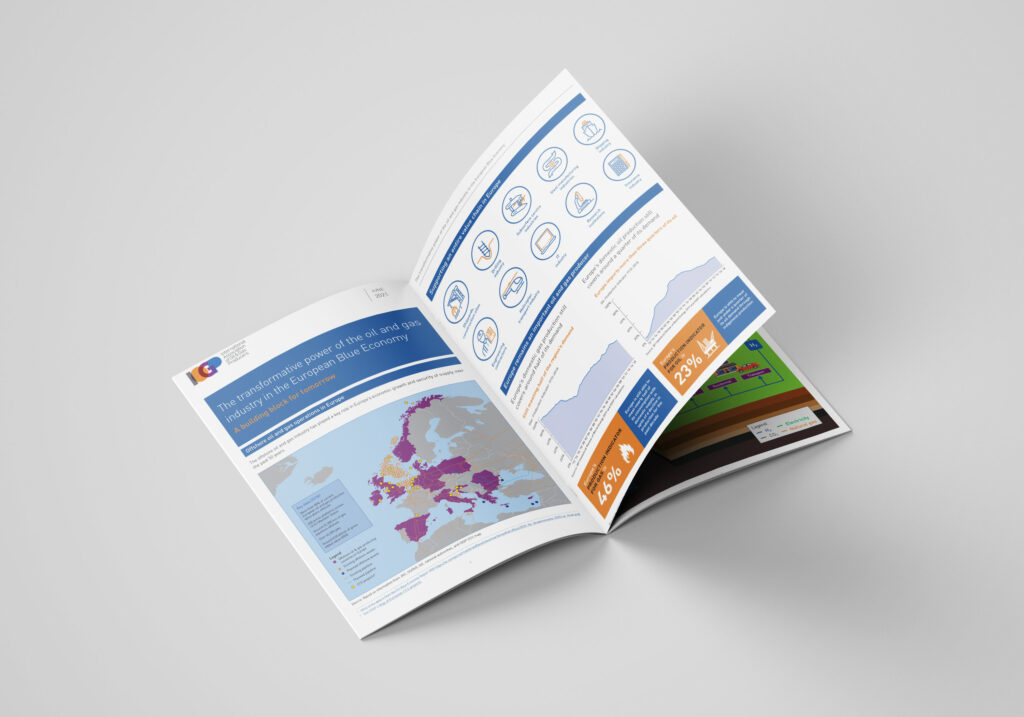
The transformative power of the Oil & Gas industry in the European Blue Economy
IOGP input to Roadmap consultation ‘Protecting the marine environment – review of EU rules’
IOGP input to the consultation on the new EU Soil Strategy
IOGP response to the roadmap on the modification of the General Block Exemption Regulation (GBER)
Underwater sound – Perspective from the oil and gas offshore industry in Europe
Public consultation on the EU Action Plan “Towards a Zero Pollution Ambition for air, water and soil”
IOGP response to the Inception Impact Assessment on the revision of the Guidelines on State aid for environmental protection and energy (EEAG) 2014-2020
IOGP written input to the consultation “Maritime sector – a green post-COVID future”
IOGP position on EU Biodiversity Strategy for 2030
IOGP written input to the consultation “International Ocean Governance”
IOGP input to the consultation on the EU nature restoration plan
IOGP input to the consultation on restricting the use of intentionally added microplastics
Funding CCS in Europe: key investments for the recovery
IOGP response to the public consultation on the revision of Regulation (EU) 347/2013 on guidelines for TEN-E Regulation
IOGP response to targeted consultation on the revision of Regulation (EU) 347/2013 on guidelines for TEN-E Regulation
IOGP input to the Roadmap on the EU Smart System Integration
IOGP feedback to the Combined Evaluation Roadmap/Inception Impact Assessment on the revision of Regulation (EU) 347/2013 on guidelines for TEN-E
IOGP input to the forthcoming EU Strategy for Energy System Integration
New and old CCS projects in Europe: What’s different this time?
IOGP assessment of National Energy and Climate Plans
IOGP assessment of draft National Energy and Climate Plans
The potential for CCS and CCU in Europe Report to the thirty second meeting of the European Gas Regulatory Forum 5-6 June 2019
Global Production Report 2019
2017 European Gas Resources Report: Plenty left and more to find
LNG – a fast lane to make Europe a leader in clean shipping
European Government Revenues from Oil & Gas
CCS: the Innovation Fund and beyond
OGP contribution to the CCS Directive evaluation

Declining number of announced CO₂ storage projects in Europe highlights gap between EU’s 2030 target and operational reality.
Joint Letter: Europe’s Response to High Energy Prices – Concerns Regarding a Natural Gas Price Cap

EU Methane Regulation Risks Severe Disruption to Europe’s Oil and Gas Supply from 2027
New interactive Data Room goes live

IOGP Europe Welcomes 3 New Board Members
Joint Statement: calling for reducing methane emissions while ensuring EU energy security
EU delivers landmark decision in quest to cut red tape, strengthen competitiveness and security of supply
New Pact for the Mediterranean: an opportunity to foster the region’s energy integration

Press release: 2040 Climate trajectory requires urgent action on policy enablers
Press release: State Aid Framework for Clean Industrial Deal marks a turn towards pragmatic decarbonization

Chris Walker (ExxonMobil), newly appointed Chair of IOGP Europe’s Communications Subcommittee
Press release: Low-carbon fuels methodology envisaged by the Commission will block key hydrogen production pathways
Joint Letter: Accelerating investments in CO₂ infrastructure
Press Release: Roadmap to end Russian energy imports will require policy signals and regulatory adjustments to succeed.

Building energy bridges between Brazil and the EU

MEP Jeannette Baljeu on the Crucial Role of CCS in Europe’s Industrial Transition
The case for unrestricted US LNG exports to Europe
Draghi Report: a pragmatic pathway to Competitiveness, Sustainability, and Resilience
IOGP Europe signs the Antwerp Declaration
Press release: Recognition of CCS on path to 2050 marks a step change, but approach to low-carbon solutions remains too narrow.
Press Release: US decision to pause LNG export approvals could put European security of supply at risk

IOGP welcomes ROMGAZ
Letter: Industry views regarding the prolongation of the joint purchasing & demand aggregation mechanism
Letter: Industry views regarding the proposal to establish a permanent demand aggregation and joint purchasing mechanism through the Recast Gas Regulation
Letter: Strong support for an implementable and pragmatic Net Zero Industry Act Article 18 – solutions to make CCS work
Net-Zero Industry Act marks a step change in industrial and climate policy – EU paves way for carbon capture and storage scale-up
Continued cross-sectoral dialogue needed to overcome energy and climate crises
Europe’s energy market proves resilient in 2022 – ensures energy security
Letter: Open, inclusive, and pragmatic Green Deal Industrial Plan for Europe
Europe needs a CO2 storage ambition for 2050
Measures chosen by the EU to address high energy prices will impact Europe’s oil and gas industry at a critical time
New study identifies Europe’s supply options to replace Russian gas before 2030
Gas market reform marks a step change in EU approach to the transition
New Re-Stream study assesses the feasibility of transport of hydrogen and CO2 in European gas and oil infrastructure
Letter: Call for a technology-inclusive revision of the TEN-E Regulation
Letter: 57 industry leaders call for enhancing gas contribution to decarbonisation
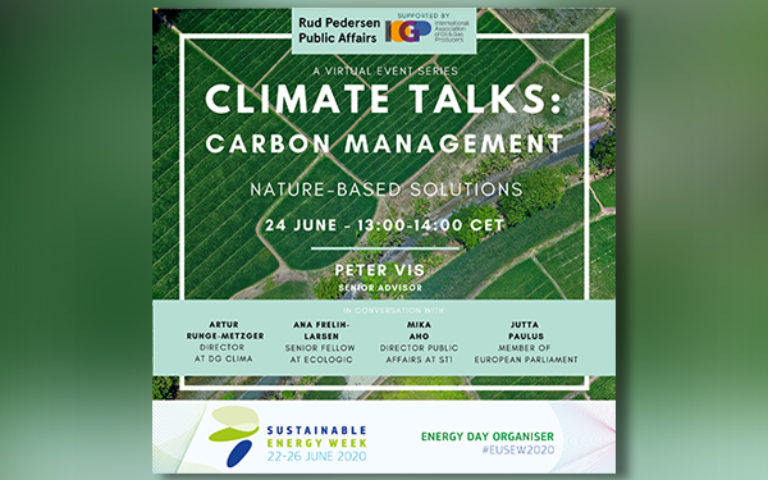
Carbon Management Webinars
Webinar: Regulating the re-use and repurposing of oil and gas installations in the context of decommissioning

IOGP actions to protect Biodiversity
IOGP welcomes the EU Biodiversity Strategy 2030
Joint letter: CCS and CCU for the EU’s Industrial Transition

Carbon Capture Europe Summit 2026 | Rotterdam | 11-12 March 2026