IOGP Europe input to the Call for Evidence on CO2 market and infrastructure
To meet the EU climate 2050 neutrality objective, a robust and interoperable CO₂ transport infrastructure is essential. The European Commission’s forthcoming regulatory package on CO₂ markets and infrastructure presents a crucial opportunity to ensure a well-designed, investment-friendly framework that supports early deployment while laying the foundation for a stable, long-term CO₂ market.
This is particularly relevant in light of the Net-Zero Industry Act (NZIA) obligation to deliver at least 50 million tonnes per annum (Mtpa) of operational CO₂ injection capacity by 2030, where the establishment of an appropriate CO₂ transport regulatory framework will be essential to achieving this target. At the same time, careful consideration is needed to ensure that such measures do not prematurely shape or constrain the development of the market before it reaches full maturity.
This position paper outlines the key challenges to CO₂ infrastructure uptake and identifies core elements to be addressed in the regulatory framework. IOGP Europe calls for a phased, flexible, and market-oriented approach, balancing early-stage public support with long-term private investment and avoiding rigid, unsuitable regulation at this nascent stage.
Main recommendations:
- Establish EU-level support mechanisms to lower the cost of capital, improve project bankability, and enable the emergence of a self-sustaining CO₂ market, including targeted de-risking instruments to mobilize private investment, and adapting and expanding EU funding instruments such as Connecting Europe Facility (CEF) and Innovation Fund that prioritize cluster-based approaches to deliver economies of scale.
- Allow Member States discretion to implement tailored measures to reflect national market maturity, industrial structure, and regional circumstances, ensuring proportionate and effective outcomes.
- Adopt a phased approach that evolves in line with market maturity, avoiding creating premature market structures that risk deterring investment for the nascent CO2 market.
- Design a legislative framework that differentiates transport and storage, recognizing their distinct risk profiles, market dynamics, and type of investors.
- Limit regulatory requirements in the early stages of the market, thereby fostering competition and incentives for private investment.
- Enable carbon capture and storage (CCS) deployment by streamlining permitting with enforceable deadlines, digital tools, and one-stop shops, while strengthening cross-border integration through mutual recognition of permits, joint planning, and carbon pricing alignment (e.g. EU–UK ETS).
- In the short term, focus on developing high-level guidance for technical CO2 standards while the markets ramp up, leaving CEN-CENELEC with the leading role in standards development.
- Ensure grandfathering clauses to safeguard early investments and first movers, preventing delays from regulatory requirements (e.g, CO2 specifications), unless clearly justified. It should also apply where national frameworks are already underway, ensuring EU rules build on existing progress and enable a coherent and proportionate regulatory transition.

- Publications
- News
- Events
Call to enable CO₂ Storage in the Baltic Sea Region under the Helsinki Convention

IOGP Europe position on Industrial Accelerator Act and recommendations for modifications

IOGP Europe’s response to the Public consultation on the renewable energy framework (post-2030 RED) for the decade ahead

Joint Industry Statement: CO2 Transport infrastructure, enabling a pragmatic framework for early market development

Upstream Oil & Gas and CCS operations in Europe: Perspective on a proposed EU Universal-PFAS Restriction

IOGP Europe’s response to CO₂ markets and infrastructure public consultation

Recommendations on the proposed new EU funding architecture under the MFF (2028-2034)
IOGP Europe’s response to the call for evidence on the General Block Exemption Regulation (GBER)

IOGP Europe input to the Public Consultation on the methodologies for certifying permanent carbon removals

IOGP Europe recommendations to address the implementation challenges of the Net-Zero Industry Act’s (NZIA) 2030 CO2 injection capacity objective

IOGP Europe feedback on the Call for Evidence: Simplification of administrative burden in environmental legislation

The Mediterranean: an energy and decarbonization opportunity for Europe

Joint Letter on EU-UK ETS Linkage

IOGP Europe views on the Grids Package

IOGP Europe response to consultation on the Industrial Decarbonisation Accelerator Act (IDAA) and call for evidence

The upcoming Grids Package: a critical opportunity not to be missed for the deployment of a European hydrogen infrastructure
Unlocking the Black Sea’s Strategic Energy Potential

Joint Letter: Accelerating investments in CO2 infrastructure

Response to the European Commission’s consultation on the draft Clean Industrial Deal State Aid Framework (CISAF)

Response to the Draft Delegated Regulation on CO₂ Injection Capacity Obligations

Omnibus Simplification Package EU Taxonomy Consultation

Feedback to the public consultation on the Net-Zero Industry Act Delegated Act on primarily used components

Advancing a Competitive, Resilient, and Integrated Energy Market
The Case for a European CCS Bank
IOGP Europe key principles on a future regulatory framework for CO2 transport infrastructure
Joint Letter- Harnessing the IPCEI mechanism for CCS in Europe
GasNaturally Letter to Competitiveness Council 23 May 2024

IOGP Europe key principles on a future regulatory framework for CO2 transport infrastructure

Creating a sustainable business case for CCS value chains

IOGP Europe statement on the ECHA proposed PFAS restriction proposal related to the Carbon Capture, Transport and Storage (CCS) Technology

IOGP Europe position on the EU Industrial Carbon Management

IOGP position paper on the European Commission’s public consultation on the EU climate target for 2040

IOGP Europe feedback on Net Zero Industry Act proposal
IOGP response on revamping the Strategic Energy Technology (SET) Plan
Re-Stream – Study on the reuse of oil and gas infrastructure for hydrogen and CCS in Europe

IOGP response to public consultation on the revised Climate, Energy and Environmental Aid Guidelines (CEEAG)
IOGP Paper on metric to use for 2030 targets

IOGP response to the roadmap on the modification of the General Block Exemption Regulation (GBER)

IOGP written input to the consultation “Maritime sector – a green post-COVID future”

Funding CCS in Europe: key investments for the recovery
IOGP response to the public consultation on the revision of Regulation (EU) 347/2013 on guidelines for TEN-E Regulation
IOGP response to targeted consultation on the revision of Regulation (EU) 347/2013 on guidelines for TEN-E Regulation

IOGP input to the Roadmap on the EU Smart System Integration
IOGP feedback to the Combined Evaluation Roadmap/Inception Impact Assessment on the revision of Regulation (EU) 347/2013 on guidelines for TEN-E

IOGP input to the forthcoming EU Strategy for Energy System Integration
New and old CCS projects in Europe: What’s different this time?
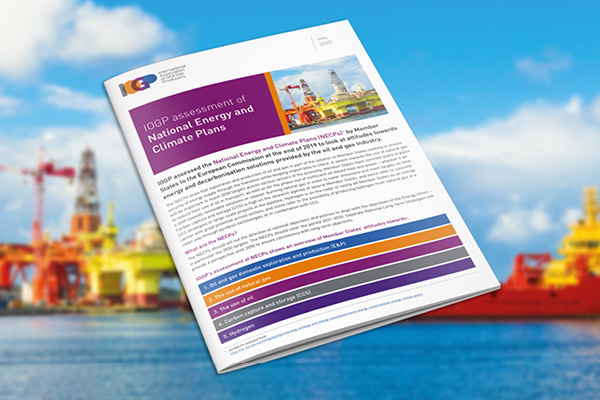
IOGP assessment of National Energy and Climate Plans
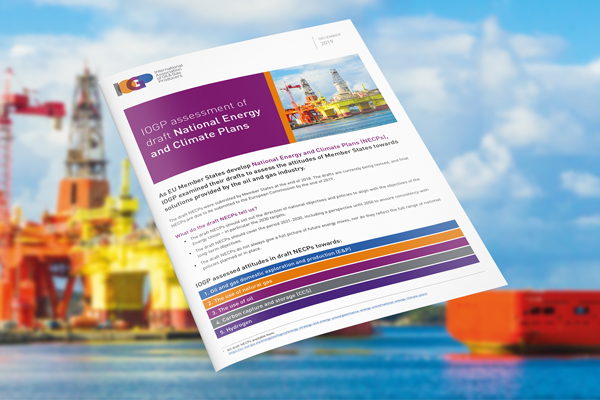
IOGP assessment of draft National Energy and Climate Plans
The potential for CCS and CCU in Europe Report to the thirty second meeting of the European Gas Regulatory Forum 5-6 June 2019
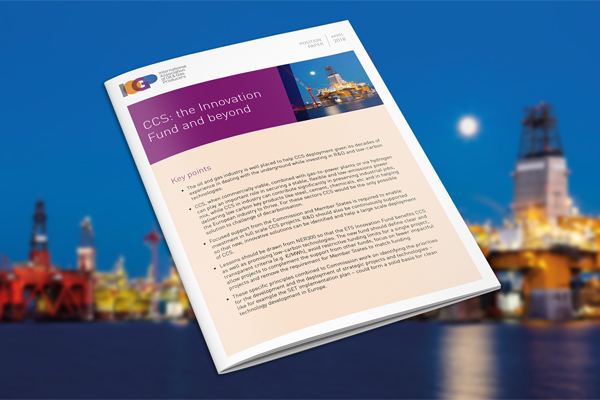
CCS: the Innovation Fund and beyond

OGP contribution to the CCS Directive evaluation

Declining number of announced CO₂ storage projects in Europe highlights gap between EU’s 2030 target and operational reality.

New Pact for the Mediterranean: an opportunity to foster the region’s energy integration

Press release: 2040 Climate trajectory requires urgent action on policy enablers
Press release: State Aid Framework for Clean Industrial Deal marks a turn towards pragmatic decarbonization
Press release: Low-carbon fuels methodology envisaged by the Commission will block key hydrogen production pathways
Joint Letter: Accelerating investments in CO₂ infrastructure
Press Release: Roadmap to end Russian energy imports will require policy signals and regulatory adjustments to succeed.

MEP Jeannette Baljeu on the Crucial Role of CCS in Europe’s Industrial Transition
Draghi Report: a pragmatic pathway to Competitiveness, Sustainability, and Resilience
Press release: Recognition of CCS on path to 2050 marks a step change, but approach to low-carbon solutions remains too narrow.
Letter: Strong support for an implementable and pragmatic Net Zero Industry Act Article 18 – solutions to make CCS work
Net-Zero Industry Act marks a step change in industrial and climate policy – EU paves way for carbon capture and storage scale-up
Letter: Open, inclusive, and pragmatic Green Deal Industrial Plan for Europe
Europe needs a CO2 storage ambition for 2050
Gas market reform marks a step change in EU approach to the transition
New Re-Stream study assesses the feasibility of transport of hydrogen and CO2 in European gas and oil infrastructure
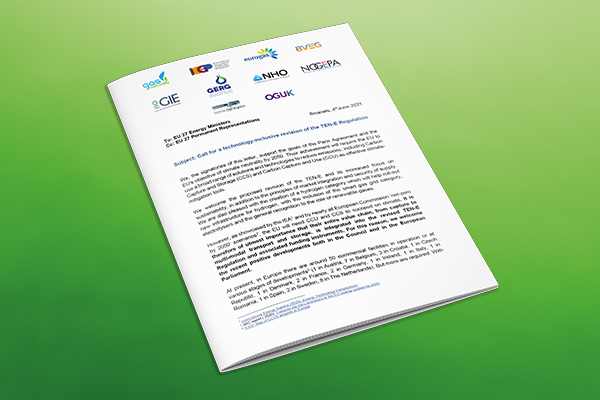
Letter: Call for a technology-inclusive revision of the TEN-E Regulation
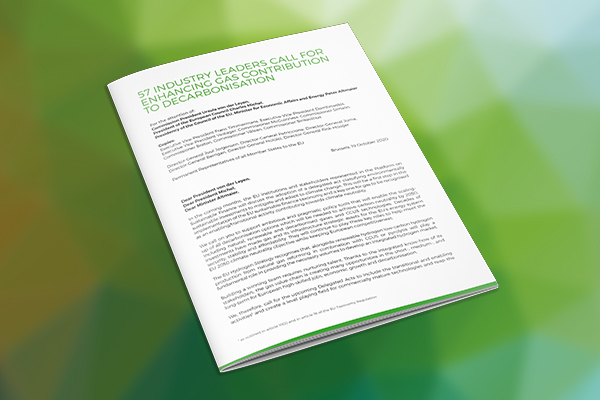
Letter: 57 industry leaders call for enhancing gas contribution to decarbonisation

Carbon Management Webinars
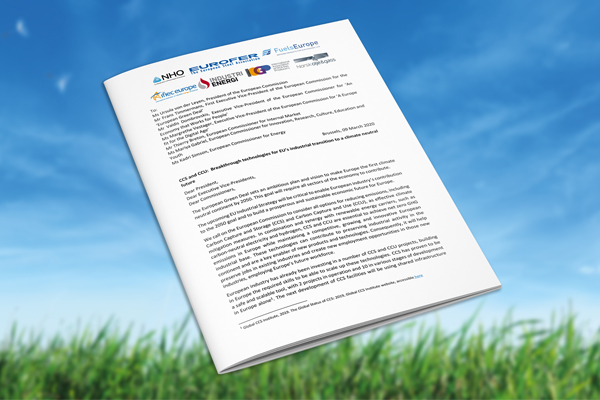
Joint letter: CCS and CCU for the EU’s Industrial Transition

Carbon Capture Europe Summit 2026 | Rotterdam | 11-12 March 2026