IOGP Europe’s response to the European Commission’s Call for Evidence on EU Arctic Policy
IOGP Europe represents the upstream oil and gas industry in Europe. We welcome the opportunity to contribute to the Commission’s call for evidence on its Arctic Policy. The European Arctic includes important hydrocarbon basins that provide a significant portion of the Norwegian oil and gas production that is imported into the European Union and contributes to both the EU’s security of energy supply and delivering Methane Emissions Regulation (MER) potentially compliant hydrocarbons to the Union.
The oil and gas industry recognizes that the Arctic is a sensitive environment. The industry has worked hard in recent decades to develop and implement specific best practices and guidance, including specifically for the Arctic-region. In Europe, Arctic operations are limited to Norwegian waters, which are ice-free year-round. Operators in those Norwegian waters take great care to prevent environmental incidents and in the past 45 years there have been no serious environmental incidents in the Norwegian Arctic associated with oil and gas production. The first oil well was completed in 1981.
Currently about 9% (365 kboe/day) of Norwegian hydrocarbons are produced in the Arctic (here defined as north of the Arctic Circle), and around 30% come from the broader ‘northern Norway region’. Offshore Norge expect that in the future the ‘northern Norway region’ may account for around 50% of Norwegian hydrocarbon production.
IOGP Europe stresses the importance of continued access to hydrocarbons in Arctic regions and other northern areas - and in particular from Norway, Greenland, Alaska and Canada - to provide security of hydrocarbon supply, and MER potentially compliant hydrocarbons to the EU.
IOGP and its members have developed a range of best practice guidance documents, and contributed to international standards (e.g., ISO Standards) that present best practices for Arctic operations, including the Arctic Oil Spill Response Joint Industry Project (https://www.arcticresponsetechnology.org/reports/). The evidence of 45 years without significant environmental incidents in the Norwegian Arctic demonstrates that the industry can, and does, operate safely and responsibly in these challenging environments.
A list of selected industry best practices are provided to demonstrate the industry’s commitment to safe and reliable operations in the Arctic and other cold climates:
- Thirty two (32) separate technical reports on oil spill preparedness issued under Arctic Response Technology JIP, available at: https://www.arcticresponsetechnology.org/reports/
- IOGP, 2013. Environmental management in Arctic oil & gas operations – good practice guide. IOGP Report 449 (note: currently proposed for update)
In addition, IOGP’s members have contributed to international standards, including:
- ISO 19906: 2019 Petroleum and natural gas industries – Arctic offshore structures
- ISO 35101: 2017 Petroleum and natural gas industries – Arctic operations – Working environment
- ISO 35102: 2020 Petroleum and natural gas industries – Arctic operations – Escape, evacuation and rescue from offshore installations
- ISO 35103: 2017 Petroleum and natural gas industries – Arctic operations – Environmental monitoring
- ISO 35104: 2018 Petroleum and natural gas industries – Arctic operations – Ice management
- ISO 35105: 2018 Petroleum and natural gas industries – Arctic operations – Material requirements for Arctic operations
- ISO 35106: 2017 Petroleum and natural gas industries – Arctic operations – Metocean, ice, and seabed data
IOGP Europe believes that Arctic hydrocarbon production can be undertaken safely and responsibly, which has been demonstrated for over 45 years in the Norwegian Arctic. Arctic provinces supply a significant, and growing, portion of the imported Norwegian hydrocarbon into the EU and are critical for security of energy supply, and as a potential source of Methane Emission Regulation-compliant hydrocarbons.
- Publications
- News
- Events
IOGP Europe’s views on the revision of the Oil Stocks Directive
IOGP Europe response to the European Commission’s consultation on the revised Maritime Spatial Planning Directive / Ocean Act

IOGP Europe’s response to the Public consultation on the renewable energy framework (post-2030 RED) for the decade ahead

Joint statement on measures to enhance the Union’s security of energy supply
IOGP Europe’s Response to the Revision of national targets and flexibilities in the EU climate policy framework after 2030

Joint industry recommendations for simplification of the importer requirements of the EU Methane Regulation

Extraordinary taxation risks undermining Europe’s security of supply and energy autonomy

Joint industry recommendations on DG ENER Guidance on penalties for the EUMR

75 organisations and companies call for targeted amendments to the Methane Emissions Reduction Regulation through the EU simplification agenda including the stop-the-clock
IOGP Europe recommendations on workable solutions for the upcoming CO2 markets and infrastructure legislative proposal

Joint Letter in the context of Europe’s Response to High Energy Prices – Concerns Regarding a Natural Gas Price Cap

Upstream Oil & Gas and CCS operations in Europe: Perspective on a proposed EU Universal-PFAS Restriction
IOGP Europe’s response to CO₂ markets and infrastructure public consultation

Joint Statement: calling for reducing methane emissions while ensuring EU energy security

EU Methane Regulation: Addressing the tracing issue to improve compliance

IOGP Europe recommendations to help the EU restore its security of supply and competitiveness through flexible and resilient energy markets.
The Mediterranean: an energy and decarbonization opportunity for Europe
Unlocking the Black Sea’s Strategic Energy Potential

Joint statement on the role of LNG in Europe’s energy transition
Response to the EU Consultation on Commodity Derivatives and Energy Spot Markets
IOGP Europe views on Communication on the Action Plan for Affordable Energy
IOGP Europe opposes any extension of the EU gas storage target to 31 December 2027

Balancing Energy Security, Decarbonization, and Competitiveness in Europeʼs Energy Landscape
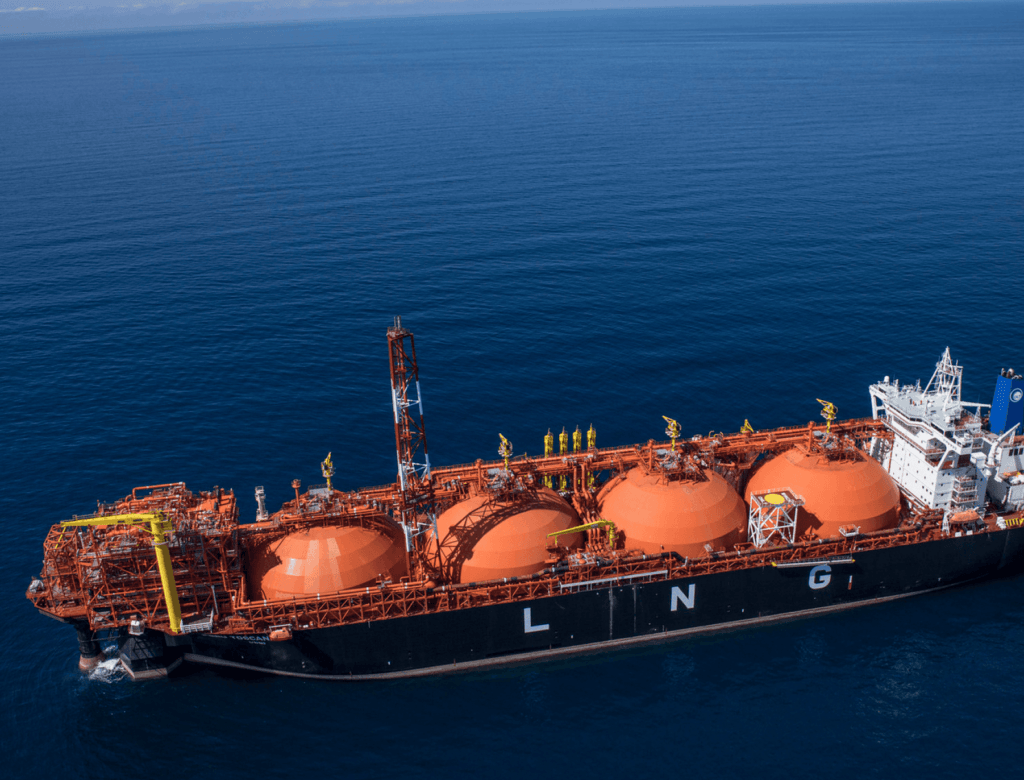
Navigating Towards 2040: The Critical Role of the LNG Industry in Achieving the EU’s Climate Targets

GasNaturally Letter to Competitiveness Council 23 May 2024
IOGP Europe response to European Commission survey on long-term contracts
Download
Rebalancing Europe’s Gas Supply Second Edition
IOGP views on the proposed Regulation amending Regulation (EU) 2021/241 as regards REPowerEU chapters in Recovery and Resilience Plans
IOGP response to the consultation on ‘Securing the EU’s winter gas supply (storage measures)’
Reaction: Proposed market interventions in context of 2021 energy price rises
Global Production Report 2019
2017 European Gas Resources Report: Plenty left and more to find
LNG – a fast lane to make Europe a leader in clean shipping
European Government Revenues from Oil & Gas

State of the European Union: Europe needs energy optionality to strengthen resilience while advancing the transition
Majority of EU Member States call for postponement and targeted amendments to Methane Regulation
Joint Letter: Europe’s Response to High Energy Prices – Concerns Regarding a Natural Gas Price Cap

EU Methane Regulation Risks Severe Disruption to Europe’s Oil and Gas Supply from 2027
New interactive Data Room goes live

IOGP Europe Welcomes 3 New Board Members
Joint Statement: calling for reducing methane emissions while ensuring EU energy security
EU delivers landmark decision in quest to cut red tape, strengthen competitiveness and security of supply
New Pact for the Mediterranean: an opportunity to foster the region’s energy integration

Chris Walker (ExxonMobil), newly appointed Chair of IOGP Europe’s Communications Subcommittee
Press Release: Roadmap to end Russian energy imports will require policy signals and regulatory adjustments to succeed.

Building energy bridges between Brazil and the EU
The case for unrestricted US LNG exports to Europe
IOGP Europe signs the Antwerp Declaration
Press Release: US decision to pause LNG export approvals could put European security of supply at risk

IOGP welcomes ROMGAZ
Letter: Industry views regarding the prolongation of the joint purchasing & demand aggregation mechanism
Letter: Industry views regarding the proposal to establish a permanent demand aggregation and joint purchasing mechanism through the Recast Gas Regulation
Continued cross-sectoral dialogue needed to overcome energy and climate crises
Europe’s energy market proves resilient in 2022 – ensures energy security
Measures chosen by the EU to address high energy prices will impact Europe’s oil and gas industry at a critical time
New study identifies Europe’s supply options to replace Russian gas before 2030
Oil & Gas Decarbonisation Congress 2027