Joint industry recommendations on DG ENER Guidance on penalties for the EUMR
Commission Guidance on penalties Industry recommendations
Summary of the recommendations:
- Penalties should not be the only source of flexibility in the EU MR framework, particularly in a context where key elements required for compliance are missing. Penalties setting should therefore acknowledge such gaps and how much of the relevant current requirements can be met.
- Fragmentation in national implementation represents a significant risk, including for penalties.
- Considering Security of Supply risks when setting penalties is a positive approach, provided it relies on a clear and comprehensive definition of Security of Supply encompassing risks on affordability, allowing to prevent risks ex-ante and matching the timeline of the EU MR reporting requirements. Additionally, it will be required to ensure that when a Security of Supply risk is recognised in a given Member State, it should be acknowledged by the Member States in which the importers supplying that country are established.
- Regarding the guidance being drafted, in light of the current compliance possibility, exacerbated by the emerging energy crisis, we believe the only valid guidance is to have a pan-European grace period associated with a proper grandfathering of the contracts signed in the interim period. Industry remains committed to developing implementable solutions to meet the EU MR objectives. It should be noted that the relief such measures will provide may have different impacts on natural gas vs. crude oil, and that the challenges encountered by the crude oil sectors may require complementary measures: the crude oil market is indeed relying most on short-term/spot deals instead of long-term agreements.
- Guidance is a welcome support from the EC but have no concrete impact in terms of legal certainty at the EU level, something that can only be delivered by changes to the EU legislation and its timeline (e.g., Omnibus with stop-the-clock) and a fully harmonised implementation in all Member States.
1. Penalties should not be the only source of regulatory flexibility
We stress that industry’s primary objective is to be compliant. Ensuring that operators are placed in the condition to comply requires more than setting penalties at zero. A credible regulatory framework requires that obligations and provisions are clear, proportionate and achievable. Defining feasible provisions and providing legal certainty is key to reducing the risk of systematic non‑compliance and contributing to better environmental outcomes.
Recommendation: The sanctions regime should remain the final element of any regulation, and it should not be the main source of flexibility nor the element to provide legal certainty for its implementation.
2. Realistic impact of the EC guidance vs. binding measures
- We appreciate the efforts of the European Commission to provide guidance and to communicate with
Competent Authorities. Nevertheless, we wish to underline that while guidance could be helpful as seen in the REPowerEU discussion, their non-binding character will not: - Provide the legal certainty needed for the industry and Member States
- Fully address the risk of fragmented implementation and solve the fundamental issue we have been seeing of double reporting hence double exposure to different national set of rules/penalties.
Recommendation: The only way to provide necessary certainty would be an EU-level change of the legislation, its timeline and a fully harmonised enforcement across the EU.
3. Penalty setting should reflect compliance feasibility beyond security of supply
- Beyond the relevant impact on Security of (Affordable) Supply, the Industry has consistently advocated for taking into account the possibility to comply in the setting of penalties. As of April 2026, key elements necessary for compliance remain unavailable or incomplete:
- The Implementing Act specifying the evidence to establish MRV equivalence for third countries has yet to be adopted.
- The separate Implementing Acts on a country-by-country basis to establish their equivalence have yet to be initiated.
- The verifiers for e.g., OGMP reports have not yet been accredited by the National Accreditation Bodies and no independent verifier for 3rd countries has been recognized as acceptable. The ISO Standards will be valid in 1.5/2 years – too late for the new requirements.
- The industry considers positive the recognition of certification, but more elements remain to be defined and clarified to launch its implementation for compliance.
Recommendations: Given these gaps, penalties setting should take into account the current status of the regulatory framework and the actual ability of the industry to comply in addition to consideration of the Security of (Affordable) Supply. In light of the current compliance possibility, exacerbated by the starting energy crisis, we believe the only valid guidance is to have a pan-European grace period associated with a proper grandfathering of the contracts signed in the interim period. Industry remains committed to developing implementable solutions to meet the EU MR requirements.
4. Need for harmonisation across the EU
The broad and undefined reference to “security of energy supply”, absent clear coordination mechanisms and well-defined criteria, leaves excessive discretion to Member States, undermining legal certainty by making it impossible for operators to predict how and when the exemption from penalties will be applied at the time of delivery and reporting.
Divergent national interpretations may lead to inconsistent or conflicting enforcement outcomes, distorting the level playing field within the EU internal market. It is also worth noting that the prejudice to Security of Supply recognized by a Competent Authority will only exempt imports from importers established in the same Member State. Finally, it must be underlined that the Competent Authority in a given Member State may not be adequately positioned to assess the occurrence of Security of Supply risks in other Member States.
5. Defining Security of Supply and its application in penalty regimes
We recommend that Security of Supply should be interpreted broadly, beyond what has been presented by the European Commission to Competent Authorities during the 4th Expert Group. It should be notably considering e.g., situations where EU MR requirements and/or national frameworks are at risk to:
- Undermine diversification efforts (e.g., in the context of enabling the phase-out of Russian oil and gas) by creating barriers to contracting or the renewal of supply arrangements from certain origins and routes as well as oil grades, which is overall detrimental to energy security and autonomy;
- Have a material adverse impact on affordability of energy supplies; or,
- Have a material adverse impact on the operations of critical infrastructure e.g., such as refineries, exposed to the competition with oil derivative products that can be produced extra-EU without adhering to the EU MR requirements.
Importantly, these safeguards should apply not only where a security-of-supply risk has materialised in the past but also prevent a foreseeable security-of-supply risk from emerging. National frameworks should therefore include explicit circumstances in which penalties shall be suspended or deferred or producers/importers exempted. Such explicit circumstances must be complemented by clear derogation procedures to follow, along with detailed documents to be presented and timeframes applicable for such request. In defining such circumstances, it should be recalled that security of supply risks arise at the level of supply routes and countries of origin, and penalties should therefore be assessed on the same basis rather than on a contract-by-contract basis.
More specifically with regard to the guidance provided during the 4th Expert Group meeting, we believe that criteria should in general not be contract/importer specific and that any SoS impact assessment should go beyond a given Member State in order to consider neighbouring Member State(s)/regional/EU impact. The criteria should not be limited to the SoS regulatory framework and should adequately cover oil and gas.

- Publications
- News
- Events
18 Organizations send a Joint Industry Letter to European Council on the EU Methane Regulation

Joint industry reaction and recommendations: EU Methane Regulation – DG ENER Recommendations
IOGP Europe’s views on the revision of the Oil Stocks Directive

IOGP Europe’s response to the Public consultation on the renewable energy framework (post-2030 RED) for the decade ahead

EU Methane Regulation Joint Statement ahead of next European Council and TTE Council of June 2026

Joint statement on measures to enhance the Union’s security of energy supply

Joint industry recommendations for simplification of the importer requirements of the EU Methane Regulation

Extraordinary taxation risks undermining Europe’s security of supply and energy autonomy

75 organisations and companies call for targeted amendments to the Methane Emissions Reduction Regulation through the EU simplification agenda including the stop-the-clock
IOGP Europe’s response to the European Commission’s Call for Evidence on EU Arctic Policy

Joint Letter in the context of Europe’s Response to High Energy Prices – Concerns Regarding a Natural Gas Price Cap

Upstream Oil & Gas and CCS operations in Europe: Perspective on a proposed EU Universal-PFAS Restriction
EU Methane Regulation: Joint letter to enable import provisions implementation
IOGP Europe’s response to CO₂ markets and infrastructure public consultation

Joint Statement: calling for reducing methane emissions while ensuring EU energy security

EU Methane Regulation: Addressing the tracing issue to improve compliance

IOGP Europe recommendations to help the EU restore its security of supply and competitiveness through flexible and resilient energy markets.
IOGP Europe Letter to Competitiveness Council
The Mediterranean: an energy and decarbonization opportunity for Europe
Joint letter: Integrating the EU Methane Regulation into the EU Simplification Agenda

Action plan to address key challenges on importers’ requirements in the Methane Regulation

IOGP Europe call for inclusion of the Methane Emissions Regulation in the forthcoming Energy Omnibus Package
Unlocking the Black Sea’s Strategic Energy Potential

Our response to the EC questionnaire on LDAR minimum detection limits and first step underground leak thresholds in the EU Methane Regulation

Joint statement on the role of LNG in Europe’s energy transition
Response to the EU Consultation on Commodity Derivatives and Energy Spot Markets
IOGP Europe views on Communication on the Action Plan for Affordable Energy
IOGP Europe opposes any extension of the EU gas storage target to 31 December 2027

Balancing Energy Security, Decarbonization, and Competitiveness in Europeʼs Energy Landscape
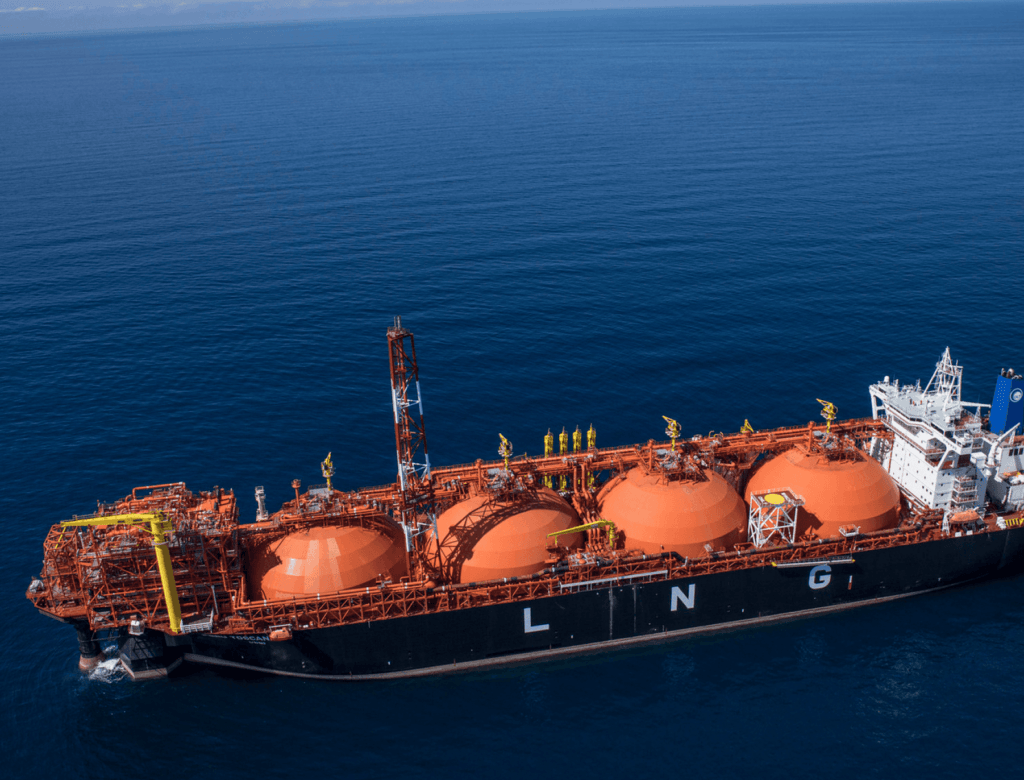
Navigating Towards 2040: The Critical Role of the LNG Industry in Achieving the EU’s Climate Targets
IOGP Europe’s Position on International GHG Supply Chain MMRV Framework

GasNaturally Letter to Competitiveness Council 23 May 2024
IOGP Europe response to European Commission survey on long-term contracts
Download
Rebalancing Europe’s Gas Supply Second Edition
IOGP views on the proposed Regulation amending Regulation (EU) 2021/241 as regards REPowerEU chapters in Recovery and Resilience Plans
IOGP response to the consultation on ‘Securing the EU’s winter gas supply (storage measures)’
IOGP response to Regulation on methane emissions reduction in the energy sector
Reaction: Proposed market interventions in context of 2021 energy price rises
IOGP response to public consultation on legislation to measure and mitigate methane emissions in the energy sector
IOGP answer to the EU roadmap on new rules to prevent methane leakage in the energy sector
Methane Management in the Upstream Oil and Gas Industry: Policy recommendations in the context of the EU Methane Strategy
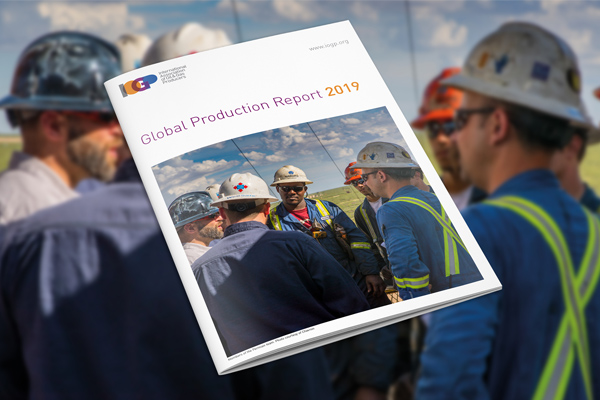
Global Production Report 2019
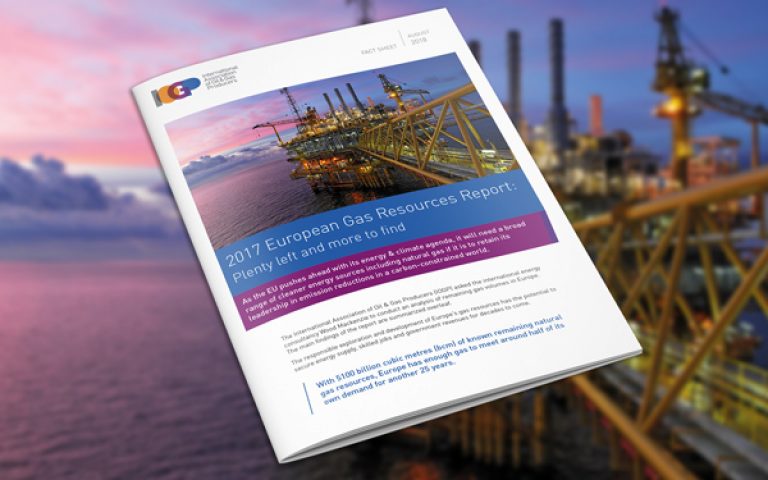
2017 European Gas Resources Report: Plenty left and more to find

LNG – a fast lane to make Europe a leader in clean shipping
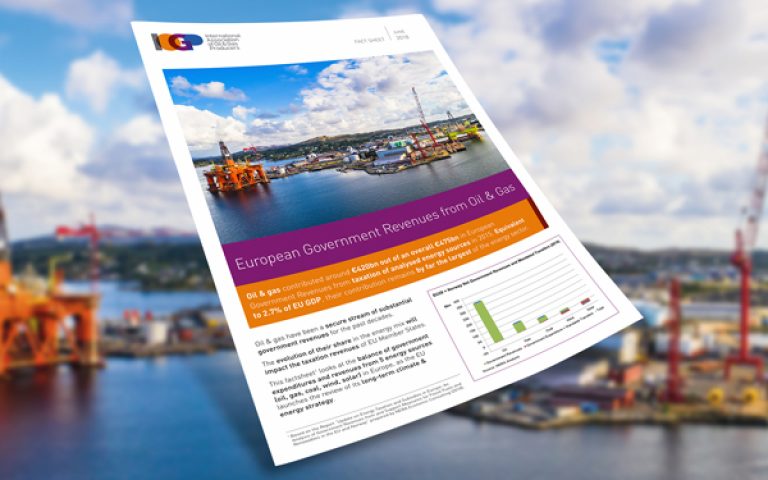
European Government Revenues from Oil & Gas

One year delays the problem; three years will fix it: Why a three-year postponement of the EU Methane Regulation’s importer requirements is needed

State of the European Union: Europe needs energy optionality to strengthen resilience while advancing the transition
21 Energy Associations sign a Joint industry reaction to the EU Methane Regulation Recommendations
Majority of EU Member States call for postponement and targeted amendments to Methane Regulation
Joint statement: Commission Recommendations on Penalties are helpful but do not provide industry with the needed legal certainty
Industry calls for 15 targeted amendments to the EU Methane Regulation to safeguard energy security and preserve environmental ambition
75 organisations and companies call for targeted amendments to the Methane Emissions Reduction Regulation through the EU simplification agenda including the stop-the-clock
Joint Letter: Europe’s Response to High Energy Prices – Concerns Regarding a Natural Gas Price Cap
EU Methane Regulation Risks Severe Disruption to Europe’s Oil and Gas Supply from 2027
Joint Statement: calling for reducing methane emissions while ensuring EU energy security
EU delivers landmark decision in quest to cut red tape, strengthen competitiveness and security of supply
New Pact for the Mediterranean: an opportunity to foster the region’s energy integration
IOGP Europe welcomes EU Energy Ministers’ call for Inclusion of the EU Methane Regulation in upcoming Energy Omnibus
Press Release: Roadmap to end Russian energy imports will require policy signals and regulatory adjustments to succeed.
The case for unrestricted US LNG exports to Europe

Navigating the EU Methane Regulation: Insights & Challenges
EU Approves Methane Regulation: What’s Next for the Industry?

Press Release: US decision to pause LNG export approvals could put European security of supply at risk
Letter: Industry views regarding the prolongation of the joint purchasing & demand aggregation mechanism
Letter: Methane emissions reduction: call for a proportionate, efficient and implementable EU Regulation
Letter: Proposed EU Methane Regulation – International dimension of EU importer requirements

Continued cross-sectoral dialogue needed to overcome energy and climate crises
Europe’s energy market proves resilient in 2022 – ensures energy security

Measures chosen by the EU to address high energy prices will impact Europe’s oil and gas industry at a critical time
New study identifies Europe’s supply options to replace Russian gas before 2030
IOGP response to IEA Global Methane Tracker Report

Methane Emissions Glossary
Guidelines for Methane Emissions target setting – Press Release
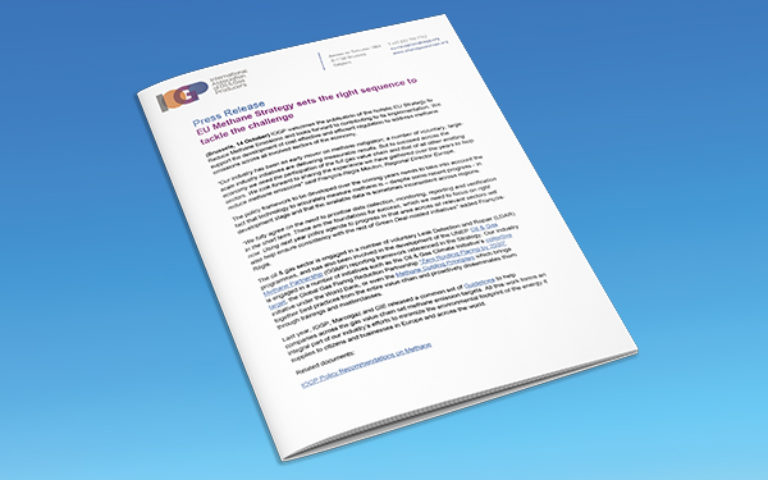
EU Methane Strategy sets the right sequence to tackle the challenge

Guidelines for Methane Emissions target setting
Methane Mitigation Europe 2027
Oil & Gas Decarbonisation Congress 2027



Go Net Zero Energy Summit 2026 to Bring Together CEE Leaders in Bucharest



EU Methane Regulation – How Operators and Stakeholders Can Implement It #3

SPE Europe Energy Conference

EU Methane Regulation – How Operators and Stakeholders Can Implement It #2
EU Methane Regulation – How Operators and Stakeholders Can Implement It #1