Joint industry recommendations for simplification of the importer requirements of the EU Methane Regulation
As the MRV equivalency requirements scheduled to apply from 1st January 2027 are, for the reasons outlined below, not feasible to achieve in practice in the given timeline, we call for the stop-the-clock and consideration of the targeted amendments proposed in this document.
We, the undersigned representatives, fully support the objective of reducing methane emissions by the EU Methane Emissions Regulation (EUMR) and EU’s ambition to reduce greenhouse gas emissions and advance global climate leadership. Our sector is actively advancing efforts to reduce methane emissions through innovation (e.g., investing in advanced monitoring technologies), voluntary action (e.g., OGMP 2.0), and engaging in collaborative projects with international partners to deliver methane reductions (e.g., OGDC).
Our goal is to ensure that the EUMR’s provisions are effective, achievable and practical - achieving real environmental impact while safeguarding Europe’s energy security, competitiveness, and industrial resilience.
The importer requirements of EUMR introduce a new layer of compliance risks and contractual complexities for natural gas, LNG and crude oil importers, which will affect crude and natural gas markets whilst putting a significant burden and compliance risk on EU importers, with uncertain extraterritorial implications, which is expected to reduce supply options for the EU, reduce operational flexibility and increase costs for compliant molecules.
These challenges are exacerbated as the EU is looking for more diverse supply, notably following the phase-out of natural gas supply from Russia.
The most pressing issues are linked to equivalency requirements that start in 2027:
- Many crude oil and natural gas producers in third countries will simply not be able to meet the high requirements for equivalency in time.
- This is partly due to the lack of clarity around, and availability of, recognized verification protocols, as well as the limited number of accredited verifiers with expertise on methane measurement, and the time typically required to complete such independent verification for a particular asset/operator.
- In addition, importers often cannot identify the producer as supply chains are usually complex with the product being traded many times including at virtual trading hubs or from portfolios.
- The use of certificates as requested by industry is not yet clarified and not fully enabled, despite the Commission’s ongoing work on recommendations related to certain high-level criteria for certification. However, implementation of the necessary schemes and suggested controls (e.g., audits) will take time and likely further delay the availability of certification across all relevant exporting countries, for both crude oil and natural gas.
- The uncertainty linked to penalty schemes and - given the above issues - the significant compliance risk for importers and suppliers is already deterring deliveries into the EU for the period beyond 2027 and can lead to serious security of supply issues and price increases. This applies in particular toc rude oil imports because refining operations are designed and optimized around certain crude oil grades/blends and changing supplies will come with a loss of processing capacity, efficiency and flexibility.
- Article 28 is designed to ensure robust methane emissions measurement by producers in preparation for the methane intensity thresholds set by Article29.Therefore, targeted amendments to the relevant provisions are both urgently needed and justified to ensure that consecutive steps are coherent, proportionate, and practically implementable.
- As fixing the issues via “simple and robust implementation” is impossible because additional rules e.g. on Member State (MS) level cannot simply deviate from EUMR provisions and would lead to many different country-level rules, a relief with legal certainty for all actors to avoid unnecessarily jeopardizing security of supply or competitiveness, can only be achieved via targeted simplification coupled with a stop-the-clock mechanism, to allow comprehensive stakeholder consultations addressing fundamental issues of the EUMR, and allow market participants to operationalize all necessary elements for compliance in a structured, effective, and legally certain manner (e.g., approaches to ‘traceability’, setting penalties).
Without targeted adjustments/simplification following a stop-the-clock process, a recent study found that by 2027 up to 43% of natural gas volumes and up to 87% of crude oil volumes could be non-compliant. While the EUMR does not formally prohibit the import of non-compliant natural gas and crude oil, the associated legal, financial, and reputational liability risks for EU importers are substantial – particularly in a context where securing sufficient compliant volumes to meet the EU demand as of January 2027 will be extremely challenging.
These risks are, therefore, likely to deter imports, reduce production capacity in European refineries and jeopardize the security of affordable energy supply. As the exact impact is hard to determine, the same study used another scenario that considers modifications to EUMR leading to a wider amount of compliant products, which still showed a significant impact on prices, shortening of supply, industry competitiveness, and on the overall EU security of oil and natural gas supply.
Contrary to concerns that amending the EUMR would undermine regulatory certainty, a limited and well-defined adjustment of the primary legislation, during a period when implementation deadlines are frozen and enforcement of penalties is paused, is precisely what is required to address structural issues and to deliver clarity, consistency, and legal certainty for operators, investors, and MSs/Competent Authorities (CAs).
Whilst we welcome Commission’s guidance to MSs/CAs on ‘flexible implementation’, it will not be sufficient or able to fix the issues from overly prescriptive requirements and unrealistic timelines in the EUMR and comes with the risk of diverging interpretation and application across MSs that can distort the Union markets for crude and gas/LNG.
The proposals set out in the Annex, which have been developed by the undersigned associations, are non-exhaustive and seek to ensure that the importer requirements under Chapter 5 of the EUMR are implemented in a manner that is effective, proportionate, and operationally feasible, without undermining the objectives of the Regulation.
We highlight some of the key proposals:
- Set a conditional, time-bound deferral of Articles 28 & 29 until essential secondary legislation, MRV standards, methodologies, and verification systems arein place, to provide all stakeholders (incl. verifiers) with sufficient time to develop and set up compliance options.
- Revise producer- and country-level MRV equivalency criteria to make compliance achievable whilst using credible, internationally recognized approaches(including OGMP 2.0 Levels 4–5 pathways), while preserving the EUMR’s ambition to drive high-quality emissions data and abatement.
- Allow third-party verification at a “limited assurance” level, reflecting current verifier capabilities and ensuring scalability across global supply chains.
- Allow the use of voluntary certification schemes for cases where importers cannot identify the producer of the imported quantities.
- Adjust penalty criteria to reflect the physical and commercial realities of crude oil and natural gas markets (e.g. molecule commingling, crude grade constraints), and the limitations of tracing volumes to producers.
- Introduce grandfathering provisions and clarify the treatment of secondary contracts to preserve legal certainty, market liquidity, and security of supply.
- Anchor the importer definition firmly in the Union Customs Code to ensure legal certainty, consistent enforcement across MSs, and clarity on responsibilities for EU- and non-EU-established entities.
Finally, and regardless of the recommended adjustments, it would be advisable for the European Commission to conduct a thorough impact assessment of the importer requirements, focusing on key criteria such as workability, environmental effectiveness, security of supply and competitiveness.
Download the document to see further details

- Publications
- News
- Events
18 Organizations send a Joint Industry Letter to European Council on the EU Methane Regulation

Joint industry reaction and recommendations: EU Methane Regulation – DG ENER Recommendations
IOGP Europe’s views on the revision of the Oil Stocks Directive

IOGP Europe’s response to the Public consultation on the renewable energy framework (post-2030 RED) for the decade ahead

EU Methane Regulation Joint Statement ahead of next European Council and TTE Council of June 2026

Joint statement on measures to enhance the Union’s security of energy supply

Extraordinary taxation risks undermining Europe’s security of supply and energy autonomy

Joint industry recommendations on DG ENER Guidance on penalties for the EUMR

75 organisations and companies call for targeted amendments to the Methane Emissions Reduction Regulation through the EU simplification agenda including the stop-the-clock
IOGP Europe’s response to the European Commission’s Call for Evidence on EU Arctic Policy

Joint Letter in the context of Europe’s Response to High Energy Prices – Concerns Regarding a Natural Gas Price Cap

Upstream Oil & Gas and CCS operations in Europe: Perspective on a proposed EU Universal-PFAS Restriction
EU Methane Regulation: Joint letter to enable import provisions implementation
IOGP Europe’s response to CO₂ markets and infrastructure public consultation

Joint Statement: calling for reducing methane emissions while ensuring EU energy security

EU Methane Regulation: Addressing the tracing issue to improve compliance

IOGP Europe recommendations to help the EU restore its security of supply and competitiveness through flexible and resilient energy markets.
IOGP Europe Letter to Competitiveness Council
The Mediterranean: an energy and decarbonization opportunity for Europe
Joint letter: Integrating the EU Methane Regulation into the EU Simplification Agenda

Action plan to address key challenges on importers’ requirements in the Methane Regulation

IOGP Europe call for inclusion of the Methane Emissions Regulation in the forthcoming Energy Omnibus Package
Unlocking the Black Sea’s Strategic Energy Potential

Our response to the EC questionnaire on LDAR minimum detection limits and first step underground leak thresholds in the EU Methane Regulation

Joint statement on the role of LNG in Europe’s energy transition
Response to the EU Consultation on Commodity Derivatives and Energy Spot Markets
IOGP Europe views on Communication on the Action Plan for Affordable Energy
IOGP Europe opposes any extension of the EU gas storage target to 31 December 2027

Balancing Energy Security, Decarbonization, and Competitiveness in Europeʼs Energy Landscape
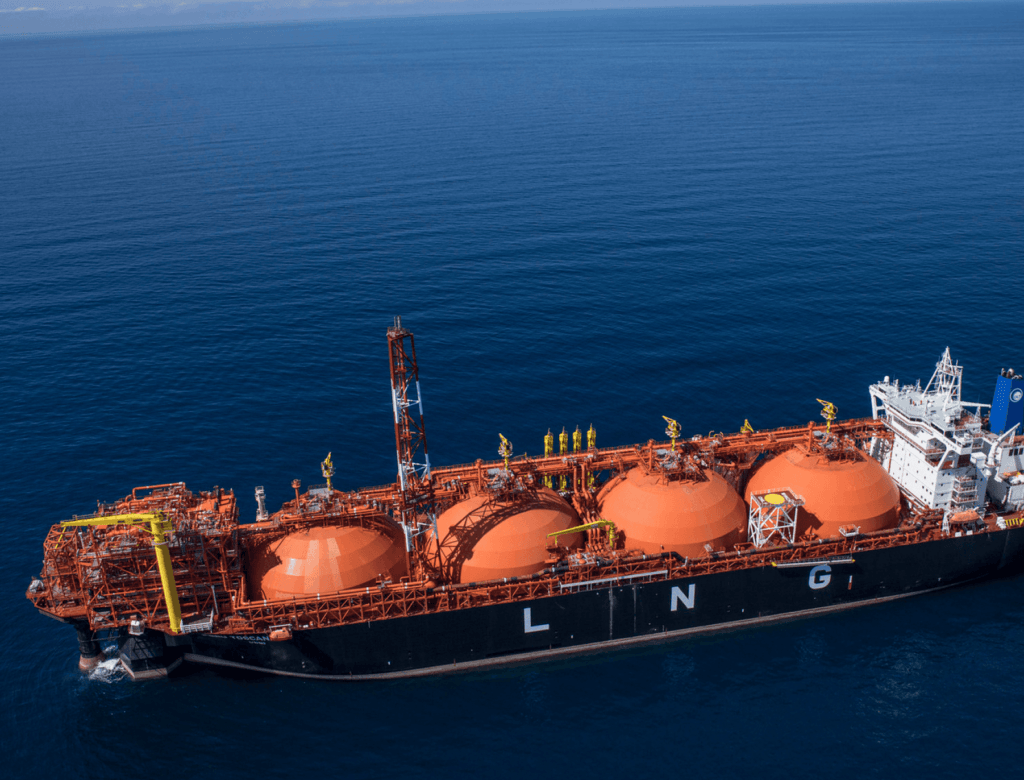
Navigating Towards 2040: The Critical Role of the LNG Industry in Achieving the EU’s Climate Targets
IOGP Europe’s Position on International GHG Supply Chain MMRV Framework

GasNaturally Letter to Competitiveness Council 23 May 2024
IOGP Europe response to European Commission survey on long-term contracts
Download
Rebalancing Europe’s Gas Supply Second Edition
IOGP views on the proposed Regulation amending Regulation (EU) 2021/241 as regards REPowerEU chapters in Recovery and Resilience Plans
IOGP response to the consultation on ‘Securing the EU’s winter gas supply (storage measures)’
IOGP response to Regulation on methane emissions reduction in the energy sector
Reaction: Proposed market interventions in context of 2021 energy price rises
IOGP response to public consultation on legislation to measure and mitigate methane emissions in the energy sector
IOGP answer to the EU roadmap on new rules to prevent methane leakage in the energy sector
Methane Management in the Upstream Oil and Gas Industry: Policy recommendations in the context of the EU Methane Strategy
Global Production Report 2019
2017 European Gas Resources Report: Plenty left and more to find

LNG – a fast lane to make Europe a leader in clean shipping
European Government Revenues from Oil & Gas

One year delays the problem; three years will fix it: Why a three-year postponement of the EU Methane Regulation’s importer requirements is needed

State of the European Union: Europe needs energy optionality to strengthen resilience while advancing the transition
21 Energy Associations sign a Joint industry reaction to the EU Methane Regulation Recommendations
Majority of EU Member States call for postponement and targeted amendments to Methane Regulation
Joint statement: Commission Recommendations on Penalties are helpful but do not provide industry with the needed legal certainty
Industry calls for 15 targeted amendments to the EU Methane Regulation to safeguard energy security and preserve environmental ambition
75 organisations and companies call for targeted amendments to the Methane Emissions Reduction Regulation through the EU simplification agenda including the stop-the-clock
Joint Letter: Europe’s Response to High Energy Prices – Concerns Regarding a Natural Gas Price Cap
EU Methane Regulation Risks Severe Disruption to Europe’s Oil and Gas Supply from 2027
Joint Statement: calling for reducing methane emissions while ensuring EU energy security
EU delivers landmark decision in quest to cut red tape, strengthen competitiveness and security of supply
New Pact for the Mediterranean: an opportunity to foster the region’s energy integration
IOGP Europe welcomes EU Energy Ministers’ call for Inclusion of the EU Methane Regulation in upcoming Energy Omnibus
Press Release: Roadmap to end Russian energy imports will require policy signals and regulatory adjustments to succeed.
The case for unrestricted US LNG exports to Europe

Navigating the EU Methane Regulation: Insights & Challenges
EU Approves Methane Regulation: What’s Next for the Industry?

Press Release: US decision to pause LNG export approvals could put European security of supply at risk
Letter: Industry views regarding the prolongation of the joint purchasing & demand aggregation mechanism
Letter: Methane emissions reduction: call for a proportionate, efficient and implementable EU Regulation
Letter: Proposed EU Methane Regulation – International dimension of EU importer requirements

Continued cross-sectoral dialogue needed to overcome energy and climate crises
Europe’s energy market proves resilient in 2022 – ensures energy security

Measures chosen by the EU to address high energy prices will impact Europe’s oil and gas industry at a critical time
New study identifies Europe’s supply options to replace Russian gas before 2030
IOGP response to IEA Global Methane Tracker Report
Methane Emissions Glossary
Guidelines for Methane Emissions target setting – Press Release
EU Methane Strategy sets the right sequence to tackle the challenge
Guidelines for Methane Emissions target setting
Methane Mitigation Europe 2027
Oil & Gas Decarbonisation Congress 2027



Go Net Zero Energy Summit 2026 to Bring Together CEE Leaders in Bucharest


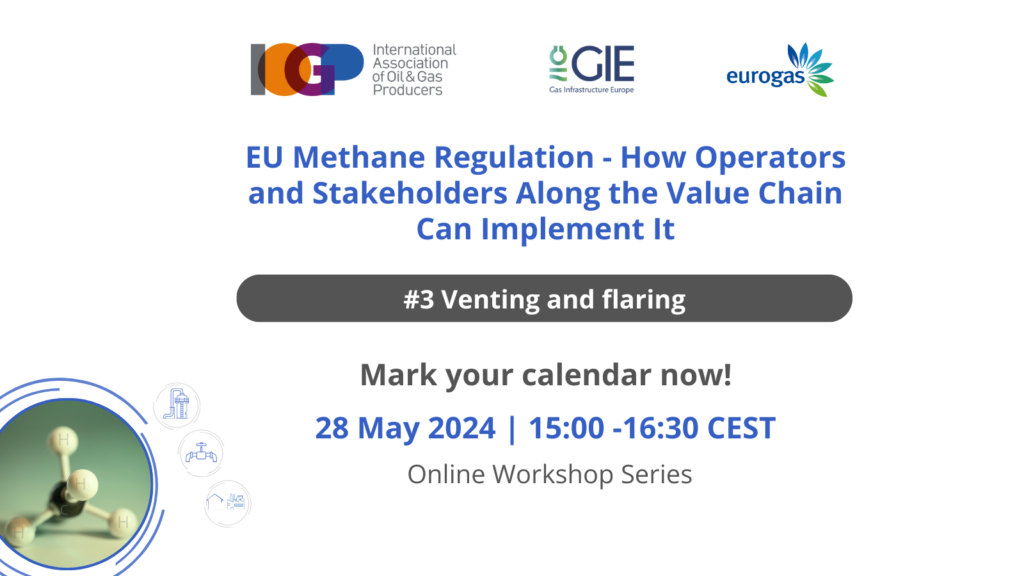
EU Methane Regulation – How Operators and Stakeholders Can Implement It #3

SPE Europe Energy Conference

EU Methane Regulation – How Operators and Stakeholders Can Implement It #2
EU Methane Regulation – How Operators and Stakeholders Can Implement It #1