Action plan to address key challenges on importers’ requirements in the Methane Regulation
Context – Challenges and current status of the Methane Regulation implementation
The Methane Regulation (MR) is an important step in aligning climate ambitions with global energy trade. The industry supports the objectives and, in principle, endorses the EU’s goals to enhance transparency with regards to imports of fossil natural gas and crude oil and the wider uptake of methane emission mitigation solutions across the globe.
As voiced by the industry during the 39th Madrid Forum and in the recent ACER 2025 Monitoring report, the implementation of the MR is currently facing significant challenges at all levels. This is linked to the implementation of complex technical/operational requirements, the demanding timelines of the MR, the remaining regulatory uncertainties and the MR’s extraterritorial implications. These challenges are creating risks for the security and affordability of energy supply and feedstock to the EU. Accessing compliant supply is even more challenging for refiners, as they require specific crude grades for their operations. This comes at a time when the EU faces a significant and growing natural gas supply gap in coming years.
The regulatory uncertainty is impacting market participants with, for example, undefined future compliance rules and severe liability risks with potential penalties of up to 20% of an importer’s annual turnover. In addition, Member States are finding it hard to match the timeline: some are delaying implementation and enforcement as a result. Taken together, these issues stall risk assessments, delay contract negotiations, the conclusion of deals and could ultimately threaten Europe’s energy security.
Considering the complex nature of global supply chains with commingled products from multiple sources involving a large number of market participants, it is a significant challenge for importers to identify the producer of the imported volumes, which also explains the limited number of data reported to competent authorities under the recent Art.27 deadline.
We recommend that importers’ obligations - like MRV equivalence and methane intensity reporting requirements - only apply after all elements required for implementation including relevant CEN/ISO standards (and 3rd party verification) are in place. At a minimum, pending clear rules on how importers can demonstrate compliance, a penalty grace period should be put in place, with appropriate grandfathering to protect contracts signed in the interim. The Commission sending a signal to Member States in that direction would encourage contract negotiations to recommence.
As the Commission strives to simplify business rules, the industry urges a similar, streamlined approach for the simplification of the EU Methane Regulation, as also supported in the 16 June Presidency Conclusions, and stands ready to help.
Please find below the actions we recommend each party take to address key challenges on requirements for importers of natural gas and crude oil in support of a pragmatic and effective implementation.
Actions we recommend for the European Commission
- In order to keep the grace period to a minimum, we strongly encourage the Commission to accelerate work on the secondary legislation: these are pre-requisites for the required certainty on compliance pathways and for ensuring efficient implementation.
- To duly assess all challenges and rapidly address Member States’ concerns regarding the Methane Regulation expressed during the Council meeting on 16 June 2025.
- The Commission should actively engage and cooperate with exporting countries and suppliers to overcome any issues related to the MR implementation (e.g. MRV equivalence).
Actions we recommend for Member States
- Member States should carefully prepare for implementation and ask for any guidance to do so. Despite the February 2025 deadline, only around 17 Member States have communicated their respective Competent Authorities and only a handful of Member States developed and communicated some details about the national implementation e.g. empowerment of the Competent Authorities, clarification of the reporting process, templates and penalties. As highlighted above, we encourage Member States to implement a unified grace period with adequate grandfathering provisions to properly reflect the challenges currently encountered, to be applied until the relevant rules are in place and operational.
- We recommend strong coordination between Member States, supported by the Commission with the involvement of ACER, notably through the recently established Network of competent authorities. This coordination should cover aspects of the implementation and enforcement, and should deliver unified guidelines for the acceptance, by Member States, of voluntary frameworks for the certification and verification of methane attributes. Such coordination should also involve operators and relevant industry stakeholders.
- Member States must ensure that their national implementation is consistent and harmonized across the Union. Member States coordination is key to ensure capacity building, resources allocation and ultimately harmonized implementation. Industry stands ready to get involved in those discussions, in a similar approach already taken by the critical Gas and Oil Coordination Groups and underline the importance of engagement by Member States.
- When setting the enforcement provisions, Member States should consider the importers' efforts and their actual compliance options.
Actions for the Industry to carry out
The Industry representatives supporting this Action Plan are actively cooperating with the Member States and the Commission with a view to address any issues related to EU MR implementation of the importers’ requirements, notably by exploring voluntary compliance pathways, particularly to address the challenge of certifying and tracking methane emissions attributes and information from producers. Certification and traceability have broader relevance too - impacting Low Carbon Hydrogen and ESG reporting. Therefore, the undersigned are currently working on options to transfer methane attributes and related information from producers to EU importers.

- Publications
- News
- Events
18 Organizations send a Joint Industry Letter to European Council on the EU Methane Regulation

Joint industry reaction and recommendations: EU Methane Regulation – DG ENER Recommendations

EU Methane Regulation Joint Statement ahead of next European Council and TTE Council of June 2026

Joint industry recommendations for simplification of the importer requirements of the EU Methane Regulation

Joint industry recommendations on DG ENER Guidance on penalties for the EUMR

75 organisations and companies call for targeted amendments to the Methane Emissions Reduction Regulation through the EU simplification agenda including the stop-the-clock
EU Methane Regulation: Joint letter to enable import provisions implementation

Joint Statement: calling for reducing methane emissions while ensuring EU energy security

EU Methane Regulation: Addressing the tracing issue to improve compliance

IOGP Europe recommendations to help the EU restore its security of supply and competitiveness through flexible and resilient energy markets.
IOGP Europe Letter to Competitiveness Council
Joint letter: Integrating the EU Methane Regulation into the EU Simplification Agenda

IOGP Europe call for inclusion of the Methane Emissions Regulation in the forthcoming Energy Omnibus Package

Our response to the EC questionnaire on LDAR minimum detection limits and first step underground leak thresholds in the EU Methane Regulation
IOGP Europe’s Position on International GHG Supply Chain MMRV Framework
IOGP response to Regulation on methane emissions reduction in the energy sector
IOGP response to public consultation on legislation to measure and mitigate methane emissions in the energy sector
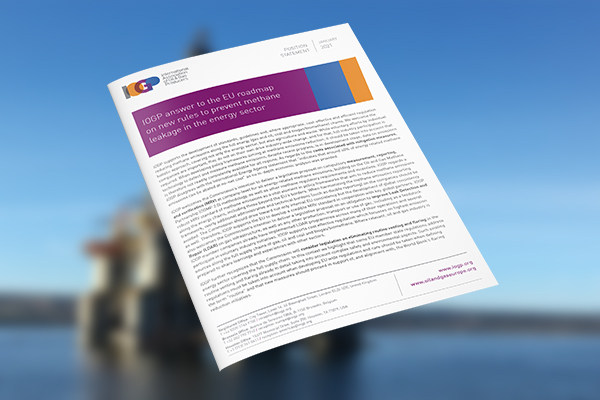
IOGP answer to the EU roadmap on new rules to prevent methane leakage in the energy sector
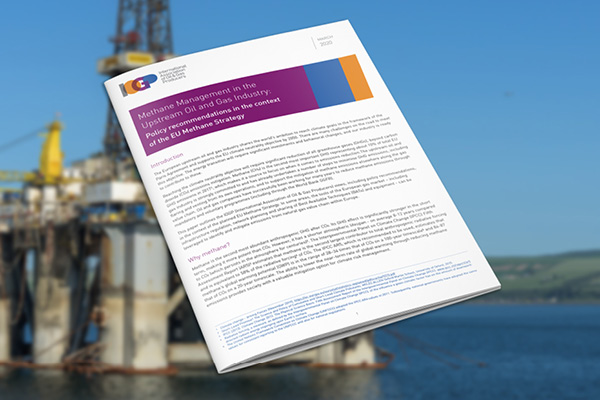
Methane Management in the Upstream Oil and Gas Industry: Policy recommendations in the context of the EU Methane Strategy

One year delays the problem; three years will fix it: Why a three-year postponement of the EU Methane Regulation’s importer requirements is needed

State of the European Union: Europe needs energy optionality to strengthen resilience while advancing the transition
21 Energy Associations sign a Joint industry reaction to the EU Methane Regulation Recommendations
Majority of EU Member States call for postponement and targeted amendments to Methane Regulation
Joint statement: Commission Recommendations on Penalties are helpful but do not provide industry with the needed legal certainty
Industry calls for 15 targeted amendments to the EU Methane Regulation to safeguard energy security and preserve environmental ambition
75 organisations and companies call for targeted amendments to the Methane Emissions Reduction Regulation through the EU simplification agenda including the stop-the-clock
EU Methane Regulation Risks Severe Disruption to Europe’s Oil and Gas Supply from 2027
Joint Statement: calling for reducing methane emissions while ensuring EU energy security
IOGP Europe welcomes EU Energy Ministers’ call for Inclusion of the EU Methane Regulation in upcoming Energy Omnibus
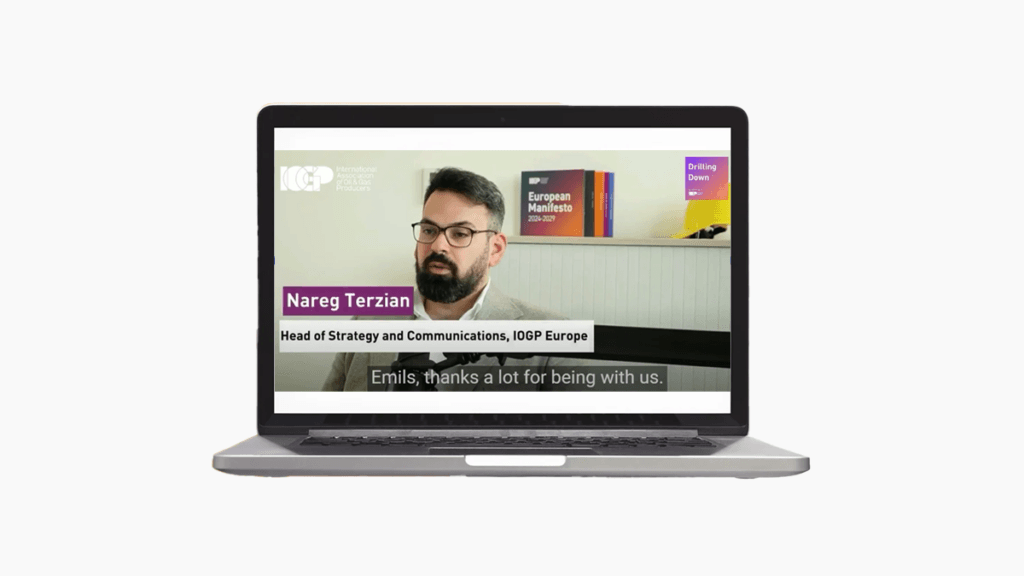
Navigating the EU Methane Regulation: Insights & Challenges
EU Approves Methane Regulation: What’s Next for the Industry?
Letter: Methane emissions reduction: call for a proportionate, efficient and implementable EU Regulation
Letter: Proposed EU Methane Regulation – International dimension of EU importer requirements
IOGP response to IEA Global Methane Tracker Report
Methane Emissions Glossary
Guidelines for Methane Emissions target setting – Press Release
EU Methane Strategy sets the right sequence to tackle the challenge
Guidelines for Methane Emissions target setting
Methane Mitigation Europe 2027


Go Net Zero Energy Summit 2026 to Bring Together CEE Leaders in Bucharest


EU Methane Regulation – How Operators and Stakeholders Can Implement It #3

SPE Europe Energy Conference

EU Methane Regulation – How Operators and Stakeholders Can Implement It #2
EU Methane Regulation – How Operators and Stakeholders Can Implement It #1