Joint Letter: Delivering Europe’s Hydrogen Ambitions – Joint Industry Roadmap Ahead of the First European Hydrogen Forum
We, the undersigned organisations, representing the entire hydrogen value chain in Europe, welcome the organisation of the first European Hydrogen Regulatory Forum. This constitutes a necessary platform to foster open and structured dialogue between policy makers, regulators, and industry representatives to address outstanding regulatory challenges.
With the core legislative framework in force, this Forum offers the right setting to assess what delivers positive results, simplify what falls short, and ensure that the rules reflect real-world market conditions.
Over the past years, the European Union has positioned hydrogen and its derivatives as a central pillar of its climate, energy and industrial strategies. However, despite the stated level of ambition, ramp up of the market have faced delays, underpinning the need for regulatory adjustments.
The current policy landscape relies on highly detailed and prescriptive rules, leaving limited room for flexibility in a still-nascent market. This lack of proportionality increases costs, constrains market uptake, and prevents the emergence of a viable business case for both renewable and low carbon hydrogen and its derivatives across the entire value chain.
Addressing the shortcomings of the regulatory framework now is essential to drive the hydrogen business case, unlock demand, and ensure hydrogen and its derivatives can deliver on their role in Europe’s decarbonisation, resilience and competitiveness objectives. We therefore see this Regulatory Forum as a timely opportunity to highlight these constraints and to engage in a constructive discussion on how to build an open and liquid market. The way forward should be structured around the following action points, each to be addressed with the same level of priority and in a coordinated manner:
- Ramping up production: The rules governing hydrogen production and its derivatives, be it renewable or low carbon, are too rigid and complex. The current approach needs to be significantly simplified, to provide flexibility and ensure technology-neutrality, by linking support and eligibility based on verified lifecycle GHG intensity of the fuel.
- Scaling up demand: The policy focus should be directed to efforts developing market-based frameworks that reward lower GHG-intensity products on the basis of lifecycle CO₂ emission performance standards.
- Rolling out infrastructure: Hydrogen infrastructure is essential to Europe’s market scale-up. A phased cluster-based approach, aligned with the development of a future European backbone, should steer investment, complemented by blending, asset repurposing and the recognition of CO₂ infrastructure as strategic to the hydrogen value chain.
- Strengthening financing and de-risking: Financing frameworks should provide support across the hydrogen value chain, addressing competitiveness gaps, de-risking infrastructure and enabling timely final investment decisions.
- Facilitating imports to complement domestic production: The revised European Hydrogen Strategy should more comprehensively address the role of both renewable and low-carbon hydrogen imports and derivatives, clarifying viable mechanisms, potential infrastructure (including import corridors and bunkering) and strategic partnerships to support EU’s demand ambitions.
Ramping up production
The European Union has set highly ambitious objectives for hydrogen, with a strong focus on renewable hydrogen. Starting with the European Hydrogen Strategy in 2020, non-binding deployment targets for renewable hydrogen including derivatives were introduced, while the strategy also acknowledged the transitional role of low-carbon hydrogen in supporting early market development. These production targets were subsequently reaffirmed and increased in later initiatives, including the REPowerEU Plan.
In parallel, the EU adopted detailed and prescriptive rules governing the production and certification of renewable and low-carbon hydrogen and derivatives, with the objective of providing regulatory certainty and a clear classification framework. While this has overall intended to deliver definitional clarity, it has also resulted in a high level of regulatory complexity, increasing administrative burdens and compliance costs for project developers. In practice, this complexity and prescriptiveness for both RFNBO and Low-Carbon Fuels Delegated Acts has become a barrier to investment and have slowed down project development, leading to a slower than anticipated market development, as highlighted in ACER’s 2024 and 2025 Hydrogen Market Monitoring Reports.
Against this backdrop, there is a clear need to enable all forms of clean hydrogen and derivatives, both renewable and low carbon, to contribute effectively to the EU’s decarbonisation objectives. Policy design should prioritise the greenhouse gas performance of the final product: hydrogen delivering at least 70% greenhouse gas emission reductions, and rewarded for further reductions, should be equally eligible to support market scale-up. This technology-neutral approach is essential to unlock sufficient volumes, reduce costs, and provide European industry with the clean and affordable hydrogen it needs to decarbonise. This principle should be firmly embedded in the upcoming European Hydrogen Strategy revision.
Scaling up demand
On the demand side, EU policy has primarily focused on identifying hard-to-decarbonise sectors as priority end-uses and introducing binding renewable consumption targets. However, effective demand creation remains one of the weakest elements of the hydrogen value chain.
End-users continue to face high costs, insufficient enabling conditions, and limited access to both hydrogen and derivatives supply and dedicated infrastructure. In most cases, binding targets for renewable hydrogen have been introduced without sufficient enabling measures, such as financial support, risk-sharing mechanisms or reasonable regulatory flexibility that takes into account regional differences. Similarly, the lack of corresponding incentives for low carbon hydrogen neglects its complementary role in the EU hydrogen framework. This misalignment increases the risk of non-delivery and ultimately undermines investor and consumer confidence.
At the same time, a major barrier to scaling hydrogen consumption is the difficulty of securing long‑term offtake agreements, which are essential for project bankability. Developers need multi‑year commitments to reach FID or long-term regulatory clarity. Yet, industrial consumers often struggle to enter such contracts due to persistent uncertainty about the long‑term competitiveness of European industry. This demand‑side risk weakens the viability of renewable and low‑carbon hydrogen projects and exacerbates slow market development.
The next phase of EU hydrogen policy should therefore place a stronger emphasis on technology neutrality and creating bankable and affordable demand. This requires closer alignment between demand targets and realistic level of regulation, combined with targeted transitional support for early movers.
It is now time to shift the policy focus to develop market-based frameworks that reward lower GHG-intensity products on the basis of lifecycle CO₂ emission performance standards. One of the measures to achieve this is the development of standardised, transparent and tradable mechanisms, such as renewable and low carbon hydrogen certificates (i.e., Proofs of Sustainability, Guarantees of Origin) ensuring harmonised and streamlined certification rules.
The Industrial Accelerator Act is expected to serve as a key first step in scaling up hydrogen demand. To achieve this, the Regulation should recognise all hydrogen pathways with a lower GHG footprint and incentivise the uptake of renewable and low carbon hydrogen and derivatives across sectors. This requires a technology-neutral framework that enables industry to choose the most effective solutions to reduce emissions, rather than being constrained by rigid regulations. Without such flexibility, many sectors will struggle to remain in Europe and be competitive on the global stage.
Rolling out infrastructure
Infrastructure is a cornerstone for the emergence of a competitive hydrogen market. Aligning infrastructure deployment with project ambition will unlock investment, strengthen supply–demand linkages and accelerate the transition toward a fully functioning market.
In the short term, scaling a competitive hydrogen market will likely require a gradual, cluster-based approach, while cross-border networks, including import corridors, are already built to develop an interconnected European hydrogen backbone. Ensuring harmonised hydrogen quality standards and interoperability requirements will be essential to facilitate cross-border trade and enable full integration into the EU energy system.
Hydrogen storage, terminals and bunkering facilities should be developed in parallel with transport and distribution infrastructure, under proportionate and supportive regulatory frameworks, to ensure flexibility, resilience and a market-driven pathway towards a future European backbone.
Alongside the rollout of dedicated hydrogen infrastructure, accelerating the ramp-up of the European hydrogen market will require pragmatic transitional measures. In this context, policy should support blending solutions and the repurposing of existing assets where technically and economically viable, enabling early demand growth, reducing upfront system costs and building momentum towards a fully developed hydrogen network.
Finally, the scale-up of hydrogen derivatives such as chemicals or e-fuels, often requires reliable access to captured carbon sources. Considering the upcoming revision of the EU ETS and ongoing discussions on EU CO2 transport and storage infrastructure, regulatory alignment is critical. Given the interdependence between hydrogen production and carbon management, the EU framework should recognise and enable the development of CO2 transport and storage infrastructure as strategic for the hydrogen value chain.
Strengthening financing and de-risking
Adequate and well-designed public financing, supporting both CAPEX and OPEX, remains a key precondition for the development and scale-up of a competitive hydrogen market in Europe. The Clean Industrial Deal State Aid Framework represents a step forward by enabling support for both renewable and low-carbon hydrogen solutions, with GHG emission reductions as the overarching objective.
Nevertheless, financing and de-risking needs remain significant, and existing mechanisms are not yet sufficient to close the cost gap between hydrogen and derivatives and conventional alternatives at scale or provide insufficient payback periods for investments. The current funding landscape is characterised by complexity, lengthy procedures, and limited visibility on future support conditions, all of which continue to constrain final investment decisions.
Going forward, priority should be given to adapting and better coordinating existing instruments to improve their effectiveness. In particular, adjustments to the European Hydrogen Bank to allow support for all low-carbon hydrogen pathways, based on greenhouse gas performance, would help accelerate market uptake. This should be coupled with an increased budget allocated to this financing instrument.
In parallel, the Industrial Decarbonisation Bank announced under the Clean Industrial Deal should provide timely and substantial and complementary support to hydrogen demand in industry, including through operational support where appropriate to close the cost gap for industrial consumers.
Carbon Contracts for Difference (CCfDs) should also be considered as a financing tool to support the European hydrogen industry. In particular, these instruments should cover the full value chain and act as a bridge until the European Competitiveness Fund is fully operational, preventing a timing mismatch between regulatory obligations and financial support.
De-risk investments using EU and national ETS revenues earmarked towards investment in scale-up of renewable and low carbon hydrogen and derivatives and clean technologies should be introduced. This is especially relevant for sectors such as maritime and aviation where uptake is limited due to volume constraints and refuelling facility availability.
Furthermore, hydrogen infrastructure investments face high risks and uncertainty due to the anticipatory nature of investments. Support would be justified by the positive externalities that sector coupling, and hydrogen would bring to the system and the lack of maturity of the sector. Introducing adequate support and de-risking mechanisms can also represent an essential enabler to unlock private investments. Tools like inter-temporal cost-allocation should be considered to support infrastructure investments, as foreseen under Article 5 EU Regulation 2024/1789.
Such financing instruments and cost allocation rules should be designed to preserve neutral access and avoid creating barriers for new entrants, in particular by limiting unintended impacts on secondary trading and short-term market participation.
Facilitating imports to complement domestic production
The EU has identified hydrogen imports as a necessary complement to domestic production, contributing to supply diversification, cost efficiency and the development of a global hydrogen market. In this context, the REPowerEU Plan sets an ambitious target of importing 10 Mt of renewable hydrogen from third countries.
To provide a clear and credible pathway, the revised European Hydrogen Strategy should more comprehensively address the role of renewable and low-carbon hydrogen and derivatives imports, clarifying viable mechanisms, potential infrastructure (including terminals, crackers, import corridors and bunkering facilities) and strategic partnerships to support EU’s supply ambitions. This would be aligned with the Union Strategy for imported and domestic hydrogen foreseen under the RED III.
To achieve this, the timely development of import-related infrastructure, including terminals, crackers, storage, transport and bunkering facilities, is critical to enable scalable and secure supply. This will require, in particular, reinforced support under the Connecting Europe Facility, alongside the swift and effective implementation of the Hydrogen and Decarbonised Gas Market Package adopted in 2024.
This should be aligned with the objective of integrated, cross-border planning for gas, electricity and hydrogen infrastructure, based on transparent assumptions and with planning responsibilities remaining anchored in the expertise of network operators, storage system operators and producers. The Grids Package initiative should not be limited to few hydrogen corridors and should provide optimal conditions for the eventual development of the entire European Hydrogen Backbone.

- Publications
- News
- Events

Joint statement on the European Commission’s Grids Package

IOGP Europe position on Industrial Accelerator Act and recommendations for modifications

IOGP Europe’s response to the Public consultation on the renewable energy framework (post-2030 RED) for the decade ahead

Extraordinary taxation risks undermining Europe’s security of supply and energy autonomy

Joint Letter in the context of Europe’s Response to High Energy Prices – Concerns Regarding a Natural Gas Price Cap

Reforming energy taxation, charges and levies to support affordability

IOGP Europe’s response to CO₂ markets and infrastructure public consultation

IOGP Europe calls for simplification of the hydrogen regulatory framework through the Omnibus Package

Joint Statement: calling for reducing methane emissions while ensuring EU energy security

Recommendations on the proposed new EU funding architecture under the MFF (2028-2034)

EU Methane Regulation: Addressing the tracing issue to improve compliance

IOGP Europe recommendations to help the EU restore its security of supply and competitiveness through flexible and resilient energy markets.

IOGP Europe’s response to the call for evidence on the General Block Exemption Regulation (GBER)

Ten action points for a Hydrogen Grids Strategy

IOGP Europe’s response to Draft T&Cs for the H2 Bank third auction

The Mediterranean: an energy and decarbonization opportunity for Europe

IOGP Europe views on the Grids Package

IOGP Europe response to consultation on the Industrial Decarbonisation Accelerator Act (IDAA) and call for evidence

Joint statement: Urgent need for European Commission to correct course on the draft Delegated Regulation on Low Carbon Fuels

The upcoming Grids Package: a critical opportunity not to be missed for the deployment of a European hydrogen infrastructure
Unlocking the Black Sea’s Strategic Energy Potential
EU Hydrogen Strategy needs a fundamental reset

Response to the European Commission’s consultation on the draft Clean Industrial Deal State Aid Framework (CISAF)

Public consultation on inter-temporal cost allocation mechanisms (ICA) for financing hydrogen infrastructure

Joint Statement: Call for action- Urgent need to recognise third country exports of gaseous fuels under the Union Database

Advancing a Competitive, Resilient, and Integrated Energy Market
Joint Statement: Reality Check for European Hydrogen Policy to Adjust the Course
The Case for a European CCS Bank
The Joint Statement on the Low-Carbon Fuels certification draft Delegated Act
IOGP response to the public consultation on the draft Methodology to determine the greenhouse gas (GHG) emission savings of low-carbon fuels
Joint Statement on the Low-Carbon Fuels certification Delegated Act
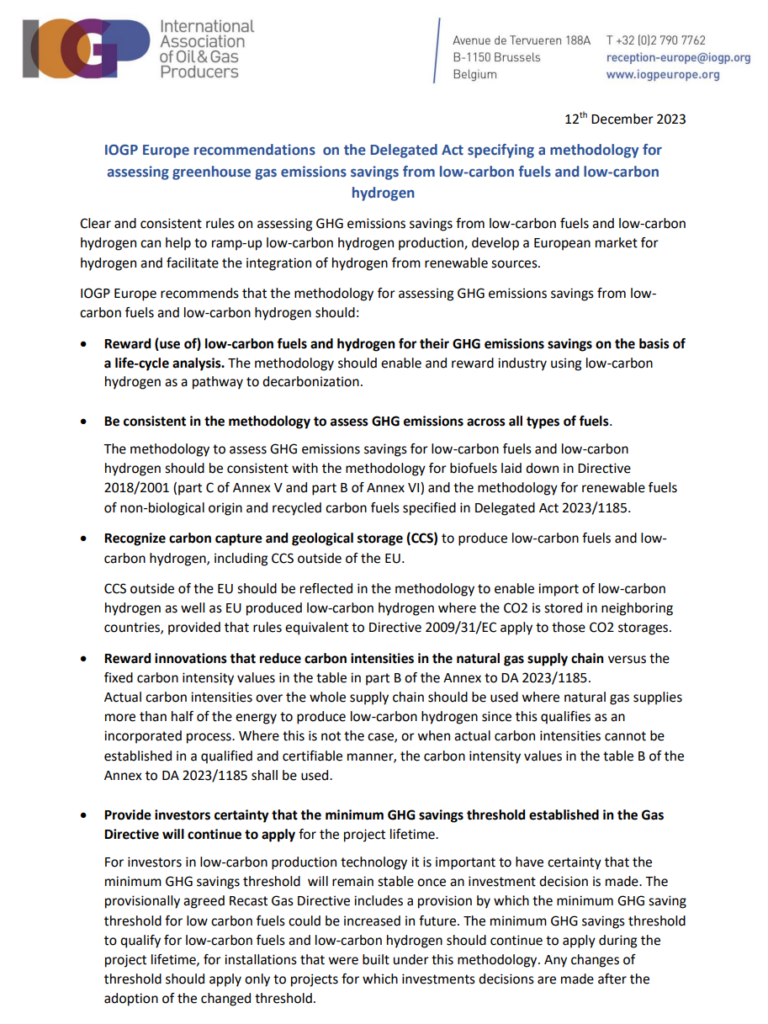
IOGP Europe recommendations on the Delegated Act specifying a methodology for assessing GHG emissions savings from low-carbon fuels and low-carbon hydrogen

IOGP position paper on the European Commission’s public consultation on the EU climate target for 2040
IOGP position on capital requirements

IOGP response on Competitive Bidding schemes for hydrogen under the Innovation Fund
IOGP response on revamping the Strategic Energy Technology (SET) Plan
IOGP response to the public consultation on the Hydrogen and Decarbonized Gas Market package
IOGP comments to R. W. Howarth and M. Z. Jacobson (2021): How Green is Blue Hydrogen?
IOGP response to the public consultation on the Renewable Energy Directive (RED) proposal

IOGP response to public consultation on the revised Climate, Energy and Environmental Aid Guidelines (CEEAG)
IOGP Paper on metric to use for 2030 targets
IOGP input to the consultation on the Hydrogen and Gas Market Decarbonization Package

Response to consultation on costs of implementing MRV regulation based on OGMP

IOGP response to the roadmap on the modification of the General Block Exemption Regulation (GBER)

IOGP response to the roadmap and inception impact assessment concerning revision of the 3rd Gas Package

IOGP written input to the consultation “Maritime sector – a green post-COVID future”
What’s Right? What’s Wrong? IOGP comments on the ‘EU Strategy for Energy System Integration’ and ‘A hydrogen strategy for a climate neutral Europe’

IOGP response to the inception impact assessment concerning the revision of the 2018 Renewable Energy Directive (REDII)
IOGP response to the public consultation on the revision of Regulation (EU) 347/2013 on guidelines for TEN-E Regulation
IOGP response to targeted consultation on the revision of Regulation (EU) 347/2013 on guidelines for TEN-E Regulation

IOGP input to the Roadmap on the EU Smart System Integration
IOGP input to the Roadmap on the EU strategy on hydrogen in Europe
IOGP feedback to the Combined Evaluation Roadmap/Inception Impact Assessment on the revision of Regulation (EU) 347/2013 on guidelines for TEN-E

IOGP input to the forthcoming EU Strategy for Energy System Integration
IOGP assessment of National Energy and Climate Plans

Scaling up Hydrogen in Europe
Hydrogen for Europe Pre-study – Key findings
IOGP assessment of draft National Energy and Climate Plans
Hydrogen for Europe

Majority of EU Member States call for postponement and targeted amendments to Methane Regulation
Joint Letter: Europe’s Response to High Energy Prices – Concerns Regarding a Natural Gas Price Cap

EU Methane Regulation Risks Severe Disruption to Europe’s Oil and Gas Supply from 2027
Joint Statement: calling for reducing methane emissions while ensuring EU energy security
EU delivers landmark decision in quest to cut red tape, strengthen competitiveness and security of supply
New Pact for the Mediterranean: an opportunity to foster the region’s energy integration

EU Low-Carbon Hydrogen production rules are not the signal investors were waiting for
Press release: 2040 Climate trajectory requires urgent action on policy enablers
Press release: State Aid Framework for Clean Industrial Deal marks a turn towards pragmatic decarbonization
Press release: Low-carbon fuels methodology envisaged by the Commission will block key hydrogen production pathways
Draghi Report: a pragmatic pathway to Competitiveness, Sustainability, and Resilience
Letter: IOGP Europe recommendations on the Hydrogen and Decarbonized Gas Market Package
Letter: Open, inclusive, and pragmatic Green Deal Industrial Plan for Europe
Gas market reform marks a step change in EU approach to the transition
New Re-Stream study assesses the feasibility of transport of hydrogen and CO2 in European gas and oil infrastructure
Letter: Call for a technology-inclusive revision of the TEN-E Regulation
“Hydrogen for Europe” study launch
Towards greater hydrogen production capacity in Europe
Letter: IOGP input on the European Commission’s consultation on the priority list for the development of gas network codes and guidelines for 2021 (and beyond)
Council’s inclusive approach to hydrogen sends strong signal ahead of key legislative year
EU’s hydrogen and energy system vision can only succeed with a more balanced, inclusive approach

Wide industry coalition call for a Hydrogen Strategy inclusive of all clean hydrogen pathways
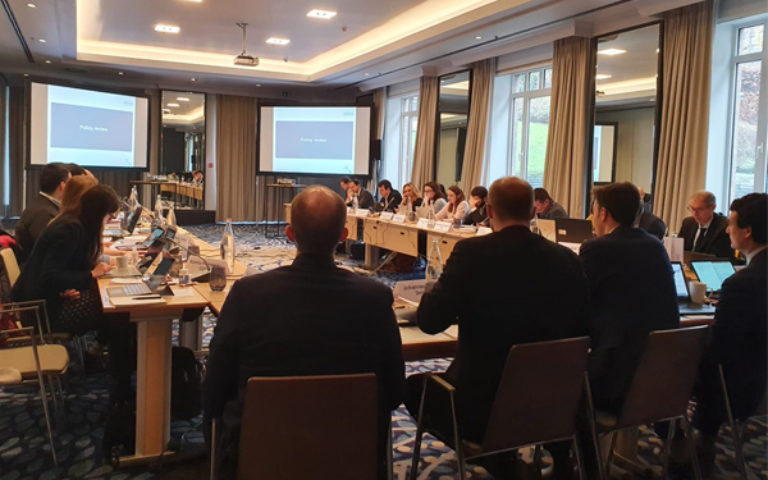
Hydrogen for Europe: 1st Working Group Meeting


Takeaways from the Industry Summit: An energy system fit to support European competitiveness







The Europe CCUS & Hydrogen Decarbonisation Summit
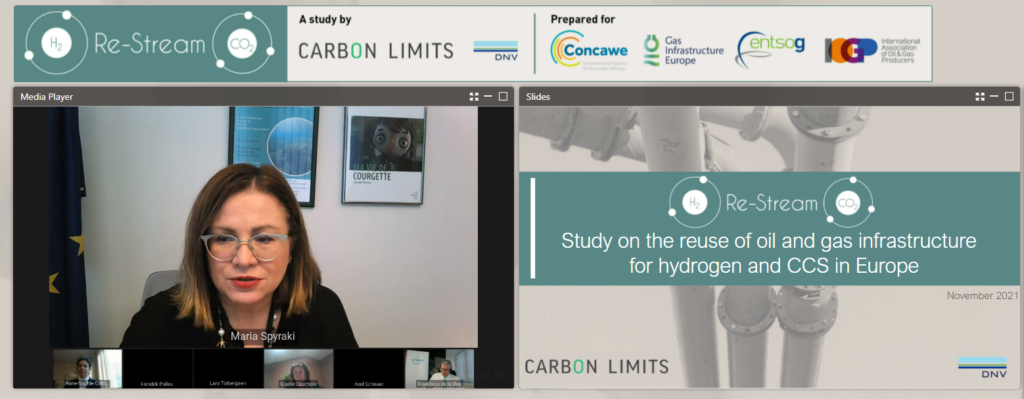
Re-Stream Study Launch Event
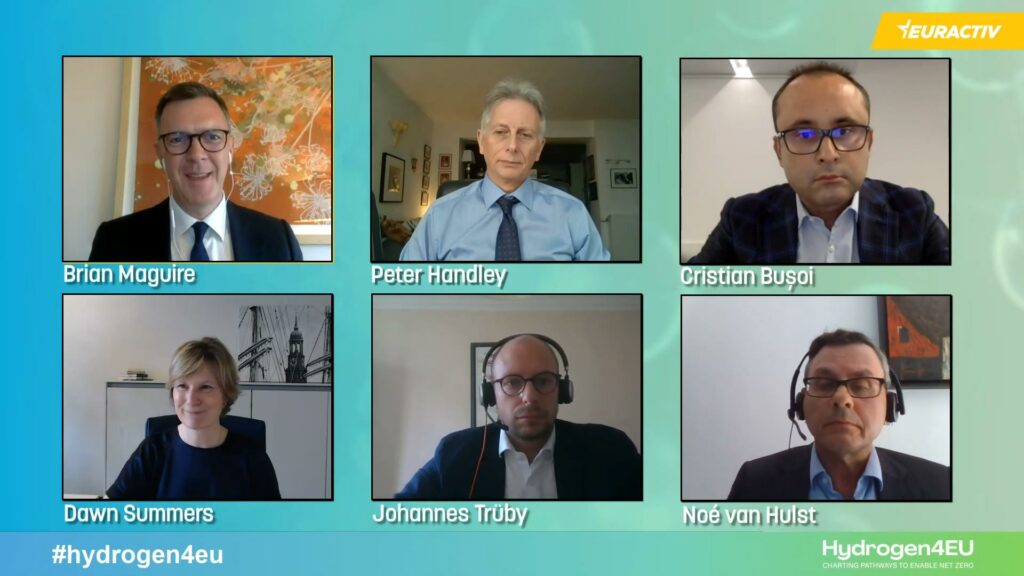
Hydrogen4EU Launch Event

Sustainable finance: investor, oil and gas sector and global perspectives

Carbon Management Webinars

Sustainable finance: non-financial disclosure for the oil and gas sector and EU taxonomy in practice