Joint Industry Paper on DNSH guidance for the MFF 2028-2034
The Commission launched a concept paper on guidance for the Do No Significant Harm (DNSH) principle under the 2028-2034 Multiannual Financial Framework (MFF). The proposal seeks to establish a simplified approach to applying DNSH across the whole EU budget, aiming for greater legal certainty while reducing administrative burdens.
Industry supports these objectives and the move towards a more harmonised application of DNSH. We welcome the overall approach which could deliver significant simplification. Nevertheless, the current approach raises concerns regarding the treatment of fuels, technologies, and energy infrastructure that remain essential for the transition towards a climate-neutral energy system. The concept paper does not recognise enough that EU climate objectives need to be achieved alongside other policy objectives, such as security of energy supply, industrial competitiveness, affordability, and system resilience. The current energy infrastructure and technologies may continue to play a transitional role while renewable and low-carbon alternatives are being developed.
Recommendations
The concept paper contains several positive elements, such as the recognition of renewable and low-carbon gases and fuels, hydrogen infrastructure, and decarbonisation projects. These broadly align with existing EU legislation, such as RED, EPBD, NZIA, and the Gas and Hydrogen Package.
However, the concept presents several elements of concern. Please find them listed below alongside recommendations that would benefit the paper.
- The concept paper risks introducing funding restrictions and duplicative assessments that are insufficiently coordinated with existing environmental, energy, and climate legislation. Furthermore, it goes beyond the purpose of the DNSH principle by identifying certain activities as harmful solely based on their technologies, rather than whether they cause significant harm. This omits the fact that energy transition is a gradual process, and that alternative fuels, technologies, and infrastructure will scale over time. Technology neutrality is a core concept defended during the SoTEU, with President von der Leyen stating: “we need to double down on our affordable, homegrown, clean energy. Be it renewables and nuclear, or biomethane and others. Technologically neutral. But they must give us independence and drive down energy prices.”
- Recommendation 1: Revise the activity list so that the DNSH focuses on activities that pose a genuine risk of environmental harm, rather than excluding technologies or activities per se. For example, investments reducing the environmental footprint of existing hydrocarbon-related activities should remain assessable on their merits, including emissions-reduction, efficiency and infrastructure-conversion projects.
- Recommendation 2: Ensure that the DNSH framework aligns with existing EU environmental, climate, and energy legislation.
- The paper dismisses the transitional role of gas infrastructure in the decarbonisation of the energy system. Existing infrastructure supports renewable and low-carbon gases and can be progressively repurposed as the energy system evolves. Such an incremental transition should be considered, also taking into consideration that decarbonisation of energy system through biomethane can largely rely on existing gas infrastructure without requiring repurposing or major new investment.
- Recommendation 3: Ensure that decommissioning decisions are duly justified and reflect future network needs, including the assessment required under Art. 57 of Directive (EU) 2024/1788, repurposing opportunities, future renewable and low-carbon gas and fuels demand, CO
- Recommendation 4: Broaden the infrastructure repurposing carve-out to cover CO
- The paper does not recognise the role of certain generation technologies during the energy transition, nor the technical and economic constraints faced by industrial actors. The availability, timing, and technical and economic feasibility of alternative solutions should be considered, while maintaining the use of technologies that can support gradual emissions reductions. Complementary solutions such as CCUS, waste-to-energy and waste-heat recovery should also be recognised where they contribute to emissions reductions, renewable and low-carbon fuels production, and energy efficiency.
- Recommendation 5: Establish a transition-sensitive assessment, considering the availability, timing, and technical and economic feasibility of alternatives.
- Recommendation 6: Recognise natural gas, flexible and dispatchable generation, CHP and other efficient energy solutions, including district heating and cooling systems under Article 26 of the Energy Efficiency Directive, particularly during the transition where suitable alternatives are not yet technically or economically feasible. The framework should also recognise
- The paper does not sufficiently recognise the role of renewable and low-carbon fuels in transport and distribution, especially taking into consideration that full electrification is not technically or economically feasible in some sectors and geographies. This approach would reflect the emissions-reduction benefits of these fuels – a principle recognised in Directive (EU) 2018/2001, Implementing Regulation (EU) 2018/2066 and the proposed revision of Regulation (EU) 2019/631.
- Recommendation 7: The DNSH framework should remain open to different decarbonisation pathways and
- Apply the DNSH principle proportionately to research, pilot, demonstration and first-of-a-kind projects. The guidance should explicitly recognise that these activities are undertaken to develop, validate and scale emerging low-carbon technologies and therefore differ fundamentally from mature commercial deployments. DNSH assessments should be adapted to the purpose, scale, duration and risk profile of innovation projects, with requirements focused on managing and mitigating environmental risks rather than demonstrating full alignment with criteria designed for commercial-scale operations. This would preserve robust environmental safeguards while ensuring that DNSH requirements do not unintentionally hinder technological innovation, industrial decarbonisation and the deployment of breakthrough clean technologies.
- Recommendation 8: Apply a proportionate and simplified DNSH assessment to research, pilot, demonstration and first-of-a-kind projects, taking account of their purpose, scale, duration and risk profile, while maintaining appropriate environmental safeguards.
- Recommendation 9: Explicitly recognise energy-supply disruptions, the resilience of critical energy infrastructure, diversification of supply routes and the preservation of strategic energy production capacities within the crisis and overriding-public-interest exemptions. Establish clear, streamlined conditions for applying these exemptions where DNSH requirements would impede investments necessary to safeguard security of energy supply.
For a detailed evaluation of the Commission’s proposed DNSH criteria, including specific industry comments and proposed amendments, please download the full document and see the assessment table in the annex
- Publications
- News
- Events
IOGP Europe’s Consultation Response to the 2nd wave of Revision of REMIT Reporting

IOGP Europe’s input to the Commission’s draft guidance on the application of the ‘do no significant harm’ principle under the 2028-2034 Multiannual Financial Framework (MFF)

IOGP Europe’s Consultation Response to the Revision of REMIT Reporting

IOGP Europe position on Industrial Accelerator Act and recommendations for modifications

Reforming energy taxation, charges and levies to support affordability
IOGP Europe’s response to the Stakeholder Consultation on MoP (Annex VII – Inside Information)

IOGP Europe’s response to the Targeted consultation on assessing the usefulness of ISO 20022 standard for REMIT Exposure data reporting

Upstream Oil & Gas and CCS operations in Europe: Perspective on a proposed EU Universal-PFAS Restriction
IOGP Europe’s response to the call for evidence on Foreign Subsidies Regulation (FSR)
IOGP Europe’s response to draft revision of the REMIT Implementing Regulation on data reporting public consultation

IOGP Europe’s response to Inside information platforms and registered reporting mechanisms under REMIT – Commission Regulation public consultation
IOGP Europe feedback on the Call for Evidence: Simplification of administrative burden in environmental legislation

IOGP Europe’s response to ESMA consults on clearing thresholds under EMIR 3

Public consultation on inter-temporal cost allocation mechanisms (ICA) for financing hydrogen infrastructure
IOGP Europe response to DG ENVI and Trinomics survey on assessment of environmental reporting and the potential for simplification
IOGP Europe response to the ECHA consultation on Universal PFAS restriction proposal
Download
Joint industry position on EMIR 3 trialogues
IOGP Europe statement on the ECHA proposed PFAS restriction proposal related to the Carbon Capture, Transport and Storage (CCS) Technology
IOGP response to consultation on the evaluation of the ‘Polluters pays principle’.
IOGP input on EU Soil Health Law for protecting, sustainably managing and restoring EU soils
IOGP position on Industrial Emissions Directive (IED) revision proposal
IOGP position on Industrial Emissions Portal (IEP) Regulation proposal
IOGP input to the call for evidence on ‘soil health – protecting, sustainably managing and restoring EU soils’
IOGP input to the call for evidence on ‘setting the course for a sustainable blue planet, an update of the international ocean governance agenda’
Input to Consultation: Restriction for per- and polyfluoroalkyl substances (PFAS)

IOGP consultation response, review of the Marine Strategy Framework Directive (MSFD)
IOGP response to the public consultation on the Energy Taxation Directive (ETD) proposal
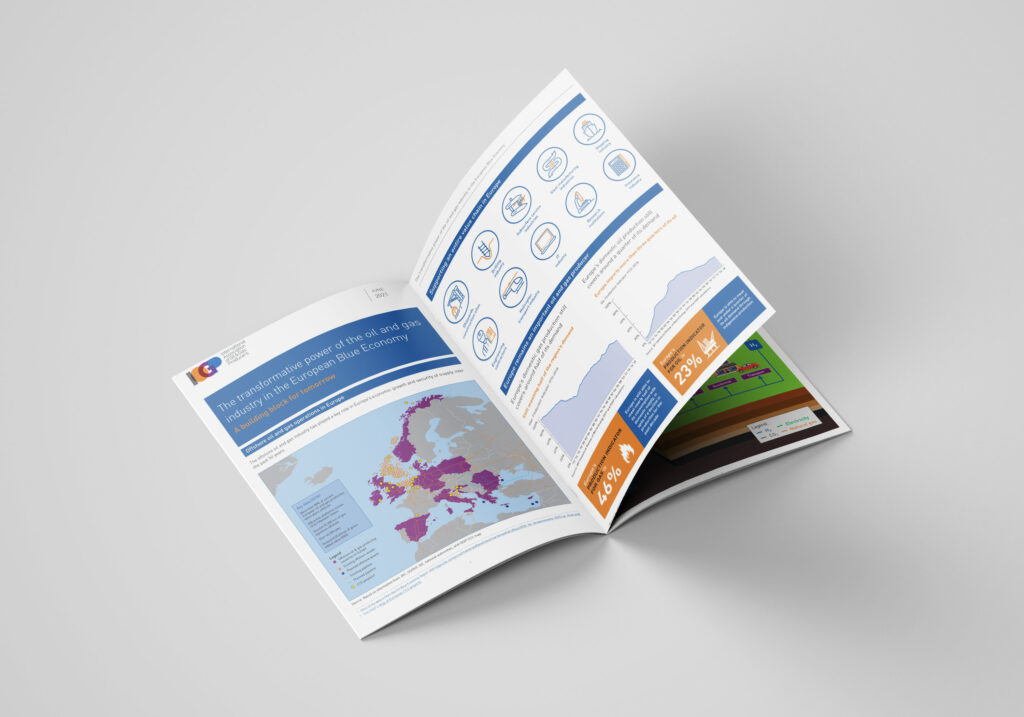
The transformative power of the Oil & Gas industry in the European Blue Economy
IOGP input to Roadmap consultation ‘Protecting the marine environment – review of EU rules’
IOGP input to the consultation on the new EU Soil Strategy
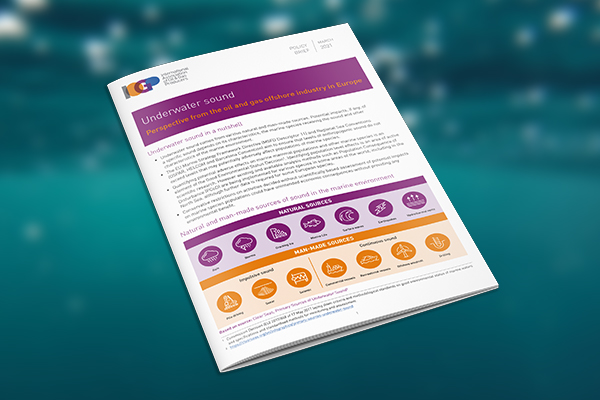
Underwater sound – Perspective from the oil and gas offshore industry in Europe

Public consultation on the EU Action Plan “Towards a Zero Pollution Ambition for air, water and soil”
IOGP response to the Inception Impact Assessment on the revision of the Guidelines on State aid for environmental protection and energy (EEAG) 2014-2020
IOGP written input to the consultation “Maritime sector – a green post-COVID future”
IOGP position on EU Biodiversity Strategy for 2030
IOGP written input to the consultation “International Ocean Governance”
IOGP input to the consultation on the EU nature restoration plan
IOGP written input to the public consultation on the revision of the Energy Taxation Directive (ETD)
IOGP contribution to the public consultation on Commission Decision setting the fees due to ACER for tasks under REMIT
IOGP input to the consultation on restricting the use of intentionally added microplastics

Webinar: Regulating the re-use and repurposing of oil and gas installations in the context of decommissioning

IOGP actions to protect Biodiversity