18 Organizations send a Joint Industry Letter to European Council on the EU Methane Regulation
To: Members of the European Council Cc: Ministers responsible for Energy in the 27 EU Member States
Brussels, 8 October 2026
EU Methane Regulation: an actionable regulatory framework that preserves energy security, affordability and emission reductions
Dear President Costa, Dear President von der Leyen, Dear Heads of State or Government,
We support the intent of the EU Methane Regulation (EUMR) and want it to work in practice for all those involved in its implementation. We, therefore, welcome the recognition that the EUMR’s importer requirements cannot be met under the current timetable. The postponement announced by Commission President von der Leyen on 6 October is a step in the right direction.
However, one year is insufficient to fully mitigate these risks and would leave the EU facing the same implementation challenges in 12 months' time. Ahead of the European Council meeting of 15–16 October 2026, we therefore urge you to support a three-year postponement of the EUMR’s importer requirements.
This would provide the time needed to establish a workable compliance framework, giving companies the legal certainty required to adapt, and keep the EU as an attractive market for the import of crude oil and natural gas. It would also allow the Commission and Member States to assess whether and how compliance with this framework affects European energy security, competitiveness and supply diversification, and to make adjustments if necessary.
The case for a three-year postponement rests on the work still required before importers can comply. These steps build on each other, for example, most Member States will not accredit until the rules exist, and producers cannot be verified until accredited verifiers are available.
- Design: verification protocols and accreditation procedures must be established and should be recognised by competent authorities across the Union to enable accreditation.
- Accreditation: verification bodies must then obtain accreditation and build capacity across producing countries.
- Verification: only once verifiers are accredited, the producers can undergo independent verification, confirming their compliance with the Regulation.
- Scaling: certification schemes for those who choose that compliance option must be recognised across the EU and scaled up in all relevant producing/exporting regions to meet demand.
The very process from accreditation through to the first certificates alone is expected to take more than 12 months. These instruments should be harmonised and operational across all Member States at least six months before the start of the year in which the relevant obligations enter into force.
This would provide market participants with sufficient time to establish the necessary governance, legal, and technical frameworks to comply with the approved and harmonised measures. Beyond these, all national competent authorities must be designated, penalty regimes established, and secondary legislation determining country-level equivalence adopted.
In this light, we respectfully ask you to support a three-year postponement of the importer obligations due in 2027 and 2028 under Articles 28(1), 28(2) and 29(1), as well as the equivalent requirements set by Article 12(3), with swift adoption by the Council and European Parliament before January 2027.
This will give the Commission, Member States and industry the time to build a framework enabling genuine, verifiable compliance. We renew and intensify our commitment to work with the Commission and competent authorities to support the timely development and implementation of the necessary compliance framework.
The co-signatories remain at your disposal to provide any further information or technical evidence that may be useful in the context of your discussions.
Yours sincerely,
The co-signatories










- Publications
- News
- Events

Joint industry reaction and recommendations: EU Methane Regulation – DG ENER Recommendations

EU Methane Regulation Joint Statement ahead of next European Council and TTE Council of June 2026

Joint industry recommendations for simplification of the importer requirements of the EU Methane Regulation

Joint industry recommendations on DG ENER Guidance on penalties for the EUMR

75 organisations and companies call for targeted amendments to the Methane Emissions Reduction Regulation through the EU simplification agenda including the stop-the-clock
EU Methane Regulation: Joint letter to enable import provisions implementation

Joint Statement: calling for reducing methane emissions while ensuring EU energy security

EU Methane Regulation: Addressing the tracing issue to improve compliance

IOGP Europe recommendations to help the EU restore its security of supply and competitiveness through flexible and resilient energy markets.
IOGP Europe Letter to Competitiveness Council
Joint letter: Integrating the EU Methane Regulation into the EU Simplification Agenda

Action plan to address key challenges on importers’ requirements in the Methane Regulation

IOGP Europe call for inclusion of the Methane Emissions Regulation in the forthcoming Energy Omnibus Package

Our response to the EC questionnaire on LDAR minimum detection limits and first step underground leak thresholds in the EU Methane Regulation
IOGP Europe’s Position on International GHG Supply Chain MMRV Framework
IOGP response to Regulation on methane emissions reduction in the energy sector
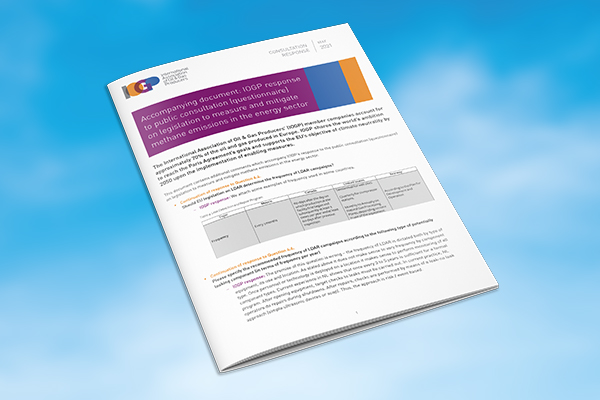
IOGP response to public consultation on legislation to measure and mitigate methane emissions in the energy sector
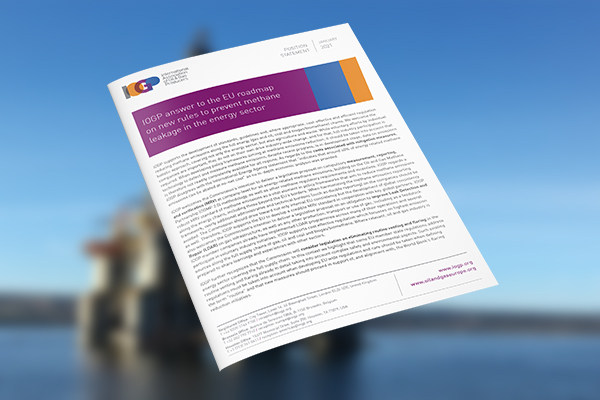
IOGP answer to the EU roadmap on new rules to prevent methane leakage in the energy sector
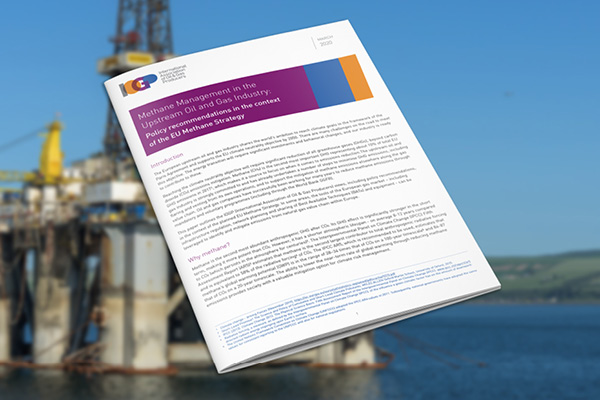
Methane Management in the Upstream Oil and Gas Industry: Policy recommendations in the context of the EU Methane Strategy

One year delays the problem; three years will fix it: Why a three-year postponement of the EU Methane Regulation’s importer requirements is needed

State of the European Union: Europe needs energy optionality to strengthen resilience while advancing the transition
21 Energy Associations sign a Joint industry reaction to the EU Methane Regulation Recommendations
Majority of EU Member States call for postponement and targeted amendments to Methane Regulation
Joint statement: Commission Recommendations on Penalties are helpful but do not provide industry with the needed legal certainty
Industry calls for 15 targeted amendments to the EU Methane Regulation to safeguard energy security and preserve environmental ambition
75 organisations and companies call for targeted amendments to the Methane Emissions Reduction Regulation through the EU simplification agenda including the stop-the-clock
EU Methane Regulation Risks Severe Disruption to Europe’s Oil and Gas Supply from 2027
Joint Statement: calling for reducing methane emissions while ensuring EU energy security
IOGP Europe welcomes EU Energy Ministers’ call for Inclusion of the EU Methane Regulation in upcoming Energy Omnibus
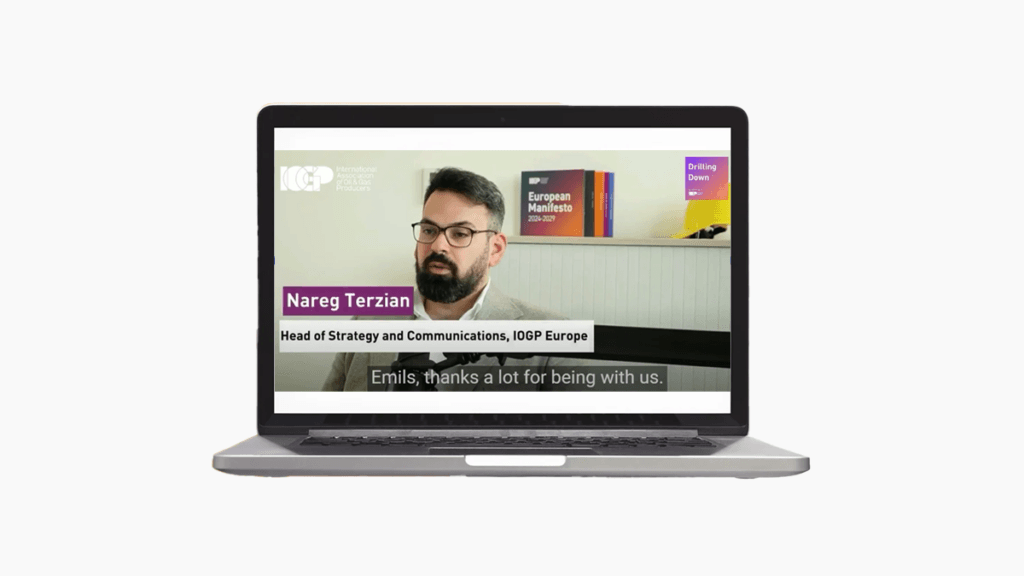
Navigating the EU Methane Regulation: Insights & Challenges
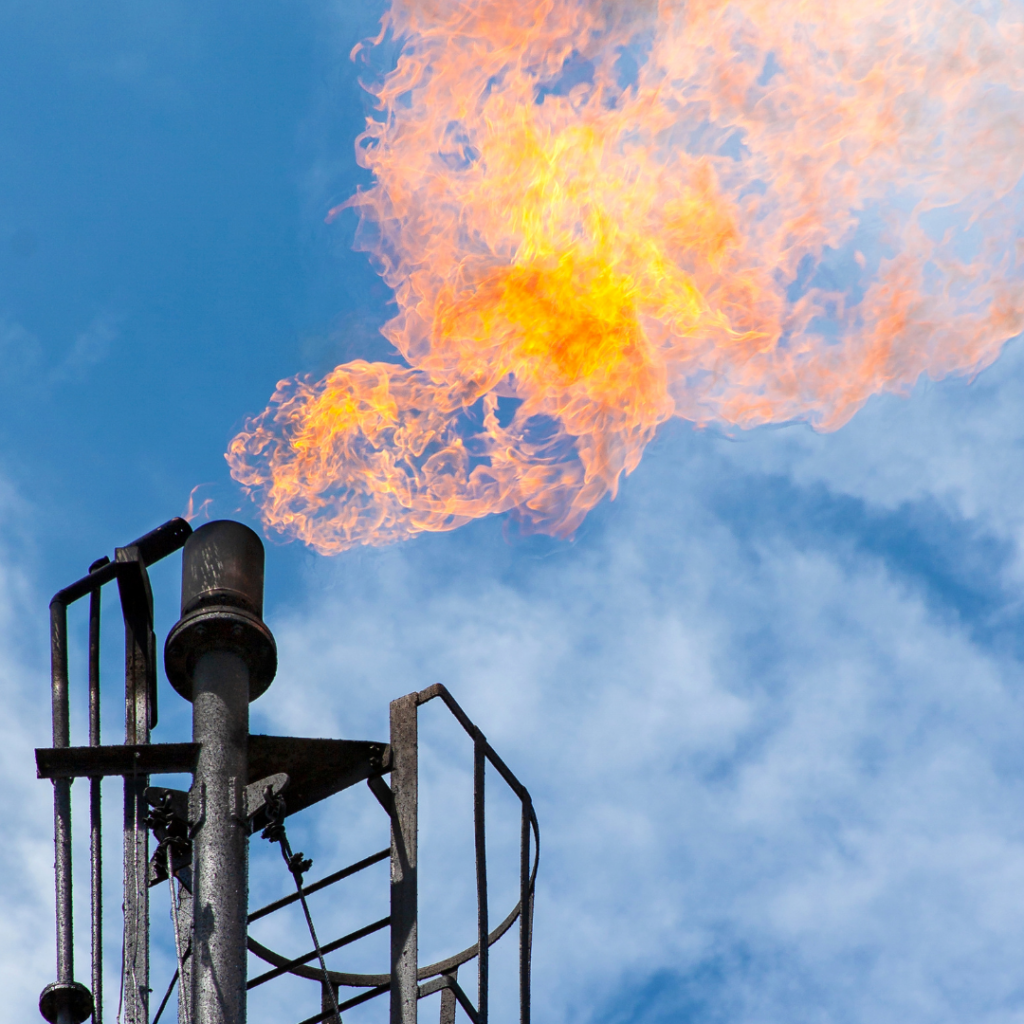
EU Approves Methane Regulation: What’s Next for the Industry?
Letter: Methane emissions reduction: call for a proportionate, efficient and implementable EU Regulation
Letter: Proposed EU Methane Regulation – International dimension of EU importer requirements
IOGP response to IEA Global Methane Tracker Report
Methane Emissions Glossary
Guidelines for Methane Emissions target setting – Press Release
EU Methane Strategy sets the right sequence to tackle the challenge
Guidelines for Methane Emissions target setting
Methane Mitigation Europe 2027


Go Net Zero Energy Summit 2026 to Bring Together CEE Leaders in Bucharest


EU Methane Regulation – How Operators and Stakeholders Can Implement It #3
SPE Europe Energy Conference

EU Methane Regulation – How Operators and Stakeholders Can Implement It #2
EU Methane Regulation – How Operators and Stakeholders Can Implement It #1