IOGP Europe response to European Commission public consultation on draft Implementing Regulation setting templates for methane emissions reporting
We fully support the objectives of the EU Methane Regulation (EUMR), and our Members are actively engaged in the efforts to monitor and reduce methane emissions across their operations.
IOGP Europe welcomes the Commission’s work to establish harmonised methane emissions reporting templates for EU producers. A common reporting template, based on data needed for OGMP 2.0 reporting templates, can help standardize data reporting formats from operators, comparability of information reported across member states, and support submissions of methane data to the UNFCCC process.
To achieve these benefits, the templates should build on existing reporting practices, provide clear instructions and avoid unnecessary duplication.
To ensure a clear, proportionate and workable reporting framework, we recommend the following key points:
• Ensure one submission and avoid duplicate reporting. Operators should not have to submit the same information through parallel national and EU systems. The final framework should ensure that one submission, through Member States, fulfils the relevant reporting obligation, with Member States retaining responsibility for compliance determinations and transferring relevant data to the Commission without making operator reporting dependent on MTDB availability. Reuse of previously submitted information, including venting and flaring notifications, and bulk upload of existing reporting templates should be enabled. The reporting template should allow operators to provide explanations alongside numerical data including relevant assumptions, methodological limitations and operational circumstances.
• Clarify reporting boundaries and ensure consistency across reporting frameworks. Physical reporting boundaries should reflect EUMR definitions and asset-level reporting, while source categories, terminology and table structures should align with the relevant OGMP 2.0 templates and UNFCCC categories. The reference to “site, facility, asset, business/operating unit” leaves the required reporting boundary unclear. The final text should establish clear reporting requirements, allowing appropriate aggregation of wells and small sites, and distinguish the detailed information retained for verification from the information submitted to authorities. Clear aggregation rules and consistent activity definitions are essential to prevent double counting and divergent interpretations.
• Keep information requirements proportionate and relevant. Each requested field should have a clear purpose and reflect the activity concerned. The templates should allow non-applicable information to be omitted, particularly for offshore facilities and inactive or plugged wells. Activity-factor and emission-factor reporting should not impose unnecessary work where emissions are established through other quantification methods. The templates should accommodate relevant methods and source categories without introducing additional measurement obligations or creating new reporting obligations for LNG logistics operators.
• Provide clear reconciliation and verification requirements. The verifiers’ role and responsibilities, supporting documentation requirements and the handling of differing interpretations. Pending a technically robust and consistently applicable methodology informed by the Commission’s position on relevant ISO/CEN standards, exclude source – and site-level uncertainty values from the templates. Distinguish reconciliation data from annual emissions reporting, determine whether T5 requires measured or annualised site-level emissions, and allow relevant pre-2025 measurements and reconciliation activities to be recorded. Operators should be able to explain reconciliation efforts and remaining discrepancies in supporting documentation without duplicating separate notifications. Verification fields should distinguish the assurance level of an engagement from its outcome.
• Clarify public disclosure and protect confidential information. The draft envisages public reporting, benchmarking and identification of high-emitting assets and operators. The Commission should specify which information will be published, at what level of detail and how commercially sensitive information will be protected. Remove the requirement for supporting methodology documentation to be similar or equivalent to OGMP 2.0 implementation plans and clarify confidentiality protections for any supporting information provided.
• Provide flexibility for evolving quantification approaches. The draft IA appropriately supports engineering calculations, industry emission factors, and other quantification methods. The framework should remain flexible to retain these methods while allowing future methods, such as direct measurement, continuous monitoring systems, and process simulation, consistent with the EUMR and OGMP framework.
• Ensure comparability of methane transparency database (MTDB) benchmarking. Future MTDB benchmarking and performance profiling should account for differences in reporting boundaries, quantification methods, measurement coverage, reconciliation approaches and uncertainty treatment to ensure meaningful comparisons across operators.
• Allow sufficient time and practical arrangements for implementation for both operators and competent authorities. Companies need adequate time to adapt their systems once the final templates, technical specifications, guidance and reporting interface are available and tested. Mandatory use should start no earlier than the first reporting year (subject to upcoming amendment of the EUMR), reported in May the following year, with final formats, validation rules and a test environment available at least six months before mandatory use, and existing formats accepted during transition. Practical arrangements are also needed where accredited verifiers or competent authorities are not yet operational. Competent authorities will need time to update their reporting tools to match finalized templates from the Commission.
The attached annex (download the full document to see) provides detailed comments and recommendations. IOGP Europe would welcome further technical dialogue with the Commission and competent authorities to support a reporting framework that is consistent, proportionate and workable in practice. As measurement, reporting, and verification requirements for EUMR are finalized, such as the adoption of Article 12 methods (i.e., ISO/CEN) or specific verification protocols, we appreciate that the Commission may need to update these templates to match those requirements.
- Publications
- News
- Events
18 Organizations send a Joint Industry Letter to European Council on the EU Methane Regulation

Joint industry reaction and recommendations: EU Methane Regulation – DG ENER Recommendations

EU Methane Regulation Joint Statement ahead of next European Council and TTE Council of June 2026

Joint industry recommendations for simplification of the importer requirements of the EU Methane Regulation

Joint industry recommendations on DG ENER Guidance on penalties for the EUMR

75 organisations and companies call for targeted amendments to the Methane Emissions Reduction Regulation through the EU simplification agenda including the stop-the-clock
EU Methane Regulation: Joint letter to enable import provisions implementation

Joint Statement: calling for reducing methane emissions while ensuring EU energy security

EU Methane Regulation: Addressing the tracing issue to improve compliance

IOGP Europe recommendations to help the EU restore its security of supply and competitiveness through flexible and resilient energy markets.
IOGP Europe Letter to Competitiveness Council
Joint letter: Integrating the EU Methane Regulation into the EU Simplification Agenda

Action plan to address key challenges on importers’ requirements in the Methane Regulation

IOGP Europe call for inclusion of the Methane Emissions Regulation in the forthcoming Energy Omnibus Package

Our response to the EC questionnaire on LDAR minimum detection limits and first step underground leak thresholds in the EU Methane Regulation
IOGP Europe’s Position on International GHG Supply Chain MMRV Framework
IOGP response to Regulation on methane emissions reduction in the energy sector
IOGP response to public consultation on legislation to measure and mitigate methane emissions in the energy sector
IOGP answer to the EU roadmap on new rules to prevent methane leakage in the energy sector
Methane Management in the Upstream Oil and Gas Industry: Policy recommendations in the context of the EU Methane Strategy

Council insists on completing Methane Regulation compliance framework, but one year delay falls short

EU Methane Regulation: Council urged to back Parliament’s three-year postponement for importers and address remaining gaps for domestic producers
EU Methane Regulation: The Commission’s proposed one-year postponement of the importer requirements falls short
One year delays the problem; three years will fix it: Why a three-year postponement of the EU Methane Regulation’s importer requirements is needed
State of the European Union: Europe needs energy optionality to strengthen resilience while advancing the transition
21 Energy Associations sign a Joint industry reaction to the EU Methane Regulation Recommendations
Majority of EU Member States call for postponement and targeted amendments to Methane Regulation
Joint statement: Commission Recommendations on Penalties are helpful but do not provide industry with the needed legal certainty
Industry calls for 15 targeted amendments to the EU Methane Regulation to safeguard energy security and preserve environmental ambition
75 organisations and companies call for targeted amendments to the Methane Emissions Reduction Regulation through the EU simplification agenda including the stop-the-clock
EU Methane Regulation Risks Severe Disruption to Europe’s Oil and Gas Supply from 2027
Joint Statement: calling for reducing methane emissions while ensuring EU energy security
IOGP Europe welcomes EU Energy Ministers’ call for Inclusion of the EU Methane Regulation in upcoming Energy Omnibus
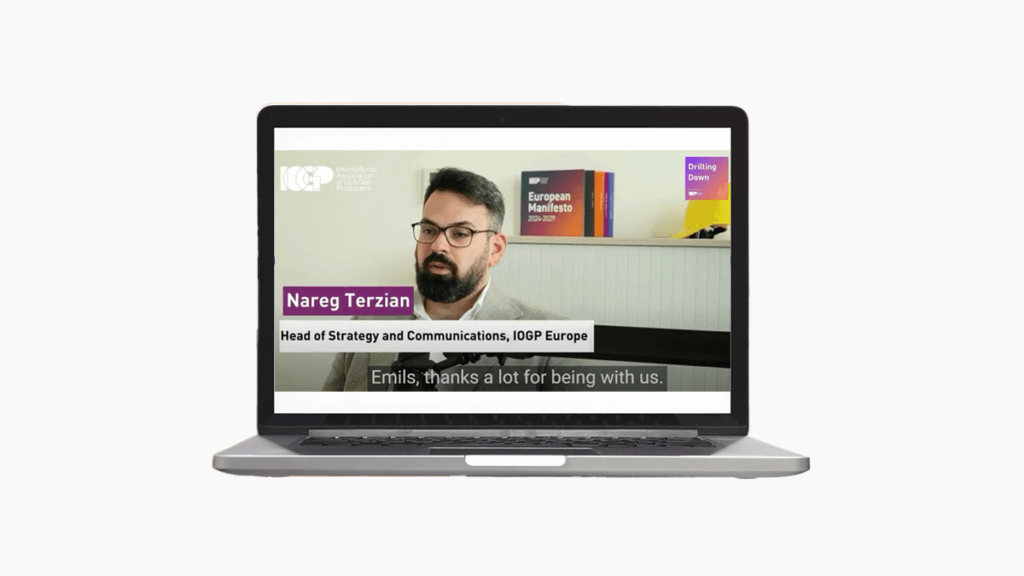
Navigating the EU Methane Regulation: Insights & Challenges
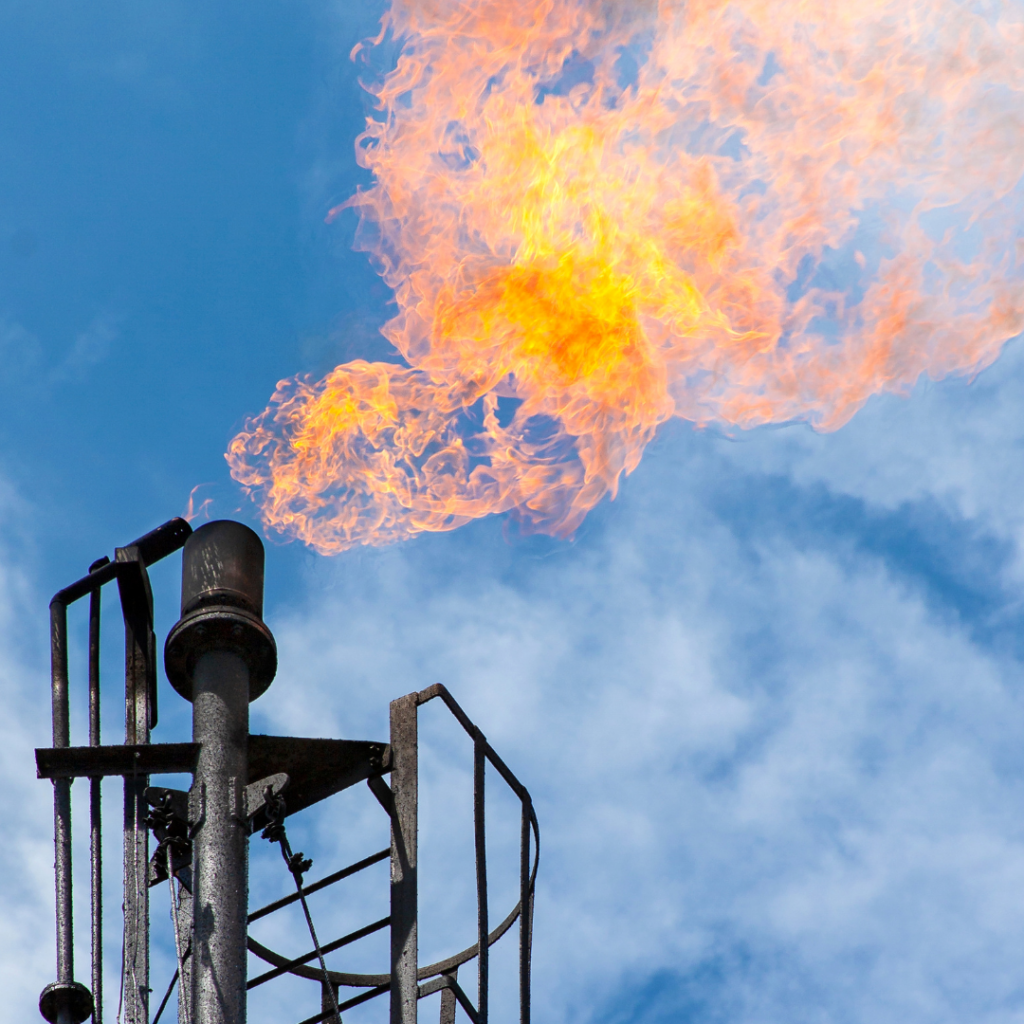
EU Approves Methane Regulation: What’s Next for the Industry?
Letter: Methane emissions reduction: call for a proportionate, efficient and implementable EU Regulation
Letter: Proposed EU Methane Regulation – International dimension of EU importer requirements
IOGP response to IEA Global Methane Tracker Report
Methane Emissions Glossary
Guidelines for Methane Emissions target setting – Press Release
EU Methane Strategy sets the right sequence to tackle the challenge
Guidelines for Methane Emissions target setting
Methane Mitigation Europe 2027


Go Net Zero Energy Summit 2026 to Bring Together CEE Leaders in Bucharest


EU Methane Regulation – How Operators and Stakeholders Can Implement It #3
SPE Europe Energy Conference
EU Methane Regulation – How Operators and Stakeholders Can Implement It #2
EU Methane Regulation – How Operators and Stakeholders Can Implement It #1