Industry Joint Paper on International Carbon Credits and Domestic Permanent Carbon Removals
We, the co-signatories of this paper, representing the European gases, oil and fuel manufacturing sectors, as well as the sugar manufacturing sector, welcome the European Commission’s proposal of 17 July 2026 to introduce high-quality international carbon credits and domestic permanent carbon removals in the revised EU Emissions Trading System (ETS). In this context, their Introduction offers additional flexibility for ETS entities, supports the development of innovative climate technologies and contributes to achieving emissions reductions.
We welcome these developments and consider that their successful implementation will depend on a predictable regulatory framework, robust environmental integrity safeguards and effective mechanisms to ensure the timely availability of eligible credits and removals.
Against this backdrop, we also encourage both the Member States and the European Parliament, in their ongoing discussion, to maintain a framework that acknowledges the growing role of domestic permanent carbon removals in achieving the EU’s ambitious climate targets and the need to support the deployment of this emerging market, while recognising the complementary role of international carbon credits in supporting cost-effective decarbonisation effort. The integration of international carbon credits into the EU ETS can also support EU climate diplomacy by promoting carbon pricing in third countries, helping to create a more level playing field and address carbon-leakage risks for EU industry.
The following recommendations set out our priorities for the ongoing ETS review, with a view to ensuring that both mechanisms can deliver their full potential while preserving the competitiveness of EU industry and the long-term effectiveness of the ETS.
International Carbon Credits
- We believe that to provide legal certainty and avoid market fragmentation, the EU framework should build on the rules and safeguards under Article 6 of the Paris Agreement, including Article 6.2 cooperative approaches and Article 6.4 of the Paris Agreement Crediting Mechanism (PACM). Any additional EU-specific requirements should be carefully assessed to avoid creating unnecessary distortions or barriers in the global carbon market. In this context, we call the Commission to establish the legal framework for international carbon credits as soon as possible.
- We encourage the Commission to take the necessary steps to assess the feasibility of the mechanism as early as possible and stress the importance of establishing a pilot phase from 2031-2035. This would allow the EU to establish partnerships with countries demonstrating strong climate ambition and Article 6 readiness and to develop a pipeline of eligible projects. Early and long-term engagement would provide greater certainty to investors and developers, support the development of market capacity and help ensure sufficient supply of high-integrity units when the mechanism becomes operational, and strengthen EU climate diplomacy, while safeguarding the environmental integrity of the EU ETS. International carbon markets can deliver the necessary volume of high-integrity credits as long as the EU sets out clear and realistic criteria.
- We highlight that linking the cap trajectory to a future assessment of international carbon credit availability risks creating unnecessary uncertainty for market participants and long-term decarbonisation investments. We therefore call for a predictable framework that avoids binary political decisions on adjusting the LRF in response to the availability of international carbon credits. To provide greater certainty, the EU should make a clear commitment to procuring the necessary volume of high-integrity international carbon credits, supported by a clear roadmap.
Permanent Carbon Removals
- We believe that the ETS framework should be aligned with the Delegated Regulation (EU) 2026/285 to ensure policy coherence and regulatory consistency. Therefore, a broader range of CRCF-certified removals, including biochar should also have a pathway into the ETS. Additionally, the Commission should also begin assessing the possible inclusion of nature-based removals under the EU ETS as soon as possible, with a view to providing greater regulatory clarity, ensuring that permanence can be adequately guaranteed, supported by appropriate durability-management tools. Robust safeguards must be in place to ensure no double counting of CRCF-certified units.
- We welcome the Commission proposal allowing operators to use self-generated CRCF-certified bioCCS removals to offset their own fossil emissions. This right should be extended to all ETS operators and all certified permanent carbon removal technologies recognised under the ETS,to create an additional demand-side signal for the domestic CDR market and encourage ETS operators and the Commission to invest in high-quality EU removals. EU ETS compliance should be manageable at corporate-group level, so that removals can be used where the corresponding fossil emissions arise, rather than being limited to the entity or ETS installation within the group that generated them.
- We underline that the integration of permanent carbon removals must safeguard the environmental integrity and scarcity of the EU ETS. Any increase in the gross cap and the resulting additional compliance space should be matched by the same amount of high-quality removals. We believe that the financing framework should be robust enough to deliver this volume. There is a risk that revenues generated from allowance auctions will not be sufficient to procure the intended volume of removals, particularly in the early years when removal costs are expected to exceed EUA prices. The 250Mt objective should therefore be supported by realistic deployment milestones and sufficient financing, including through the proposed allowance buffer, reviewed and adjusted as needed, or additional de-risking instruments, such as Carbon Contracts for Difference (CCfDs).
- We encourage the European Commission to publish the delegated acts setting out the detailed rules for the purchasing, auctioning and procurement of carbon removals as soon as possible, to provide the regulatory certainty needed for investment and project development.
- We back the development of additional routes into the EU ETS beyond the Commission's purchasing as soon as possible. Eligible CRCF-certified permanent removal units should be directly tradable and usable by regulated ETS entities for compliance from the outset, subject to robust MRV, permanence, liability, and cap-accounting safeguards. Recital 4 of Delegated Regulation (EU) 2026/285 already records that operators capturing and storing biogenic or atmospheric CO₂ are unable to receive allowances or reductions in their obligations under Directive 2003/87/EC, and identifies this as a market failure.
- We also support the recognition of permanent geological CO₂ storage sites in third countries for EU ETS purposes, provided that equivalent conditions are met to ensure permanently secure and environmentally safe storage. This should include requirements on monitoring, reporting and verification (MRV), as well as remediation in the event of leakage. We therefore call for greater clarity on how and when equivalence with the EU legislative framework will be established, as well as on the timeline for recognising third-country storage sites, to provide greater certainty for projects relying on storage capacity outside the Union.
- We also stress that the importance of ensuring that the development of permanent carbon removals goes hand in hand with the deployment of CO₂ transport and storage infrastructure, which is essential to scaling up BioCCS and DACCS projects.
We strongly call on the European Commission, the European Parliament and the Member States to consider and integrate the above recommendations to ensure that the flexibilities introduced through international carbon credits and domestic permanent carbon removals under the EU ETS are effective, support the EU’s climate ambitions and foster the development of clean technologies, while keeping decarbonisation and emissions reductions affordable.
Relevant Amendments:
- International Carbon Credits: 232,1233, 1234, 1240, 1242, 1257, 1258, 1262, 1264, 1265, 1280
- Permanent Carbon removals: 6, 8, 32, 36, 37, 74, 254, 256, 257, 1285,1288, 1292, 1293, 1316, 1317, 1338, 1339, 1340, 1346, 2736, 2929, 2930, 2931, 2932.
Signatories





- Publications
- Events

IOGP Europe position statement on the EU ETS revision

Joint Letter on EU-UK ETS Linkage

IOGP Europe’s input to the Public Consultation on International Carbon Credits
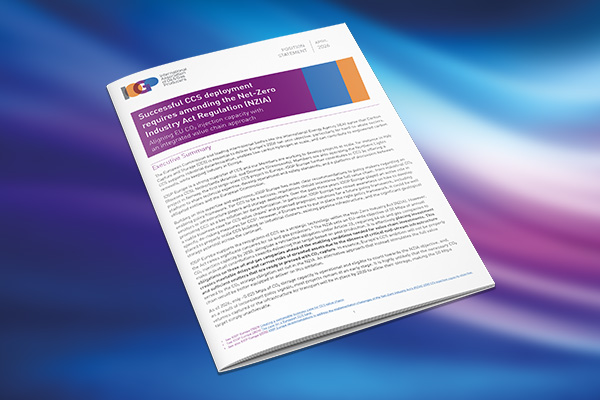
Successful CCS deployment requires amending the Net-Zero Industry Act Regulation (NZIA): Aligning EU CO₂ injection capacity with an integrated value chain approach
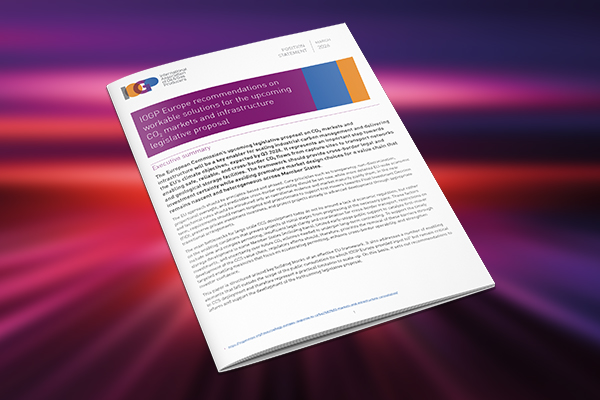
IOGP Europe recommendations on workable solutions for the upcoming CO2 markets and infrastructure legislative proposal

IOGP Europe’s response to CO₂ markets and infrastructure public consultation

IOGP Europe input to the Public Consultation on the methodologies for certifying permanent carbon removals

IOGP Europe position on the revision of the EU ETS 1

IOGP Europe feedback to the Implementing Act on Certification schemes, certification bodies, and audits

IOGP Europe views on the methodologies for the certification of carbon dioxide removals
IOGP response to the consultation on certification of carbon removals – EU rules
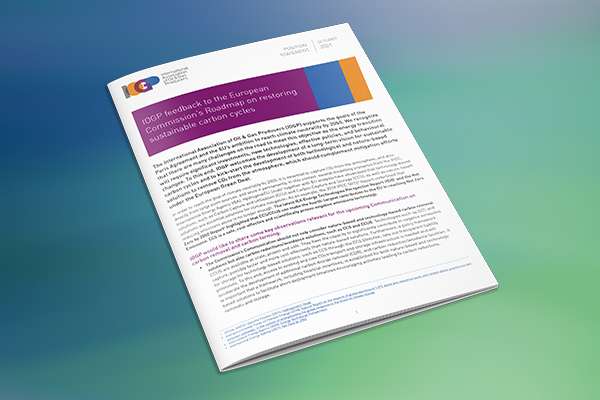
IOGP feedback to the European Commission’s Roadmap on restoring sustainable carbon cycles
IOGP response to the public consultation on the Carbon Border Adjustment Mechanism (CBAM) proposal
IOGP position on the revision of the EU Emissions Trading System (EU ETS) Directive
IOGP input to the consultation on the Industrial Emissions Directive

Response to consultation on updating the EU Emissions Trading System

IOGP written input to the public consultation on the Carbon Border Adjustment Mechanism (CBAM)

IOGP feedback on the update of EU ETS monitoring and reporting rules (2021-30)